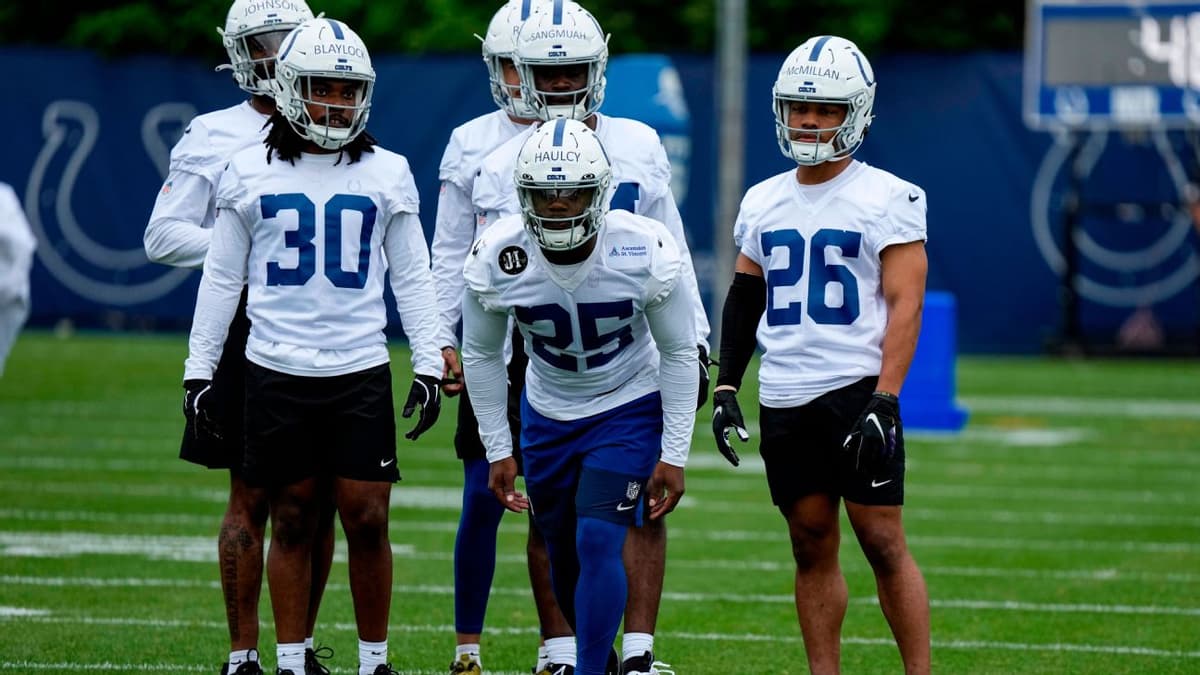
The Indianapolis Colts find themselves at a critical crossroads as the 2026 NFL season approaches. After missing the postseason every year since 2020, the organization is placing a significant bet on its future. The strategy is clear: the Indianapolis Colts young defenders must bypass the traditional developmental curve and become high-level contributors immediately. In a league where patience is a rare commodity, Indy is asking its newest defensive assets to learn the nuances of professional football under the brightest lights and highest stakes.
The Rapid Development of Indianapolis Colts Young Defenders
The urgency in Indianapolis is palpable. The franchise has endured a five-year playoff drought, a stretch of frustration that has left fans and management eager for a return to January football. To bridge the gap between potential and production, the coaching staff has implemented a "trial by fire" philosophy. Rather than easing rookies into the rotation, the team is prioritizing live-game experience as the primary teacher. The hope is that by facing elite NFL offenses early and often, these young players will sharpen their instincts and adapt to the speed of the professional game faster than their peers.
This approach is not without its risks. The AFC is currently a gauntlet of elite quarterback talent, and the learning curve for a defender can be steep. However, the Colts' front office believes that the physical tools of their recent draft classes are ready for the challenge. The focus in training camp and early-season matchups will be on minimizing the mental errors that often plague inexperienced units, ensuring that the physical talent of these players can shine through without being hindered by hesitation.
The DeForest Buckner Influence: Veteran Stability
While the spotlight is firmly on the youth movement, the presence of DeForest Buckner remains the foundation of the entire defensive unit. As a perennial All-Pro caliber tackle, Buckner provides more than just production in the trenches; he offers a blueprint for professional excellence. For the younger players, having a veteran of Buckner’s stature means having a mentor who has seen every scheme and blocking adjustment the league has to offer.
Buckner’s role in 2026 is twofold. On the field, his ability to command double-teams creates easier matchups for the edge rushers and linebackers. Off the field, his leadership is expected to stabilize the locker room during the inevitable ups and downs of a long season. By anchoring the middle of the line, Buckner provides a safety net that allows the newer defenders to play with more aggression, knowing they have one of the league's best interior forces backing them up.
Benchmarking Success Against Elite Standards
The standard for immediate defensive impact in the modern NFL has been set by players like Sauce Gardner, who proved that young defensive backs can dominate from their first snap. The Colts' coaching staff has reportedly looked at the success of players like Gardner as a benchmark for what is possible. For the Indianapolis secondary, the goal is to emulate that level of preparation and confidence.
The challenge for the Colts' defensive backfield is significant. They must contend with a division and a conference that prioritizes explosive passing plays. To succeed, the young corners and safeties must develop a short memory and a high level of technical discipline. The organization is betting that their investment in length and speed will finally pay dividends, provided the mental side of the game catches up to the physical attributes.
A Postseason Mandate for the 2026 Campaign
The expectation for the 2026 season is singular: return to the playoffs. There is no longer a "rebuilding" narrative within the facility. Head coach and defensive coordinators have made it clear that the time for growth must translate into wins. To achieve this, the defensive unit has identified three primary areas where the youth movement must show immediate results.
Stabilizing the Secondary
Communication is the cornerstone of a successful secondary. The young defensive backs are being tasked with mastering complex coverage rotations to prevent the explosive plays that have hindered the team in recent seasons. Reducing blown assignments and improving chemistry between the safeties and corners is the top priority for the coaching staff during the summer months.
Establishing a Consistent Pass Rush
While the veteran presence of Buckner is vital, the team needs its young edge rushers to provide a consistent threat. The goal is to create a pass rush that can disrupt the quarterback without the defensive coordinator having to rely on high-risk blitz packages. Winning one-on-one battles on the perimeter will be the litmus test for the defensive line's development.
The Turnover Battle
To support the offense and flip the field, the defense must become more opportunistic. Learning to identify passing lanes and mastering the art of the "peanut punch" or strip-sack are high-level skills that the coaching staff is drilling into the younger roster members. Increasing the turnover margin is seen as the fastest way to turn close losses into pivotal victories.
If the defensive unit can solidify these areas by mid-season, the Indianapolis Colts will be well-positioned to end their five-year postseason drought. The talent is evident, and the veteran leadership is in place; now, it is simply a matter of how quickly the next generation of Colts defenders can rise to the occasion.
Sources & Original Reporting