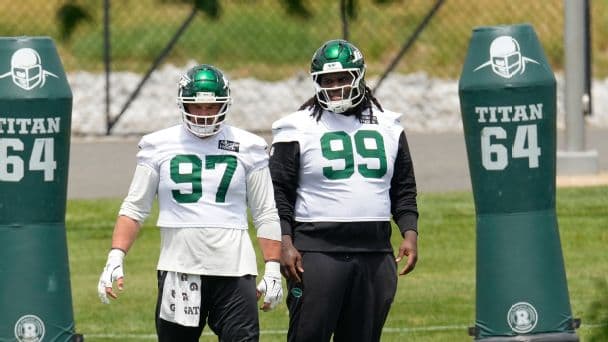
The New York Jets have made a clear statement this offseason: size matters. Head coach Aaron Glenn has orchestrated a strategic shift toward adding mass and physicality to his roster, emphasizing the need to compete in what he calls a "big man's game." The move represents a deliberate response to years of being physically overmatched, particularly on the defensive side of the ball.
Aaron Glenn's Philosophy: Building a Physical Jets Team
Glenn made his philosophy crystal clear during Wednesday's session, stating "It's a big man's game, and will always be a big man's game," adding that having "large men that have the ability and agility that those guys have, it only makes us better as a team." For a former cornerback who was listed at just 5'8" and 185 pounds, Glenn's focus on getting bigger players is something of a unique experience.
The emphasis was significant for the coaching staff, with Glenn noting "That was a big emphasis for us," specifically highlighting the need for "not only big men but big men that can move." This approach signals a fundamental shift in how the Jets plan to build their roster moving forward.
T'Vondre Sweat Acquisition Highlights Size Strategy
The biggest player brought in to the team this offseason by New York was nose tackle T'Vondre Sweat, a former Texas product acquired in a trade with the Titans. Sweat, a 6-foot-4, 366-pound beast, adds beef to the middle of Aaron Glenn's defense, which struggled against the run.
Sweat finished fifth among interior defensive linemen in Pro Football Focus grades and was the fourth-best player in his role at stopping the run last season. As part of the deal, New York gave away edge rusher Jermaine Johnson to the Titans. The trade made sense for both sides, as the former Jets head coach Robert Saleh now leads Tennessee.
Addressing Years of Physical Deficiencies
At times over the years, it has felt like the Jets have been pushed around on defense when it has mattered most, with cornerbacks struggling against physical receivers, edge rushers unable to set the edge against monster tackles, and defensive tackles pushed back at alarming rates. The new emphasis on size directly addresses these longstanding concerns.
During free agency, the Jets franchise tagged running back Breece Hall, acquired veteran T'Vondre Sweat via trade, signed linebacker Demario Davis and traded for five-time Pro Bowl safety Minkah Fitzpatrick. Each of these moves reflects the team's commitment to adding not just talent, but physicality across the roster.
Braelon Allen and the Offensive Size Component
The emphasis on size extends beyond the defensive side of the ball. The big question for the running back group is whether Allen can stay healthy, as the former fourth-round selection had his 2025 campaign cut short in Week 4 because of an MCL injury, but should the bruiser be on the field a lot this year, New York will add a new dynamic to their offense that they simply haven't had.
With Glenn's focus on being a running team, the idea of keeping a powerful back like Allen on the roster aligns perfectly with the overall philosophy. The Jets are clearly building an identity centered around physical dominance in the trenches and at key positions.
The Road Ahead for the Jets
Despite going 3-14 in his first season as the Jets head coach, Glenn and general manager Darren Mougey are confident in a quick turnaround. The aggressive offseason moves demonstrate their commitment to competing immediately rather than accepting a prolonged rebuild.
The hope for New York is that their size issue won't be a concern anymore: that they can match up physically with teams across the league. With additions like T'Vondre Sweat anchoring the middle of the defense, Demario Davis providing veteran leadership at linebacker, and Braelon Allen offering power in the backfield, the Jets have put their money where their mouth is when it comes to building a bigger, more physical football team.
As the 2026 season approaches, the Jets' transformation under Aaron Glenn will be put to the test. The "big man's game" philosophy represents more than just a catchphrase—it's a comprehensive roster construction strategy designed to end years of being physically dominated. Whether it translates to wins on the field remains to be seen, but the Jets have certainly made their intentions clear.
Sources & Original Reporting