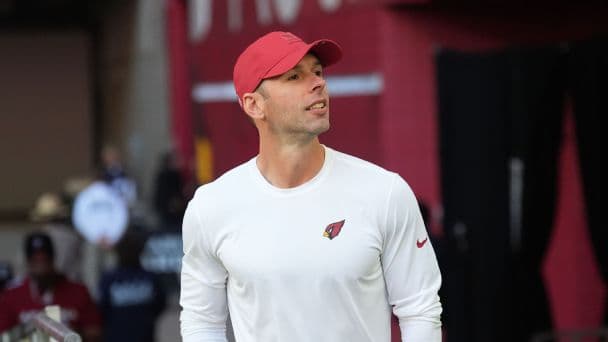
The Green Bay Packers are entering a transformative era on the defensive side of the ball, and it starts with a fundamental shift in philosophy. When Matt LaFleur hired Jonathan Gannon as the team's new defensive coordinator, fans and analysts immediately began speculating whether the team would transition to a 4-3 base or stick with the 3-4 alignment that has defined the frozen tundra for years. However, the Jonathan Gannon Packers defense won't be defined by numbers on a depth chart or rigid positional labels. Instead, Gannon is bringing a philosophy that prioritizes performance and adaptability over traditional structural norms.
The Death of the 3-4 vs. 4-3 Debate
For decades, NFL defenses were neatly categorized into two buckets: the 3-4 and the 4-3. In Green Bay, these labels have often been the subject of intense scrutiny from a fan base eager for a more aggressive identity. But according to Gannon, those distinctions are becoming increasingly irrelevant in the modern NFL. Rather than declaring a definitive scheme, Gannon is focused on how the unit functions as a cohesive, moving part.
Gannon’s approach is rooted in the reality of today’s game, where teams spend the vast majority of their snaps in sub-packages like nickel and dime. By refusing to label the Jonathan Gannon Packers defense as a specific scheme, the coordinator is signaling a move toward a more fluid, situational strategy. The goal is simple: put the best eleven players on the field and allow their specific skill sets to dictate the look of the defense, rather than forcing those players into a pre-existing mold.
Performance Over Personnel Labels
One of the most striking aspects of Gannon’s introductory philosophy is his refusal to get bogged down in terminology. To Gannon, the question isn't whether a player is an outside linebacker or a defensive end; it’s whether that player can disrupt the quarterback and hold their gap in the run game. This performance-centric model is designed to maximize the talent currently on the Packers' roster.
- Versatility: Players will be expected to learn multiple roles to keep offenses guessing.
- Production: Success will be measured by efficiency metrics and takeaways rather than adherence to a playbook.
- Matchup Focus: The scheme will change weekly based on the opponent's weaknesses.
By focusing on how the defense performs rather than how it is "dubbed," Gannon aims to eliminate the hesitation that often plagues players in complex, rigid systems. When players aren't worried about whether they are technically in a 3-4 or 4-3 alignment, they can play faster and more instinctively.
The "Micah Parsons" Blueprint for Versatility
While Gannon is focused on the talent in the Green Bay locker room, the league-wide trend toward positionless defenders is impossible to ignore. Elite defensive weapons like Micah Parsons have proven that the most valuable players in the league are those who cannot be easily categorized. Parsons effectively functions as a hybrid who can rush from the edge, stack in the box, or drop into coverage, making him a nightmare for offensive coordinators to account for in their protection schemes.
Gannon’s vision for the Packers involves finding and developing that same level of multi-faceted utility. By not tethering the defense to a specific scheme, Gannon creates a vacuum where a player’s individual strengths can shine. If a defensive lineman has the lateral quickness to stunt inside or the bend to win on the outside, Gannon’s "schemeless" approach ensures that player will be utilized in both capacities.
Building a Culture of Adaptability
The decision to move away from a named scheme is also a strategic move by Matt LaFleur to modernize the team's culture. In previous seasons, the Packers' defense has occasionally struggled to adjust when their primary plan was neutralized. Gannon’s philosophy is built-in with a secondary plan; because the system is fluid by design, adjustments are a feature, not a bug.
This level of adaptability is crucial in an NFC North division that features diverse offensive attacks. From the high-flying passing games to physical, run-heavy schemes, the Packers need a defense that can transform itself from week to week. Gannon’s focus on performance over identity ensures that the team won't be caught trying to fit a square peg into a round hole when the postseason push begins.
What Fans Should Expect This Fall
As the Packers head into training camp, don't expect to see a static defensive front. Instead, look for a variety of looks that emphasize speed and disruption. The Jonathan Gannon Packers defense will likely look different in the first quarter than it does in the fourth, and that is exactly the point. In Gannon's world, the only label that matters is "winner."
Sources & Original Reporting