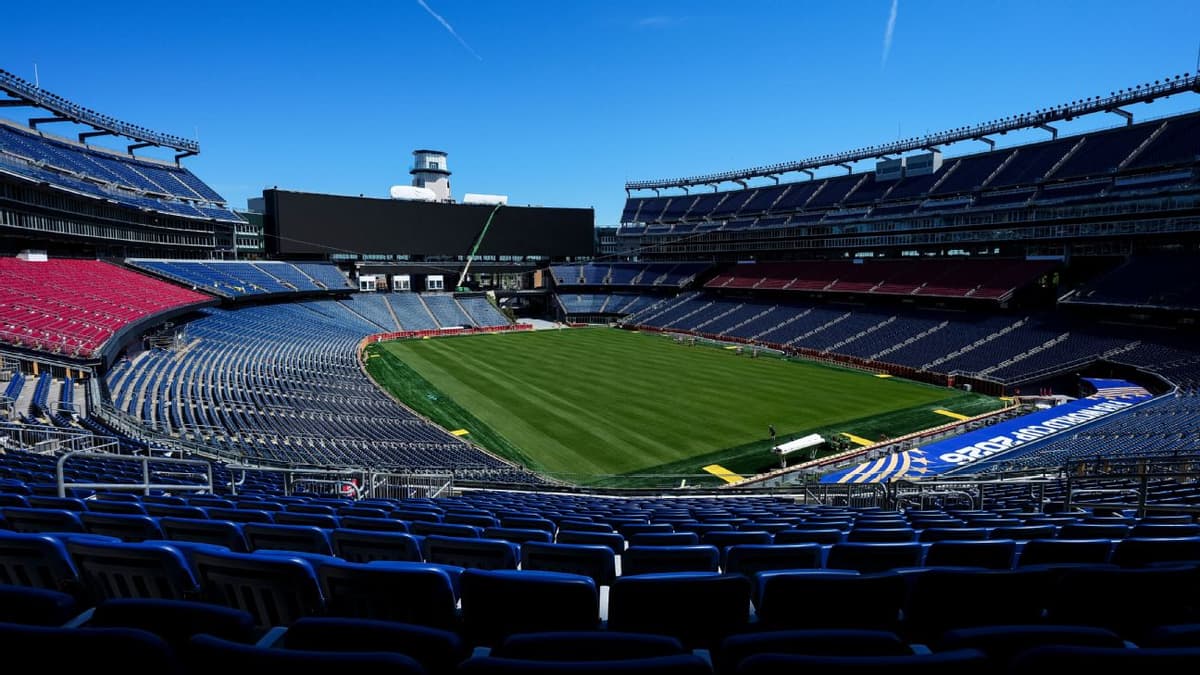
The long-standing relationship between the New England Patriots and their home town has hit a significant legal snag. On Tuesday, Kraft Sports & Entertainment and the New England Patriots officially filed a lawsuit against the town of Foxborough, Massachusetts. The legal action centers on a dispute regarding nearly $1 million in security-related fees tied to the annual renewal of the entertainment license for Gillette Stadium.
Details of the Kraft Sports & Entertainment Lawsuit
The Kraft Sports & Entertainment lawsuit marks a rare public confrontation between the organization and local officials. According to the filing, the dispute arises from the costs associated with police and security details required for the stadium to operate. Gillette Stadium, which serves as the home for both the New England Patriots of the NFL and the New England Revolution of MLS, requires an annual entertainment license to host its full slate of professional sports, concerts, and special events.
The core of the legal complaint involves nearly $1 million in fees that the town has reportedly sought to collect as part of the licensing process. Kraft Sports & Entertainment (KSE) contends that these security-related charges are inconsistent with existing agreements or are otherwise unjustified under the current regulatory framework. As the primary economic engine for the region, the stadium's operations are vital to the local economy, making this financial standoff a high-stakes matter for both the town and the Kraft family.
The Role of the Entertainment License at Gillette Stadium
In the state of Massachusetts, large-scale venues like Gillette Stadium must secure an entertainment license from the local municipality. This license is not merely a formality; it dictates the parameters under which the venue can host thousands of fans, including requirements for traffic control, public safety, and police presence. The Kraft Sports & Entertainment lawsuit suggests that the costs being levied by Foxborough for these services have become a point of contention that could no longer be resolved through standard negotiations.
For the New England Patriots and the New England Revolution, the entertainment license is the lifeblood of their home-field advantage. Without it, the stadium cannot legally host the massive crowds that flock to Foxborough every autumn for NFL Sundays or throughout the summer for MLS matches. The lawsuit aims to clarify the financial responsibilities of the Kraft Group versus the town's authority to impose security-related assessments.
Impact on the New England Patriots and New England Revolution
While the legal battle unfolds in the courts, fans of the New England Patriots and New England Revolution are left wondering how this might affect their game-day experience. Currently, there is no indication that the lawsuit will disrupt scheduled events at Gillette Stadium. However, the tension highlights the complexities of managing a world-class sports venue within a smaller suburban town.
The Kraft Group has historically maintained a collaborative relationship with Foxborough, often investing in local infrastructure and community programs. This lawsuit indicates a significant shift in that dynamic, as the organization seeks to protect its interests against what it perceives as excessive municipal fees. The outcome of this case could set a precedent for how security costs are allocated for other major venues across the Commonwealth.
Historical Context of the Foxborough Partnership
The Patriots have called Foxborough home since 1971, originally playing at Schaefer Stadium (later Sullivan Stadium and Foxboro Stadium) before moving into the privately financed Gillette Stadium in 2002. Throughout this half-century tenure, the town and the team have navigated numerous agreements regarding land use, noise ordinances, and public safety. The current dispute over nearly $1 million in fees is one of the most significant financial disagreements in recent memory between the two parties.
As the legal process moves forward, both Kraft Sports & Entertainment and the town of Foxborough will likely be required to present detailed accounting of security expenditures and the specific language of their long-term operating agreements. For now, the focus remains on the $1 million figure and the future of the licensing process that keeps the lights on at one of the NFL's most iconic venues.
Sources & Original Reporting