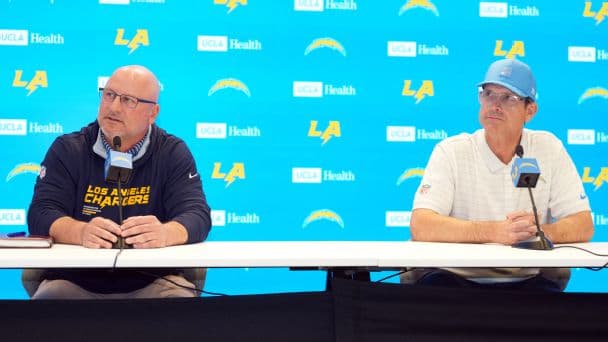
The 2025 NFL season has officially come to a close, and for the Bolts, the focus shifts immediately to a pivotal Los Angeles Chargers 2026 offseason. After a year of searching for consistency and identity under the current coaching staff, the front office faces a series of high-stakes decisions that will define the franchise's trajectory for the remainder of the decade. With free agency looming and the draft board beginning to take shape, the Chargers must navigate a complex landscape of veteran contracts and underperforming assets to ensure they remain competitive in an increasingly difficult AFC West. The decisions made in the coming weeks will determine whether Justin Herbert has the supporting cast necessary to lead this team back to the postseason.
The Offensive Line Dilemma: Moving on from Mekhi Becton
One of the most pressing issues for the Chargers this spring involves the offensive line, specifically the future of Mekhi Becton. While Becton was initially brought in with the hope of providing elite protection for Herbert, the reality of the 2025 season was far different than the initial expectations. Throughout the campaign, Becton was moved inside to play Right Guard, a transition that proved difficult for the massive veteran. Rather than stabilizing the interior, Becton struggled to adapt to the technical requirements of the position.
Statistically, Becton was one of the lowest-graded blockers in the entire league during the 2025 season. His struggles in pass protection and a lack of consistency in the run game have turned what was once a potential long-term solution into a major liability. As the Los Angeles Chargers 2026 offseason begins, Becton is no longer viewed as a player the team is looking to extend. Instead, current data identifies him as a likely salary cap casualty. Cutting ties with Becton would allow the Chargers to recoup valuable cap space to address an offensive line that desperately needs a more consistent and reliable presence to protect their franchise quarterback.
Veteran Leadership vs. Retirement: The Khalil Mack Status
On the defensive side of the ball, the primary question revolves around the legendary Khalil Mack. Mack has been the heartbeat of the Chargers' pass rush, providing not only consistent pressure on opposing quarterbacks but also a veteran presence in the locker room that is difficult to quantify. However, as the 2026 offseason begins, the front office faces a multifaceted dilemma regarding his future with the team. Mack’s contract status is a significant factor in roster construction, but it is no longer the only one on the table.
At this stage of his career, retirement is a primary factor in Mack's 2026 status alongside his contract. The Chargers must weigh the benefits of his leadership against his potential departure from the game or the need for younger, more explosive edge rushers. In a division that features high-octane offenses like the Kansas City Chiefs, the pass rush is the engine that drives the defense. Whether Mack decides to hang up the cleats or the team pursues a short-term extension to lower his immediate cap hit, the resolution of his status will be a defining moment of the Los Angeles Chargers 2026 offseason. Keeping a player of his caliber requires creative financial maneuvering, and the team must have a contingency plan in place should he choose to walk away.
Financial Flexibility and 2026 Free Agency Strategy
Beyond individual player personnel, the third major question facing the Chargers is how they will utilize their available cap space to fill depth holes. The front office has worked diligently to clean up the balance sheet over the last two years, but the 2026 free agency period presents a unique set of challenges. The team needs to address depth at several key positions to truly compete for a deep postseason run. The Los Angeles Chargers 2026 offseason isn't just about retaining talent; it's about strategic acquisition and finding players who fit the team's evolving defensive and offensive schemes.
Secondary Depth
Finding a ball-hawking safety to complement the existing cornerback room is a top priority. The Chargers need to improve the team's turnover margin, and adding a veteran playmaker in the secondary could provide the stability needed to prevent big plays. A versatile safety who can play both in the box and in deep coverage will be a primary target during the early stages of the free agency period.
Interior Pressure
Adding a disruptive force at defensive tackle is another critical need for the defense. The Chargers have lacked a consistent interior push, which has allowed opposing quarterbacks to step up in the pocket and negate the effectiveness of the edge rushers. A stout defensive tackle who can also stifle the run game would transform the front seven's effectiveness and take the pressure off the outside linebackers.
Playmaking Weapons
Continuing to surround Justin Herbert with versatile targets remains a non-negotiable goal. Whether it is a reliable slot receiver or a vertical threat who can win in the red zone, the Chargers need more explosive plays to keep pace with the rest of the AFC. The front office's ability to identify "value" signings—players who can contribute immediately without breaking the bank—will be the difference between a good roster and a championship-caliber one.
Conclusion: A Crossroads for the Bolts
As the offseason unfolds, the answers to these three big questions will provide a roadmap for the team's future. The Los Angeles Chargers 2026 offseason promises to be one of the most active and consequential in recent memory. By addressing the underperformance on the offensive line, navigating the potential retirement of a defensive icon, and strategically using their cap space to build depth, the Chargers can finally solidify themselves as a perennial powerhouse. The synergy between free agency and the upcoming draft will be the cornerstone of their success, and the front office must be decisive to maximize the prime years of their elite quarterback.
Sources & Original Reporting