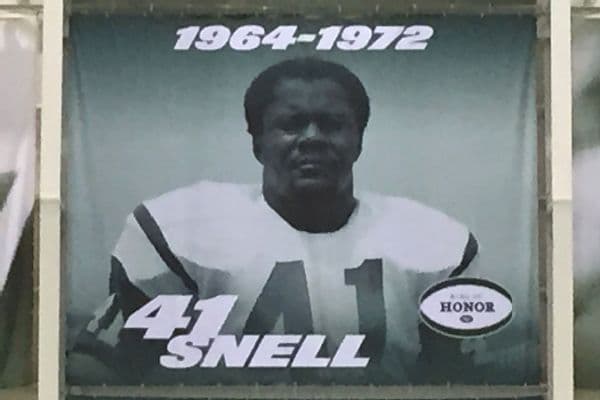
The New York Jets community and the wider NFL world are mourning the loss of a true gridiron icon. Matt Snell, the powerhouse fullback who played a pivotal role in one of the greatest upsets in sports history, passed away on Tuesday at the age of 84. According to team statements and reports from ESPN, Snell died of natural causes.
While Joe Namath’s famous "guarantee" often dominates the narrative of Super Bowl III, those who watched the game know that it was Matt Snell who served as the engine of the New York Jets' offense that day. His physical running style and relentless determination helped secure the franchise's only championship, cementing his place in the pantheon of New York sports legends.
The Hero of Super Bowl III
On January 12, 1969, the New York Jets entered Super Bowl III as massive 18-point underdogs against the Baltimore Colts. While the AFL was still fighting for respect against the established NFL, Matt Snell provided the proof that the younger league belonged on the big stage. Snell was the workhorse of the Jets' attack, carrying the ball 30 times for 121 yards.
Most importantly, Snell scored the only touchdown of the game for the Jets. In the second quarter, he powered through the Colts' defense for a 4-yard touchdown run, giving New York a lead they would never relinquish. His ability to move the chains and exhaust the Baltimore defense allowed the Jets to control the clock and validate Namath’s bold prediction with a 16-7 victory. To this day, Snell’s performance remains one of the most statistically dominant rushing displays in Super Bowl history.
A Decorated AFL and NFL Career
Before he was a Super Bowl hero, Matt Snell was a highly touted prospect out of Ohio State, where he played under the legendary Woody Hayes. In 1964, he was a first-round draft pick for the Jets in the AFL Draft (and a fourth-round pick for the New York Giants in the NFL Draft). Choosing the Jets proved to be a franchise-altering decision.
Snell made an immediate impact, earning AFL Rookie of the Year honors in 1964 after rushing for 948 yards and five touchdowns. His versatility was ahead of its time; he was not only a bruising runner but also a capable receiver out of the backfield, hauling in 56 passes for 393 yards in his debut season. Over the course of his career, Snell was selected to three Pro Bowls (1964, 1966, and 1969) and was a consistent force in the Jets' backfield for nine seasons.
Despite battling knee injuries later in his career—injuries that would have ended the careers of lesser players in that era—Snell remained a productive member of the roster until his retirement following the 1972 season. He finished his professional career with 4,285 rushing yards, 24 rushing touchdowns, and nearly 200 receptions.
Legacy in New York and Beyond
The impact of Matt Snell extends far beyond the stat sheet. He was a cornerstone of the 1960s Jets teams that helped bridge the gap between the AFL and the NFL during the merger era. His toughness and blue-collar work ethic resonated with the New York fan base, earning him a spot in the Jets Ring of Honor in 2015.
In the years following his retirement, Snell remained a respected figure in the community, though he often shied away from the bright lights of the media. He was known as a man of few words who let his play on the field speak for itself. His teammates often spoke of him with immense reverence, noting that while Namath provided the flash, Snell provided the substance that made the Jets champions.
Matt Snell is survived by a legacy that includes one of the most important touchdowns in professional football history. As the Jets and their fans reflect on the 1968 championship season, Snell’s contributions as a premier fullback and a champion will never be forgotten. He remains a symbol of an era where grit and determination could topple giants.
Sources & Original Reporting