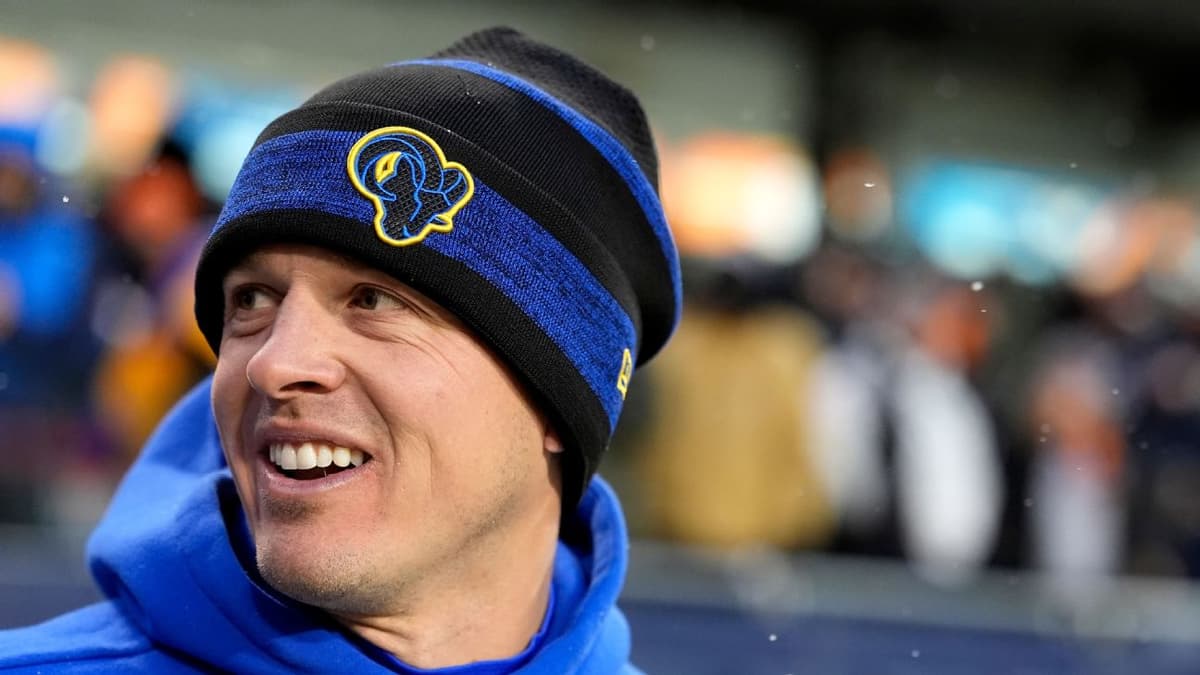
The Arizona Cardinals have officially signaled a new direction for their franchise, turning to one of the most respected offensive minds in the league to lead them into the future. The Mike LaFleur hire represents a calculated gamble on pedigree and scheme, as the former Los Angeles Rams offensive coordinator makes the move to the desert. With a roster that features elite individual talent but lacks a consistent identity, the Cardinals are betting that LaFleur’s experience under Sean McVay can finally unlock the full potential of their franchise cornerstones.
Analyzing the Mike LaFleur Hire: The McVay Connection
In the modern NFL, few credentials carry as much weight as being a branch of the Sean McVay coaching tree. By securing the services of the former Rams coordinator, Arizona gains a play-caller who has spent years at the forefront of offensive innovation. LaFleur arrives in Arizona after a highly successful stint in Los Angeles, where he helped revitalize an offense that had struggled following their Super Bowl run. He is known for a scheme that prioritizes pre-snap motion, heavy usage of play-action, and creating mismatches through creative personnel groupings.
This strategic move suggests that the front office wanted a leader who could modernize an attack that often felt stagnant or overly reliant on individual brilliance. By bringing in a coach who has seen how a championship-level offense operates from the inside, the Cardinals are hoping to replicate that efficiency and explosive playmaking ability. The focus will be on creating a system where the scheme does the heavy lifting, rather than forcing the players to win strictly on 50-50 balls or broken-play scrambles.
The Kyler Murray Factor: Unlocking the Franchise Quarterback
The most pressing question facing the new coaching staff is the development and utilization of Kyler Murray. The dual-threat quarterback remains one of the most polarizing figures in the league, possessing an MVP-level ceiling but occasionally struggling with consistency and health. The arrival of a new offensive architect is specifically designed to build a system that maximizes Murray’s unique athleticism while reducing the physical toll on his body.
Under this new regime, expect to see Murray utilized more in the quick-passing game and on designed rollouts that effectively cut the field in half. The goal will be to provide Murray with clearer reads and more “easy” completions, something that was often missing in previous iterations of the Cardinals' offense. If the coaching staff can get Murray to buy into a more structured, timing-based system, the ceiling for this offense rises exponentially. The marriage between Murray’s off-script playmaking and LaFleur’s structured design could be the most dangerous combination in the NFC West.
Maximizing Marvin Harrison Jr. and the Skill Positions
Beyond the quarterback, the decision to bring in LaFleur is a massive win for Marvin Harrison Jr.. The rookie phenom showed flashes of greatness last season, but at times he seemed underutilized in critical situations. LaFleur’s history suggests he knows how to feed a WR1; during his time with the Rams and Jets, he consistently found ways to get his best playmakers the ball in space.
Increasing Target Volume and Efficiency
Expect Harrison Jr. to see a significant uptick in targets, particularly on crossing routes and deep overs that are staples of the McVay-style offense. The goal is to move the star receiver into positions where he can use his frame and speed against smaller defensive backs, rather than just lining up on the boundary every snap.
Strategic Positional Flexibility
The new offensive scheme will likely move Harrison Jr. around the formation, using him in the slot and as a “Z” receiver to force defensive mismatches. This prevents defenses from simply shading a safety over the top of him. By creating “gravity” with Harrison Jr., the Cardinals will also open up lanes for their young tight ends and complementary receivers, who will benefit from the attention the primary target commands.
Grading the Hire: Why This Move Makes Sense Now
When grading the Mike LaFleur hire, it is hard not to view it as a B+ or A- move. While he has not yet been a head coach at the NFL level, his trajectory has been consistently upward. He has worked under both Kyle Shanahan and Sean McVay—the two most influential offensive minds of the current era. This background gives him a tactical advantage over many veteran retreads who have cycled through the league.
The risk, of course, lies in the transition to the top job. Being a head coach involves much more than designing a 3rd-and-short conversion. The new leader will need to manage a locker room, oversee a defensive unit that has its own set of problems, and handle the intense media scrutiny that comes with the role. However, in terms of purely football-centric decision-making, this is exactly the type of hire a team with an elite QB and a young star WR should make to ensure they don't waste the prime years of their talent.
Eyeing What’s Next for the Arizona Cardinals
With the coaching staff beginning to take shape, the organization's focus now shifts to the roster. The new head coach will likely have a significant say in personnel decisions, particularly regarding the offensive line and backfield. The team needs to ensure they have the “heavy” personnel required to run the wide-zone schemes that are a staple of this system. This may mean looking for more mobile linemen who can reach the second level of the defense effectively.
As the offseason progresses, the NFL world will be watching to see how the defensive staff is filled out. While the hire was made for offensive prowess, the Cardinals' defense was a major liability last year. If the team can pair this offensive vision with a competent, aggressive defensive coordinator, Arizona could quickly become the dark horse of the NFC. The transition is the first step in what fans hope is a rapid ascent back to playoff contention and relevancy in a crowded conference.
Sources & Original Reporting