For years, the Minnesota Vikings have enjoyed a level of stability at the skill positions that most NFL franchises would envy. From legendary pass-catchers to workhorse backs, the roster has rarely lacked top-tier talent. However, as the focus shifts toward the future, the front office faces a rare and pressing challenge. For the first time in recent memory, the Minnesota Vikings Draft strategy must prioritize rebuilding depth at both wide receiver and running back to sustain their offensive momentum.
The Search for a Secondary Threat Behind Justin Jefferson
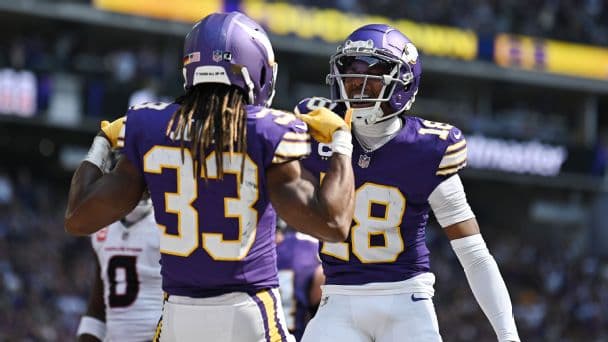
While Justin Jefferson remains the undisputed focal point of the Vikings' aerial attack and one of the premier talents in the league, the supporting cast surrounding him has become a point of concern. Jefferson’s ability to draw double coverage and dictate defensive schemes is legendary, but the team requires a consistent, reliable threat to punish defenses that over-commit to the All-Pro receiver. The lack of established depth behind the starters has created a bottleneck that the organization is eager to address.
The 2026 draft presents a critical opportunity for Minnesota to find a young, cost-controlled talent who can grow alongside their current core. According to recent reports, the team is looking to move away from patchwork veteran solutions and toward a more sustainable long-term model at the WR2 and WR3 spots. Ensuring that the offense does not become one-dimensional is paramount for the coaching staff as they look to maintain their standing in a competitive NFC North.
Evaluating the Backfield: Planning for Life After Aaron Jones Sr.
The running back position is also under the microscope as the team evaluates its long-term health. Aaron Jones Sr. has provided veteran leadership and explosive playmaking since joining the squad, but the reality of the NFL’s "running back clock" is unavoidable. As Jones enters the later stages of his career, the Vikings need to identify a successor who can handle the physical toll of a 17-game season while providing the versatility required in Kevin O'Connell's system.
The mention of high-caliber runners like Jordan Mason in league-wide discussions highlights the type of physical, reliable runner the Vikings might be targeting. Whether through a high-round selection or a strategic mid-round pick, the 2026 draft will likely see Minnesota invest heavily in the ground game to ensure they have a viable "Plan B" and a future "Plan A." The goal is to find a player who can offer both pass-protection reliability and home-run hitting ability out of the backfield.
A Necessary Shift in Draft Philosophy
Historically, the Vikings have often used their high-value draft capital to bolster the offensive line or the defensive secondary. However, the current roster construction necessitates a pivot. The "skill position vacuum" that has slowly formed behind their primary starters is no longer something the front office can ignore if they want to remain Super Bowl contenders.
Key Objectives for the 2026 Draft:
- Decreasing reliance on aging veterans: Moving toward younger, more durable options at high-impact positions.
- Increasing the "explosiveness" quotient: Finding players who can create yards after the catch or after contact.
- Securing insurance policies: Protecting the offense against potential injuries to high-usage starters like Jefferson.
By targeting these positions early in the Minnesota Vikings Draft process, the team aims to ensure that their offense remains multi-dimensional. This strategy prevents opponents from simply "bracketing" Jefferson and daring the rest of the roster to win individual matchups. As the 2026 draft cycle begins to take shape, all eyes will be on how Minnesota balances these immediate depth needs with their long-term vision for the franchise.
Sources & Original Reporting