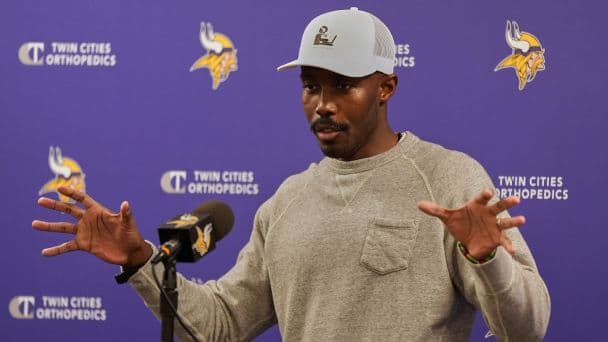
The "competitive rebuild" era in the Twin Cities has officially come to an end. In a move that signals a major restructuring of the franchise's leadership, the Minnesota Vikings fire GM Kwesi Adofo-Mensah after four seasons at the helm. The decision, announced by the Wilf family, marks the conclusion of an ambitious experiment that attempted to blend Wall Street analytics with traditional football operations, a gamble that ultimately failed to produce the consistent postseason success the organization craves.
The Immediate Catalyst: A 9-8 Finish and Missed Playoffs
While the decision to move on from a general manager is rarely based on a single season, the results of the 2025 campaign served as the final straw for Vikings ownership. The team finished the year with a 9-8 record, a mediocre result that saw Minnesota once again watching the postseason from the sidelines. Despite flashes of potential and a roster featuring high-end talent, the inability to secure a playoff berth in a competitive NFC North proved to be the breaking point.
The 2025 season was viewed as a critical pivot point for the franchise. After moving on from veteran quarterback Kirk Cousins the previous year, the pressure was on the front office to prove that the roster was deep enough to support a transition. Instead, the team struggled with consistency, particularly in the trenches and on the defensive side of the ball—areas where draft-day investments failed to yield the expected returns. This lack of progress led directly to the decision that the Minnesota Vikings fire GM Kwesi Adofo-Mensah before the start of the 2026 offseason cycle.
Reflecting on Four Seasons of the "Competitive Rebuild"
When Kwesi Adofo-Mensah was hired in 2022, he brought an unconventional background to the role, having transitioned from a career in commodities trading to NFL executive roles. He famously coined the term "competitive rebuild" to describe his philosophy: staying relevant in the playoff race while simultaneously clearing the books of expensive, aging veterans. Over his four-season tenure (2022, 2023, 2024, and 2025), this philosophy was put to the ultimate test.
His tenure began with a flourish in 2022, as the Vikings notched 13 wins and an NFC North title. However, that success was largely viewed through the lens of a historic 11-0 record in one-score games—a statistical anomaly that masked deeper roster issues. As those close games began to swing the other way in subsequent seasons, the talent gaps created by several underwhelming draft classes became impossible to ignore. The "big swing" ownership took on an inexperienced executive ultimately missed the mark in terms of long-term roster sustainability.
Drafting Struggles and the Future of JJ McCarthy
Perhaps the most significant criticism of Adofo-Mensah’s time in Minnesota was his track record in the NFL Draft. His inaugural 2022 class, headlined by safety Lewis Cine and cornerback Andrew Booth Jr., failed to provide the foundational defensive starters the team desperately needed. While the 2023 addition of Jordan Addison was a bright spot, the overall hit rate on mid-to-late round picks remained low, forcing the team to rely heavily on expensive free-agent acquisitions.
The most pivotal move of his tenure, however, was the selection of quarterback JJ McCarthy. The franchise’s future is now inextricably linked to the young signal-caller's development. By deciding to fire GM Kwesi Adofo-Mensah now, the Vikings are essentially looking for a new architect to build around McCarthy. The next general manager will inherit a team with a franchise quarterback prospect but a roster that still requires significant fortification to compete with the elite of the NFC.
The Transition Plan: Rob Brzezinski Takes the Reins
In the wake of the firing, the Vikings have established a clear transition plan to ensure stability heading into a crucial offseason. Executive Vice President of Football Operations Rob Brzezinski has been named the interim lead for football operations. Brzezinski, a long-time fixture in the Vikings' front office known for his expertise in salary cap management and contract negotiations, will oversee the department through the 2026 NFL Draft.
This move provides the Wilfs with a steady hand during the scouting and free-agency periods while they conduct a comprehensive search for a permanent replacement. Brzezinski’s deep knowledge of the current roster and the league's financial landscape makes him a logical choice to bridge the gap. The search for a new permanent GM will likely focus on candidates who can maintain a strong collaborative relationship with head coach Kevin O'Connell, who remains in place despite the front office shakeup.
What’s Next for the Minnesota Vikings?
As the Vikings move forward, the priorities for the front office are clear. The organization must improve its talent evaluation process to maximize the remaining years of their stars' primes and the rookie contract window of JJ McCarthy. The following goals will be paramount for the incoming regime:
- Establishing a more consistent and productive drafting strategy.
- Solidifying the offensive and defensive lines to provide a physical identity.
- Ensuring the infrastructure around the young quarterback is elite.
- Moving beyond the "middle-ground" results of the last four years.
The decision to fire GM Kwesi Adofo-Mensah is a sobering admission that the previous strategy did not meet the franchise's high standards. With a new leadership search underway and Brzezinski at the helm for the immediate future, the Vikings are once again at a crossroads, searching for the right leader to finally deliver a championship to Minnesota.
Sources & Original Reporting