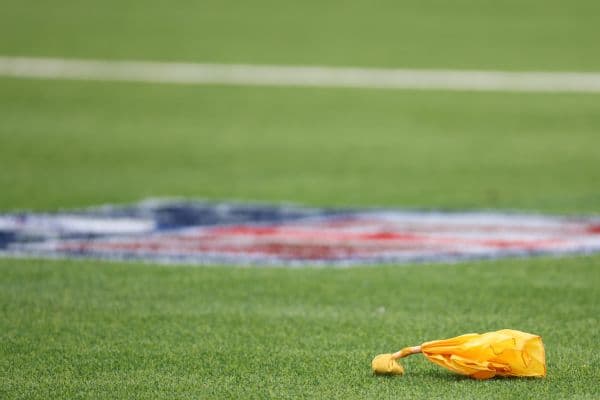
In a move that could fundamentally alter the landscape of professional football officiating, the NFL competition committee is currently weighing a proposal that would grant unprecedented power to the league's booth-based officials. According to league sources, the committee is discussing the possibility of authorizing NFL replay officials to throw penalty flags for non-football acts that are missed by the seven-man crew on the field.
This potential rule change represents a significant shift in the league's officiating philosophy. For decades, the authority to penalize players resided exclusively with the officials physically present on the turf. However, as the speed of the game increases and the scrutiny from high-definition broadcast cameras intensifies, the league is looking for ways to ensure that egregious violations do not go unpunished simply because they occurred outside the immediate view of a field judge or referee.
Defining Non-Football Acts and Replay Authority
The primary focus of this discussion involves what the league categorizes as "non-football acts." While standard penalties like holding, pass interference, or offsides require a level of subjective judgment regarding the flow of the play, non-football acts are often more objective and occur after the whistle or away from the ball. These include actions such as punching, kicking, or other forms of fighting, as well as late hits that clearly fall outside the boundaries of standard physical play.
Under the current system, NFL replay officials have a limited scope of influence. They can assist with objective rulings such as ball placement, whether a player stayed in bounds, or if a catch was completed before the ball hit the ground. They also participate in the "expedited review" process to correct clear and obvious errors regarding clock management or the spot of a foul. However, they do not currently have the authority to initiate a penalty for a foul that was not called on the field. The new proposal would bridge that gap, allowing the "eye in the sky" to intervene when a player commits a dangerous or unsportsmanlike act that the on-field crew missed.
The Evolution of the NFL Replay Official Role
The role of the replay booth has expanded incrementally over the last several seasons. The NFL has gradually moved toward a more collaborative officiating model where the Replay Assistant and the officiating department in New York provide real-time feedback to the crew on the ground. This evolution has been driven by a desire to reduce the number of game-altering errors and to utilize the vast array of camera angles available in the modern era.
By allowing NFL replay officials to flag non-football acts, the league aims to eliminate the frustration felt by fans, coaches, and players when a blatant violation is visible to millions of television viewers but remains unpenalized during the game. Such incidents often result in post-game fines or suspensions issued by the league office, but those retrospective punishments do nothing to rectify the immediate impact the foul may have had on the game's momentum or player safety.
Balancing Game Flow and Officiating Accuracy
One of the primary concerns for the NFL competition committee during these discussions is the potential impact on the pace of play. The league has worked hard to keep game times manageable and to avoid excessive stoppages that can frustrate the viewing audience. There is a delicate balance between getting every call right and maintaining the rhythmic flow of a professional football game.
To mitigate these concerns, the proposal specifically targets non-football acts rather than subjective fouls like holding. Because acts like fighting or late hits are generally clear-cut and do not happen on every snap, the committee believes the intervention from the booth would be infrequent enough to avoid disrupting the game's tempo. The goal is to provide a safety net for the most egregious violations rather than turning the replay official into a "virtual eighth official" who scrutinizes every nuance of every play.
Next Steps for the Competition Committee
The NFL competition committee, which consists of various owners, general managers, and head coaches, meets annually to review the state of the game and propose rule changes for the upcoming season. For this proposal to become an official rule, it must be formally presented to the NFL team owners and receive at least 24 votes of approval (a three-quarters majority) from the 32 clubs.
As the league continues to navigate the intersection of technology and traditional officiating, this proposal serves as a testament to the NFL's commitment to player safety and competitive integrity. Whether the owners will embrace this expansion of booth power remains to be seen, but the discussion itself highlights a growing consensus that the league must utilize all available tools to ensure the rules are enforced fairly and accurately.
If passed, this rule change would mark one of the most significant adjustments to the replay system since its inception, further integrating technology into the live officiating process and ensuring that non-football acts have no place on the field, regardless of whether a flag is thrown from the sideline or the booth.
Sources & Original Reporting