In the high-stakes world of professional football, the venues that host the games are often as iconic as the players themselves. From the frozen tundra of historic landmarks to the climate-controlled glass palaces of the modern era, the landscape of professional football is a mix of architectural history and futuristic luxury. For fans and historians alike, the oldest NFL stadiums represent the soul of the sport, offering a tangible link to the league's storied past while highlighting the rapid evolution of the fan experience.
The Historic Icons: The Oldest NFL Stadiums Still in Use
When discussing the oldest NFL stadiums, the conversation begins and ends with two legendary venues that have become synonymous with the franchises they house. These stadiums have survived multiple eras of the league, undergoing massive renovations to stay viable in the modern age.
Soldier Field (1924) - Chicago Bears
Opening its doors in 1924, Soldier Field in Chicago is the undisputed elder statesman of the league. While the Chicago Bears didn't move there permanently until 1971, the stadium itself has hosted a century of history. A massive renovation in 2003 modernized the interior with luxury suites and updated seating, though the project was controversial for its clash with the original neoclassical colonnades.
Lambeau Field (1957) - Green Bay Packers
The Green Bay Packers have called Lambeau Field home since 1957. Unlike Soldier Field, Lambeau was built specifically for football and has remained the home of the Packers for its entire existence. It is widely considered the "Holy Grail" of NFL venues, maintaining its traditional bowl seating while adding modern amenities through phased renovations over the last two decades.
The Survivors: Stadiums from the 1970s and 1980s
Only a handful of venues remain from the league's massive expansion period in the late 20th century. These stadiums were built during an era where capacity and sightlines were prioritized over the high-tech bells and whistles seen today.
GEHA Field at Arrowhead Stadium (1972) - Kansas City Chiefs
Opened in 1972, Arrowhead Stadium remains one of the most intimidating environments for visiting teams. Known for its record-breaking noise levels, it has stayed relevant through significant upgrades to its concourses and video boards.
Highmark Stadium (1973) - Buffalo Bills
The Buffalo Bills have played at Highmark Stadium since 1973. Famous for its swirling winds and snowy playoff games, it is currently one of the oldest venues without a major structural overhaul, which is why a new stadium is currently under construction nearby.
Caesars Superdome (1975) - New Orleans Saints
An architectural marvel when it opened in 1975, the Caesars Superdome remains a premier destination for Super Bowls and Final Fours. Its iconic roofline is a staple of the New Orleans skyline.
Hard Rock Stadium (1987) - Miami Dolphins
The Miami Dolphins moved into their current home in 1987. While it is nearly 40 years old, a recent $500 million renovation that added an open-air canopy has made it feel like a brand-new facility.
The Expansion Boom: Stadiums of the 1990s
The 1990s saw a shift toward football-specific stadiums as teams looked to move out of multi-purpose venues shared with MLB teams. This era introduced several stadiums that are now considered the "middle class" of the league's inventory.
EverBank Stadium (1995)
The home of the Jacksonville Jaguars opened as Jacksonville Municipal Stadium and has seen several name changes, most recently becoming EverBank Stadium.Bank of America Stadium (1996)
Built for the Carolina Panthers during their inaugural years, this classic open-air stadium remains a fixture in Charlotte.Northwest Stadium (1997)
Formerly known as FedExField, this venue hosts the Washington Commanders and was once the largest stadium in the league by capacity.M&T Bank Stadium (1998)
The Baltimore Ravens moved into this downtown stadium just two years after the franchise was established.Raymond James Stadium (1998)
Home to the Tampa Bay Buccaneers, it is famous for the pirate ship located in the north end zone.Cleveland Browns Stadium (1999)
Built specifically for the return of the Cleveland Browns, this stadium sits on the shores of Lake Erie.Nissan Stadium (1999)
The Tennessee Titans moved here after their relocation from Houston, though a replacement stadium is already in the works.
The Modern Standard: 21st Century Construction
Since the turn of the millennium, the NFL has seen a wave of construction that redefined what a stadium could be. These venues focus on the "fan experience," featuring massive video boards, retractable roofs, and climate control.
The 2000-2009 Era
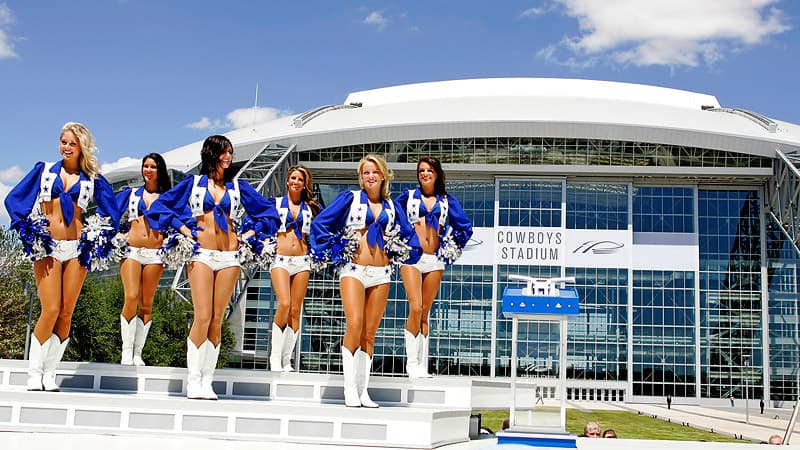
During this decade, the league saw 11 new stadiums open, including Paycor Stadium (2000), Empower Field at Mile High (2001), Acrisure Stadium (2001), Ford Field (2002), Gillette Stadium (2002), Lumen Field (2002), NRG Stadium (2002), Lincoln Financial Field (2003), State Farm Stadium (2006), Lucas Oil Stadium (2008), and the massive AT&T Stadium (2009) in Dallas.
The 2010 to Present Era
The newest stadiums in the league are less like sports arenas and more like entertainment districts. MetLife Stadium (2010), shared by the New York Giants and New York Jets, remains the only stadium to house two NFL franchises until the recent addition of SoFi Stadium. Other modern marvels include Levi’s Stadium (2014), U.S. Bank Stadium (2016), and Mercedes-Benz Stadium (2017).
The Newest Jewels: SoFi and Allegiant (2020)
The two newest venues in the NFL are SoFi Stadium (home to the Los Angeles Rams and Los Angeles Chargers) and Allegiant Stadium (home to the Las Vegas Raiders). Both opened in 2020 and represent the pinnacle of sports architecture, with SoFi Stadium costing an estimated $5 billion to complete.
The Ever-Changing Landscape
The list of the oldest NFL stadiums is constantly in flux. As franchises seek higher revenue through luxury seating and modern technology, the lifespan of a stadium is shorter than ever. While we celebrate the glass and steel of the new era, the history preserved in places like Chicago and Green Bay remains the bedrock of the league's identity. With new builds already underway in Buffalo and Nashville, the average age of an NFL stadium is set to trend even younger in the coming decade.
Sources & Original Reporting