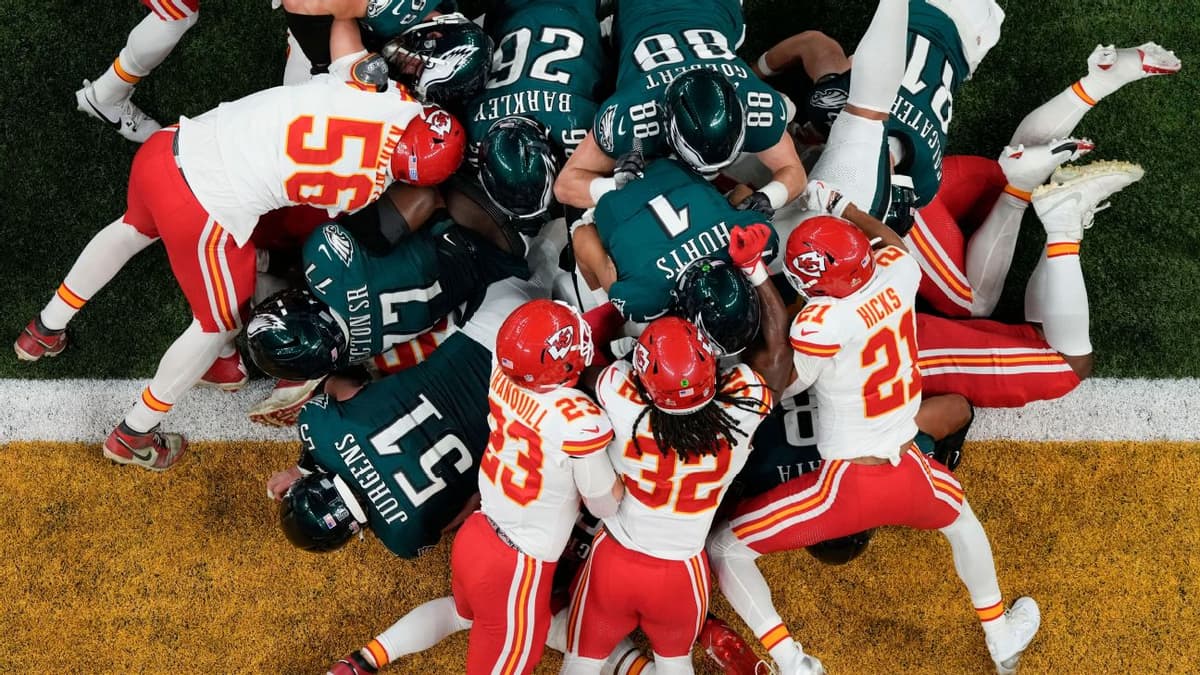
The most debated play in modern professional football has received a temporary reprieve from the league's governing bodies as the league prepares for the 2026 league year. Rich McKay, the NFL competition committee co-chairman, provided a significant update on Sunday regarding the future of the controversial short-yardage maneuver. Despite a 2025 season filled with heated discussions and calls for change, McKay stated that he is not anticipating a tush push ban proposal to be brought forward during this year’s official rule-change deliberations. This confirmation ensures that the play, which has become a staple of short-yardage strategy, will remain legal for the upcoming 2026 season.
The Competition Committee’s Stance on the Tush Push
As the NFL enters its primary window for evaluating rule changes and competitive balance following the conclusion of the 2025 season, all eyes were on the competition committee regarding the "tush push," also frequently referred to as the "Brotherly Shove." Rich McKay’s comments suggest that the committee has not found sufficient evidence to justify an immediate tush push ban proposal. The committee typically relies on a combination of injury data, competitive equity, and the overall integrity of the game when considering such significant shifts in the rulebook.
According to McKay, the lack of a formal proposal indicates that the league is not yet ready to move against the play. For a rule to be changed, it generally requires a formal recommendation from the committee followed by a vote where at least 24 of the 32 NFL owners must approve. Without the committee’s backing, the likelihood of a ban passing this year is virtually non-existent. This decision comes after a year where the league monitored the play closely for potential safety risks, particularly concerning the high-density pile-ups that occur at the line of scrimmage during these high-leverage moments.
Why the Tush Push Ban Proposal Failed to Materialize
The primary reason a tush push ban proposal is not on the table for 2026 likely stems from the data collected during the 2025 season. While critics have argued that the play is unaesthetic or "not football," the NFL competition committee prioritizes safety metrics above all else. To date, the injury rate on the tush push has not shown a statistically significant increase compared to traditional quarterback sneaks or other short-yardage rushing attempts. Without a clear safety mandate, the committee is often hesitant to outlaw a play simply because it is difficult to defend or visually distinct from traditional schemes.
Furthermore, there is a growing sentiment within some league circles that the play is a testament to superior offensive line play and execution rather than a flaw in the rules. By choosing not to propose a ban, the NFL is effectively challenging defensive coordinators to find a tactical solution to the problem rather than relying on a legislative one. This stance encourages innovation on the defensive side of the ball, as teams look for ways to counter the massive leverage generated by the offensive front in 2026 and beyond.
Impact on the Philadelphia Eagles and the Rest of the League
The news is particularly impactful for the Philadelphia Eagles, who have mastered the play better than any other franchise in history. Led by quarterback Jalen Hurts and a highly disciplined offensive line, the Eagles have converted short-yardage situations at an unprecedented rate over the last few years. Their success sparked a league-wide trend, with teams like the Buffalo Bills, Seattle Seahawks, and Pittsburgh Steelers all incorporating variations of the push into their own playbooks with varying degrees of success during the 2025 season.
While other teams have attempted to replicate the Eagles' efficiency, none have quite reached the same level of consistency. The Buffalo Bills have utilized Josh Allen’s physical frame to great effect, while the Pittsburgh Steelers and Seattle Seahawks have used the play as a reliable tool to extend drives and maintain possession. The decision to keep the play legal means these teams can continue to refine their techniques and build their short-yardage packages around the push for the foreseeable future. It also places a premium on having a quarterback with the lower-body strength required to anchor the initial surge against a stout defensive front.
The Future of Short-Yardage Strategy in the NFL
While the tush push is safe for now, the NFL competition committee will likely continue to monitor the play throughout the 2026 season. If injury trends change or if the conversion rates become so high that they fundamentally break the balance of the game, the conversation regarding a tush push ban proposal could resurface in 2027. For now, however, the league seems content to let the game evolve naturally on the field.
Coaches across the league will now head into the draft and free agency knowing exactly where the league stands on this issue. Defensive units will likely spend a significant portion of their offseason programs developing new techniques to get underneath the offensive line and disrupt the timing of the push. As the 2026 season approaches, the "Brotherly Shove" remains one of the most effective and polarizing weapons in the NFL arsenal, and its continued legality will undoubtedly be a major talking point in every short-yardage situation this fall.
Sources & Original Reporting