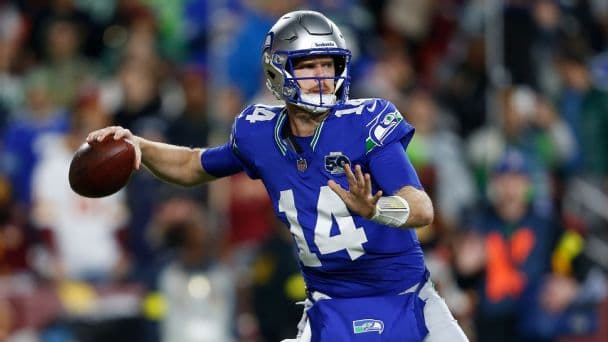
The road to Super Bowl LIX was paved with skepticism. When the Seattle Seahawks and New England Patriots began their respective journeys last March, many NFL analysts and fans questioned their blueprints. Conventional wisdom suggests that to win in the modern era, a team needs a young, high-ceiling offensive play-caller and a superstar quarterback on a rookie deal or a record-breaking extension. However, both the Seahawks and Patriots reached the pinnacle by ignoring these tropes and focusing on a different kind of NFL offseason strategy.
The Myth of the 'Offseason Winner' and Defensive Dominance
For years, the NFL community has been conditioned to be wary of the "offseason champion." Teams that spend the most in free agency often find themselves watching the playoffs from home. Similarly, the league-wide trend has leaned heavily toward hiring offensive-minded head coaches to keep pace with high-flying scoring attacks. The Seahawks and Patriots took the opposite approach, proving that a defensive foundation is still a viable path to a championship appearance.
The hiring of Mike Macdonald in Seattle and Jerod Mayo in New England was met with raised eyebrows. In an era where teams are desperate to find the next Sean McVay or Kyle Shanahan, these two franchises doubled down on defensive leadership. This NFL offseason strategy focused on structural integrity and disciplined play rather than flashy offensive schemes. Macdonald and Mayo have shown that a well-coached defense can neutralize even the most potent offenses, provided the culture and scheme are sound.
The Value of the Mid-Tier Quarterback Contract
Perhaps the most scrutinized aspect of both teams' rosters was the quarterback position. The Seahawks committed to Geno Smith on a deal that many viewed as a "mid-tier" contract—not quite the bargain of a rookie deal, but not the astronomical price of a Tier 1 superstar. Critics argued that Smith had a limited ceiling and that Seattle would eventually be stuck in "quarterback purgatory."
Similarly, the Patriots utilized a veteran bridge strategy. By bringing in Jacoby Brissett to provide a professional floor for the offense while developing young talent, New England avoided the catastrophic collapses often seen when rookie quarterbacks are thrown into the fire without support. This approach to the most important position in sports highlights a crucial lesson: you don't always need a $50 million-per-year quarterback to win if the rest of the roster is built to win in the trenches and on the perimeter.
Aggressive Free Agency Spending That Actually Worked
It is easy to be skeptical about big free agency spending. Historically, teams like the Jaguars or Jets have spent big in March only to struggle in October. However, the 2024 offseason for the Seahawks and Patriots was a masterclass in targeted aggression. Instead of buying stars for the sake of headlines, both front offices identified specific needs that aligned with their new coaching philosophies.
- Seattle Seahawks: Focused on reinforcing a defensive front that could execute Macdonald's complex, disguised pressures.
- New England Patriots: Prioritized retaining their own core talent while adding veteran leadership to a locker room undergoing a massive cultural shift.
By spending on high-floor players who fit their specific schemes, these teams avoided the typical pitfalls of free agency. They didn't just buy talent; they bought utility and fit. This nuance in NFL offseason strategy allowed them to maintain chemistry while significantly upgrading their physical presence on the field.
Lessons for the Rest of the NFL
The success of the Seahawks and Patriots serves as a reminder that there is no single "correct" way to build a Super Bowl contender. While the league may be obsessed with offensive gurus and elite quarterback prospects, the fundamentals of football—defense, smart spending, and veteran leadership—remain the bedrock of winning franchises.
As other teams head into the upcoming offseason, the lessons from Seattle and New England will likely be studied closely. The narrative that defensive-minded coaches are a thing of the past has been effectively debunked. Furthermore, the success of mid-tier veteran quarterback play suggests that the "all-or-nothing" approach to the QB position might be an oversimplification of how to win games in the postseason.
In the end, the Seahawks and Patriots proved that being an "offseason winner" only matters if those moves translate to January and February. By sticking to their evaluations and ignoring the noise, they found themselves exactly where they planned to be: playing for the Lombardi Trophy.
Sources & Original Reporting