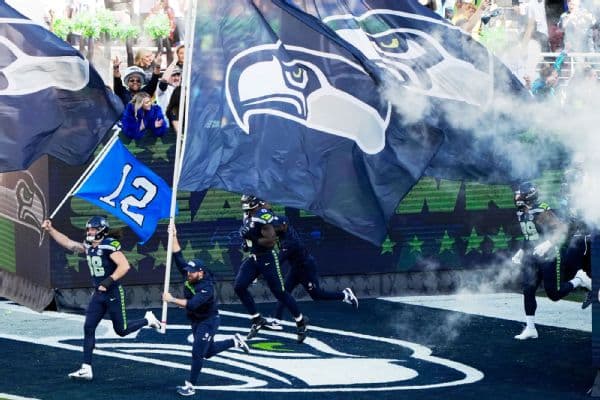
The landscape of the NFL is about to undergo a seismic shift as one of the league's most stable and successful franchises officially hits the market. On Wednesday, the estate of the late Paul Allen announced that it has formally begun the process of putting the Seattle Seahawks for sale. This move marks the beginning of the end for the Allen family's stewardship of the team, a tenure that transformed the Seahawks from a struggling franchise into a perennial Super Bowl contender and a pillar of the Pacific Northwest sports community.
Fulfilling the Wishes of Paul Allen
The decision to initiate the sale of the team is not a sudden pivot in strategy, but rather the fulfillment of a long-standing mandate. Since Paul Allen’s passing in 2018, his sister, Jody Allen, has served as the chair of the Seahawks and the trustee of the Paul G. Allen Trust. It has been a matter of public record that Allen’s estate plan directed his trustees to eventually liquidate his major assets—including his professional sports teams—to fund his vast philanthropic interests.
In a statement released on Wednesday, the estate confirmed that the formal process of identifying a new owner has commenced. While Jody Allen has spent the last several years maintaining the team’s competitive standard and overseeing significant organizational transitions, the time has come to adhere to the legal and charitable obligations set forth by the Microsoft co-founder. The Seattle Seahawks for sale announcement signals a transition that will be closely watched by the league office and potential billionaire investors worldwide.
The Impact of Paul Allen’s Ownership
To understand the gravity of this sale, one must look back at the state of the Seahawks before Paul Allen arrived. In 1997, the franchise was on the verge of moving to Southern California under previous owner Ken Behring. Allen, a Seattle native, stepped in to purchase the team for $194 million, a move that effectively saved professional football in the city.
Under Allen’s ownership, the Seahawks experienced an unprecedented era of success, including:
- The construction of Lumen Field (formerly Seahawks Stadium and CenturyLink Field), which became one of the most feared environments for visiting teams in the NFL.
- Three Super Bowl appearances (Super Bowl XL, Super Bowl XLVIII, and Super Bowl XLIX).
- The franchise's first championship title with a dominant victory in Super Bowl XLVIII.
- The rise of the "Legion of Boom" and the cultivation of the "12th Man" culture that defined NFL fandom in the 2010s.
Allen was known as an owner who provided his front office and coaching staff with the resources necessary to win while remaining largely behind the scenes, a philosophy that led to the successful tenures of Mike Holmgren and Pete Carroll.
A Potential Record-Breaking Valuation
While the 1997 purchase price of $194 million was significant at the time, the Seattle Seahawks for sale today are expected to command a price tag that reflects the explosive growth of NFL team valuations. Recent sales of NFL franchises have set new benchmarks; the Denver Broncos sold for $4.65 billion in 2022, and the Washington Commanders were acquired for a staggering $6.05 billion in 2023.
Financial analysts suggest the Seahawks could potentially challenge or exceed those figures. Seattle is a top-tier market with a dedicated, sell-out fan base and modern stadium infrastructure. Furthermore, the NFL's lucrative media rights deals ensure that any incoming owner is stepping into a highly profitable enterprise. The sale process will likely involve a rigorous vetting period by the NFL’s finance committee to ensure any prospective buyer meets the league’s strict debt-to-equity requirements.
What Lies Ahead for the Franchise
Despite the announcement of the sale, fans should not expect an immediate change in day-to-day operations. The process of selling an NFL team is notoriously complex and can take several months, if not over a year, to finalize. The estate has emphasized that the goal is to find a steward who will maintain the team’s commitment to the Seattle community and its winning tradition.
Current team leadership, including General Manager John Schneider and Head Coach Mike Macdonald, are expected to continue their work as the franchise enters this period of corporate transition. For the fans in Seattle, the hope is that the next owner will mirror Paul Allen’s passion for the city and his willingness to invest in a championship-caliber product. As the estate moves forward with the sale, the focus remains on ensuring that the Seahawks remain a cornerstone of the NFL for decades to come.
Sources & Original Reporting