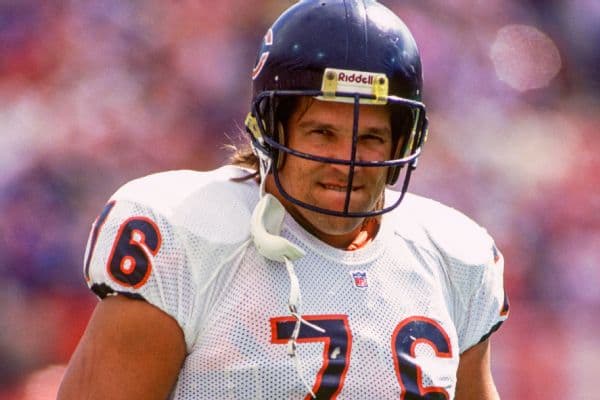
The indomitable spirit of Steve "Mongo" McMichael defined an era of Chicago Bears football, characterized by a relentless pass rush and an uncompromising physical presence. However, a new medical report released one year after his passing reveals the hidden toll that his legendary career took on his long-term health. Researchers have confirmed a Steve McMichael CTE diagnosis, providing definitive evidence of the degenerative brain disease that many suspected played a role in his final years.
Understanding the Steve McMichael CTE Diagnosis
According to a report from the Boston University CTE Center, McMichael was diagnosed with Stage 4 Chronic Traumatic Encephalopathy (CTE), the most severe form of the disease. The findings come after his wife, Misty McMichael, made the decision to donate his brain to research following his death in 2025 at the age of 67. The Steve McMichael CTE diagnosis serves as a somber reminder of the risks associated with the high-impact nature of professional football during the 1980s and 90s.
Stage 4 CTE is typically characterized by profound cognitive impairment, memory loss, and often severe behavioral changes. In McMichael’s case, the diagnosis adds a complex layer to his well-documented health struggles. While CTE can only be definitively diagnosed posthumously, the severity of the findings at the Boston University center suggests that the disease was advanced by the time of his passing.
The Intersection of ALS and Head Trauma
For the final five years of his life, Steve McMichael battled Amyotrophic Lateral Sclerosis (ALS), a progressive neurodegenerative disease that eventually left him paralyzed and unable to speak. The connection between repetitive head trauma in contact sports and the development of motor neuron diseases like ALS has been a subject of intense scientific scrutiny in recent years. Researchers at Boston University and other institutions have noted that athletes with high exposure to head impacts are at a significantly higher risk for both CTE and ALS.
McMichael was first diagnosed with ALS in early 2021. Despite the rapid progression of the disease, he remained a public figure in Chicago, with his family providing regular updates on his condition. The news of the Steve McMichael CTE diagnosis clarifies that the Hall of Famer was fighting multiple neurological battles simultaneously. Misty McMichael’s decision to donate his brain was driven by a desire to help the medical community better understand these links and protect future generations of athletes.
A Hall of Fame Career Defined by Toughness
Steve McMichael was a cornerstone of the 1985 Chicago Bears defense, a unit widely regarded as one of the greatest in the history of the NFL. Over a career that spanned 15 seasons—13 of which were spent in Chicago—McMichael became a beloved figure known for his "Mongo" persona. He was a two-time All-Pro and a two-time Pro Bowler, finishing his career with 95 sacks, a remarkable total for an interior defensive lineman.
His durability was legendary; McMichael played in 191 consecutive games for the Bears, a testament to his physical and mental toughness. This toughness was on full display during his final years. In 2024, McMichael was officially inducted into the Pro Football Hall of Fame. Though he was unable to travel to Canton, Ohio, for the ceremony due to his ALS, the gold jacket was brought to his home in a moving tribute that resonated throughout the sports world. He passed away shortly after achieving the game’s highest honor.
The Broader Implications for NFL Player Safety
The confirmation of Stage 4 CTE in a player of McMichael’s stature continues to fuel the conversation regarding player safety and the long-term consequences of professional football. McMichael is one of several members of the 1985 Bears team to be diagnosed with brain trauma-related issues posthumously, joining teammates like Dave Duerson and Mike Richardson in the spotlight of CTE research.
As the NFL continues to implement rule changes designed to reduce head-to-head contact and improve helmet technology, the stories of legends like McMichael provide the necessary data to drive these safety initiatives. For the fans in Chicago and across the league, McMichael will always be remembered for his vibrant personality and his dominance on the field, but his legacy now also includes a vital contribution to the scientific understanding of athlete health.
The McMichael family has expressed hope that the transparency regarding his diagnosis will encourage more families to participate in brain donation programs. By studying the brains of former players, researchers can work toward earlier detection and potential treatments for CTE, ensuring that the heavy price paid by players like "Mongo" leads to a safer future for the sport.
Sources & Original Reporting