Long before the pyrotechnics, the synchronized drone light shows, and the global dominance of superstars like Bad Bunny, the Super Bowl halftime show was a much more modest and localized affair. In the earliest days of the NFL’s championship game, viewers might see a college marching band or a local drill team during the mid-game break. However, a pivotal shift in Super Bowl halftime show history occurred when a group known as Up with People took the field. With their synchronized dancing and relentless positivity, this massive ensemble of young adults changed the trajectory of the NFL’s biggest stage forever.
The Wholesome Origins of the Modern Spectacle
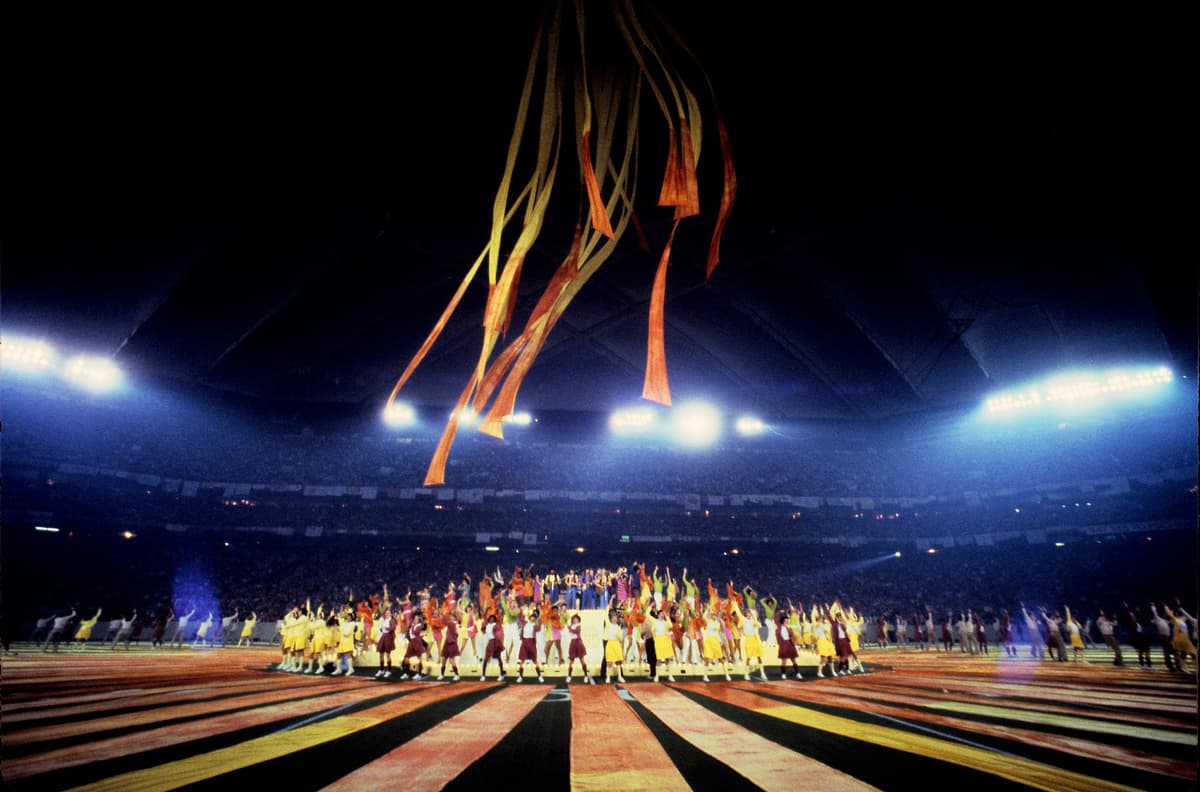
To understand the current scale of the Super Bowl, one must look back at the 1970s and 80s. During this era, Up with People became the most frequent performer in the event's history, appearing at Super Bowl X, XIV, XVI, and XX. At the time, the NFL wasn't looking for a chart-topping pop star to drive ratings; they were looking for family-friendly entertainment that bridged cultural gaps. Up with People, an international educational organization, fit the bill perfectly.
Imagine 600 young adults, dressed in vibrant pastel outfits, smiling as one and singing about peace and positivity. While it may seem quaint compared to the high-concept performances of today, these shows were the first to treat the halftime break as a produced television event rather than just a breather for the players. They introduced the concept of a theme—such as "200 Years and Going Strong" or "Peace on Earth"—which remains a staple of the halftime show format to this day.
Why Up with People Mattered to NFL Branding
In the narrative of Super Bowl halftime show history, Up with People served as a crucial bridge. Before their involvement, the halftime show was often an afterthought. By bringing in a touring cast with high production values (for the time), the NFL realized that the halftime show could be a product in its own right. This era proved that the audience was willing to stay tuned during the intermission if the entertainment was engaging and visual.
The logistical feat of coordinating hundreds of performers on a football field in under ten minutes was pioneered during these years. The quick-change stages, the field-covering choreography, and the use of the entire stadium as a backdrop are all elements that modern producers still use. When we see Rihanna or The Weeknd utilize hundreds of backup dancers, they are using a blueprint that was first sketched out by the massive choral ensembles of the 1980s.
The Transition to Global Superstars
The shift from the wholesome ensemble casts of Up with People to the solo superstar era didn't happen overnight. It was a gradual realization by the NFL and its broadcast partners that the halftime show could attract a demographic that might not even be watching the game. This evolution reached a fever pitch in 1993 with Michael Jackson, but the foundation of the "spectacle" was already laid. Producers learned from the Up with People era that the show needed to be big, it needed to be bold, and it needed to utilize the entire field.
Today, the Super Bowl halftime show is the most-watched musical performance of the year. The transition from the "pastel era" to the "pop era" reflects the NFL's growth from a domestic sports league into a global entertainment powerhouse. The same stage that once featured 600 young adults singing about harmony now hosts Bad Bunny, bringing reggaeton and Latin trap to hundreds of millions of viewers worldwide.
Connecting the Past to the Present: The Bad Bunny Era
While the music and the fashion have changed drastically, the core objective remains the same: to create a moment of shared cultural experience. When Bad Bunny took the stage alongside Shakira and Jennifer Lopez during Super Bowl LIV, it represented the modern version of the internationalism that Up with People originally championed. The scale remains massive, the energy remains high, and the focus on a "positive vibe"—though framed through modern aesthetics—is a direct descendant of those early performances.
As we look back at Super Bowl halftime show history, it is easy to dismiss the older shows as relics of a different time. However, without the smiles, the pastel sweaters, and the 600-person dance routines of Up with People, the NFL might never have discovered the power of the halftime show. They paved the path for every artist who has followed, proving that the Super Bowl is about much more than just four quarters of football; it is the ultimate stage for global entertainment.
Sources & Original Reporting