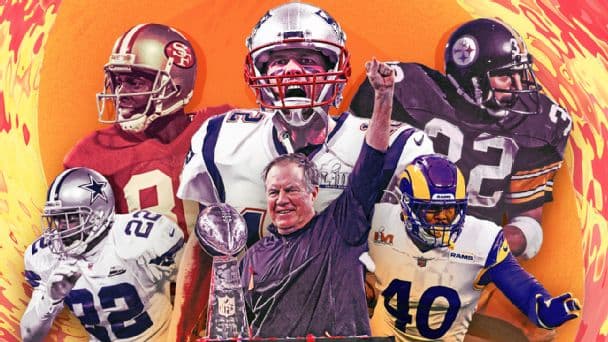
The Super Bowl is more than just a championship game; it is a cultural phenomenon that has defined the landscape of American professional sports for over half a century. To truly appreciate the magnitude of the modern game, one must look back at Super Bowl history to see the legendary performances and statistical anomalies that have shaped the NFL. From the early dominance of the Green Bay Packers to the modern dynasty of the New England Patriots, the record books tell the story of the league's evolution.
Individual Excellence: The Legends of Super Bowl History
When discussing Super Bowl history, the conversation inevitably begins with Tom Brady. The legendary quarterback holds a staggering number of records that may never be challenged. Brady has appeared in 10 Super Bowls, winning seven of them—more than any single NFL franchise. His career totals in the big game are mind-boggling, including the most career passing yards (3,039) and the most career passing touchdowns (21).
While Brady dominates the passing categories, Jerry Rice remains the gold standard for receivers. Rice holds the records for the most career Super Bowl receptions (33), receiving yards (589), and total touchdowns (8). His performance in Super Bowl XXIII, where he recorded 215 receiving yards, remains the single-game record for a wideout. These individual milestones highlight the level of performance required to succeed on the world's biggest stage.
Team Records: Dominance and Dynasty
The quest for the Lombardi Trophy has seen several franchises rise to legendary status. Currently, the Pittsburgh Steelers and the New England Patriots share the record for the most Super Bowl victories, each boasting six titles. The Patriots also hold the record for the most Super Bowl appearances with 11, a testament to their sustained excellence over two decades.
On the opposite end of the spectrum, some teams have faced heartbreak more often than others. The Denver Broncos and New England Patriots share the record for the most Super Bowl losses with five each. However, perhaps the most famous statistical anomaly in team history belongs to the Buffalo Bills, who reached the Super Bowl in four consecutive seasons (1990–1993) but were unable to secure a victory in any of those appearances.
High-Scoring Thrillers and Defensive Masterclasses
Super Bowl history is filled with games that kept the scoreboard operators busy, as well as defensive struggles that were won in the trenches. The record for the most points scored by a single team in a Super Bowl belongs to the San Francisco 49ers, who put up 55 points against the Denver Broncos in Super Bowl XXIV. That game also holds the record for the largest margin of victory, a 45-point blowout.
Conversely, the lowest-scoring game in the history of the event occurred in Super Bowl LIII, where the New England Patriots defeated the Los Angeles Rams by a score of just 13-3. This game broke the long-standing record for the fewest combined points (16), proving that even in the modern era of high-octane offenses, a dominant defense can still dictate the outcome of a championship.
Single-Game Statistical Leaders
- Most Passing Yards: Tom Brady, 505 yards (Super Bowl LII)
- Most Rushing Yards: Timmy Smith, 204 yards (Super Bowl XXII)
- Most Receptions: James White, 14 catches (Super Bowl LI)
- Longest Play: Jacoby Jones, 108-yard kickoff return (Super Bowl XLVII)
- Most Sacks: L.C. Greenwood, 4 sacks (Super Bowl X)
Coaching Milestones and Longevity
The men on the sidelines are just as critical to Super Bowl history as the players on the field. Bill Belichick holds the record for the most Super Bowl wins by a head coach with six, all with the Patriots. He also holds the record for the most appearances as a head coach with nine. Before the Belichick era, Chuck Noll of the Pittsburgh Steelers held the gold standard with a perfect 4-0 record in Super Bowl appearances.
As the NFL continues to evolve, these records serve as the benchmark for greatness. Every February, new chapters are written, and while some records appear unbreakable, the history of the Super Bowl has taught us that on any given Sunday, anything is possible.
Sources & Original Reporting