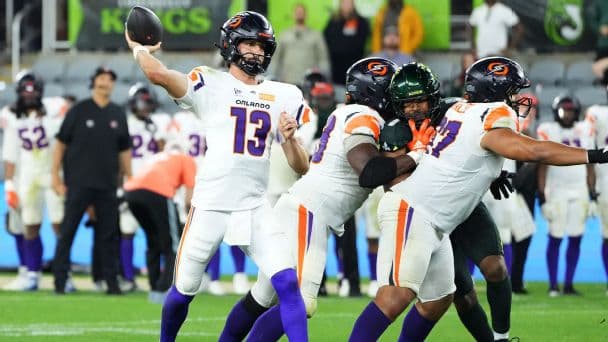
The United Football League (UFL) has built its reputation on being a laboratory for football innovation, but even the most forward-thinking leagues occasionally hit a snag. Following a weekend defined by confusion and a finish that left fans, coaches, and even officials scratching their heads, the league has officially announced a UFL overtime rule change. The move comes as a direct response to the bizarre conclusion of the game between the Orlando Storm and the Louisville Kings, a contest that highlighted a significant loophole in the league's previous overtime protocols.
While the UFL has often been praised for its willingness to experiment with the game’s format, the events in Orlando proved that clarity must always precede creativity. The league’s competition committee acted swiftly, acknowledging that the integrity of the game depends on rules that can be understood and enforced in real-time. This mid-season adjustment is rare in professional football, but league officials deemed it necessary to prevent a repeat of the chaotic scenes that unfolded during the Storm-Kings matchup.
The Chaos in Orlando: A Finish to Forget
The controversy began during the final moments of a high-stakes matchup between the Orlando Storm and the Louisville Kings. As the game pushed into the extra period, the unique overtime format of the UFL—which utilizes a best-of-three shootout style rather than traditional timed periods—was put to the test. However, instead of a clean resolution, the stadium was met with a chorus of whistles and a long delay as the officiating crew struggled to interpret the specific requirements of the conversion attempts.
According to reports from the field, coaches from both sidelines were seen shouting at officials, and players appeared visibly frustrated as the logic behind the win-condition for Orlando was explained. The Orlando Storm were eventually awarded the victory, but the path to that decision was so convoluted that the league felt immediate intervention was necessary to protect the integrity of future broadcasts and competitive outcomes. The lack of clear communication during the broadcast left the viewing audience equally perplexed, as the logic for the game-ending call seemed to change multiple times over the course of the delay.
Understanding the UFL Overtime Rule Change
The primary focus of the UFL overtime rule change is to simplify the scoring tracking and the "sudden death" triggers that occur if the initial shootout ends in a tie. Under the previous guidelines, the technicalities surrounding defensive penalties during a two-point conversion attempt in overtime were not sufficiently defined, leading to the "bizarre" scenario where a game could theoretically end on a clerical technicality rather than a play on the ball.
Streamlining Penalty Enforcement
One of the most critical updates involves how penalties are handled during the shootout. Previously, a defensive foul could lead to a confusing stalemate where the ball was moved half the distance to the goal, but the "count" of the attempt remained in limbo. The new UFL overtime rule change ensures that any defensive penalty results in a clear choice: a yardage assessment with a re-try or an automatic score if the foul is deemed to have prevented a clear touchdown path. This removes the ambiguity that plagued the Louisville Kings defense during their final stand.
Clarifying Scoring Sequences and Signaling
To prevent the "ghost snaps" and procedural confusion seen in Orlando, the league has also updated the signaling requirements for officials. The updated rule ensures that:
- All scoring attempts are clearly signaled by the head referee before the snap to ensure all parties are ready.
- The sequence of attempts is strictly mandated to prevent coaches from being confused about which "round" of the shootout they are currently in.
- The league command center in Arlington will have a direct audio link to the stadium PA system to explain rulings in real-time to the fans.
Referees and Coaches Seek Clarity
One of the most concerning aspects of the Storm-Kings finish was the apparent lack of synchronization between the on-field officials and the league's command center. The UFL has prided itself on a transparent officiating process, often allowing fans to hear the audio from the replay booth. However, during this specific event, even the audio revealed a lack of consensus on how to proceed, with officials debating the rulebook while the clock was stopped.
By implementing this UFL overtime rule change mid-season, the league is acknowledging that the previous wording was a "blind spot." For a league that often serves as a testing ground for potential NFL rule changes, the ability to pivot quickly is essential. Coaches for both the Louisville Kings and the Orlando Storm expressed that while they respect the league's innovative spirit, the players deserve a set of rules that can be understood in the heat of competition. The goal is to ensure that the outcome of a game is decided by the athletes on the field rather than the interpretation of a complex manual.
Impact on the Remainder of the Season
As the UFL season progresses, the implications of this change will be felt by every team in the standings. With parity being a hallmark of the league, many games are expected to go down to the wire. The Orlando Storm currently benefit from the win, but the Louisville Kings and the rest of the league now have the benefit of a clearly defined roadmap should they find themselves in a similar situation.
The UFL's decision to tweak the rule immediately, rather than waiting for the offseason, signals a commitment to fairness. While the finish in Orlando was undeniably messy, it has provided the necessary catalyst to refine one of the most exciting aspects of spring football. Fans can now look forward to overtime periods that are defined by athletic playmaking rather than officiating confusion. As we move closer to the playoffs, this UFL overtime rule change may very well be the most important administrative move of the year.
Sources & Original Reporting