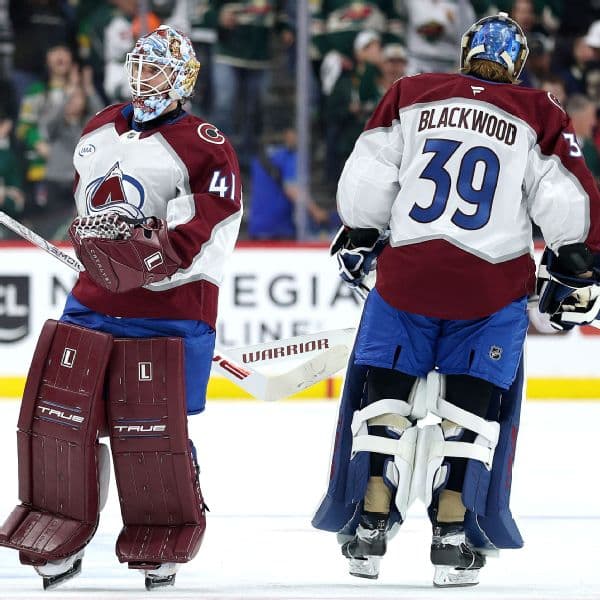
The postseason is often defined by how a championship contender responds to sudden adversity. For the Colorado Avalanche, that moment arrived on Saturday night in Minnesota. After a dominant start to their playoff run, the Avalanche faced their first true setback of the postseason, falling to the Minnesota Wild in a physical Game 3 encounter. However, the result of the game was only half the story, as a significant mid-game coaching decision saw starting goaltender Scott Wedgewood pulled in favor of Mackenzie Blackwood.
Scott Wedgewood Pulled After Early Struggles
The Colorado Avalanche entered Game 3 with significant momentum, but that energy quickly dissipated as the Minnesota Wild offense found gaps in the Colorado defense early and often. The primary focus of the evening’s struggles centered on the crease. Scott Wedgewood, who had been a reliable presence for the Avalanche, found himself under fire from the opening whistle.
The statistical breakdown of Wedgewood’s night highlights the efficiency of the Minnesota attack. Wedgewood lasted just 24 minutes and 23 seconds of game time before the coaching staff decided a change was necessary. During that span, the Wild managed to put three goals past him on just 12 total shots. Allowing three goals on such a low volume of shots resulted in a .750 save percentage for the evening—a figure that rarely leads to postseason success.
The decision to pull a starting goaltender is never made lightly, especially in the high-stakes environment of the NHL playoffs. However, after the third goal crossed the line early in the second period, the Avalanche bench opted to trigger the change to provide a spark for the rest of the roster and attempt to stabilize the defensive end.
Mackenzie Blackwood Steps into the Crease
With Wedgewood heading to the bench, Mackenzie Blackwood was called upon to handle the relief duties. Transitioning from the bench to the high-intensity environment of a playoff game is one of the most difficult tasks for a professional athlete, yet Blackwood was tasked with keeping the game within reach as the Avalanche attempted to mount a comeback.
The goaltending swap served as a tactical reset for Colorado. While the move is often intended to wake up the skaters in front of the net, it also puts immense pressure on the backup to remain perfect. Blackwood’s entry into the game marked a pivotal shift in the Avalanche’s strategy for the remainder of the contest, as they sought to shut down a Wild team that had clearly found its rhythm on home ice.
First Postseason Loss for the Colorado Avalanche
Before Saturday night’s defeat, the Colorado Avalanche had enjoyed a flawless trajectory through the early stages of the postseason. This loss to the Minnesota Wild represents the first time this spring that Colorado has failed to secure a victory, bringing an end to their undefeated streak. For a team with championship aspirations, this loss serves as a reminder of the thin margins for error in the NHL playoffs.
The Minnesota Wild capitalized on the home-crowd energy, utilizing their 12 shots against Wedgewood to build a lead that proved too much for Colorado to overcome. By the time the goaltending change was made, the momentum had firmly shifted in favor of the Wild, who were able to manage the game effectively through the final two periods.
Looking Ahead After the Game 3 Decision
As the series progresses, the primary question for the Avalanche coaching staff will be the status of the starting goaltender position. While Wedgewood has been the primary option, the efficiency with which Minnesota scored in Game 3 creates a narrative of uncertainty heading into the next matchup. The team must now evaluate whether the three goals allowed were a result of defensive lapses or a sign that a permanent change in the crease is required.
The Avalanche will need to regroup quickly to ensure this first loss doesn't turn into a trend. With the series remaining in Minnesota for the next contest, the pressure will be on the Colorado Avalanche to tighten their defensive structure and provide better support for whoever starts between the pipes. The Wild have proven they can exploit even the smallest openings, and Game 3 served as a blueprint for how to disrupt the Avalanche’s postseason rhythm.
Sources & Original Reporting