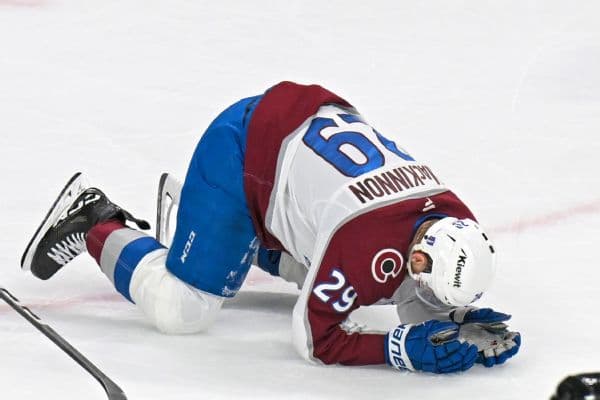
The Stanley Cup Playoffs are a grueling test of physical and mental fortitude, and Colorado Avalanche star forward Nathan MacKinnon proved his mettle once again during a high-stakes Game 4 against the Minnesota Wild. In a moment that briefly silenced the crowd, MacKinnon was forced to leave the ice after a frightening incident involving "friendly fire" from teammate Devon Toews. However, in a testament to the grit required for postseason success, the alternate captain’s absence was short-lived, providing a massive emotional boost to the Avalanche bench and their fans.
The Incident: A Defensive Zone Clearing Attempt Gone Wrong
The scary sequence unfolded during a period of sustained pressure by the Minnesota Wild in the Avalanche's end. While the Colorado defensive unit was working to stabilize their zone and relieve the pressure, defenseman Devon Toews attempted to clear the puck out of danger. In the chaotic environment of the playoff trenches, where every inch of ice is contested, the puck took an unfortunate trajectory during the clearing attempt, striking Nathan MacKinnon directly in the face.
The impact was immediate and visible. MacKinnon dropped to the ice, clutching his face as the officials blew the whistle to halt play. Trainers rushed to the ice to attend to the star forward, who was seen with a significant amount of blood coming from his nose area. Despite the obvious pain and the shock of the impact, MacKinnon was able to skate off the ice under his own power, though he headed straight to the locker room for immediate medical evaluation. The sight of their offensive engine leaving the game with a towel to his face cast a temporary shadow over the Colorado bench as the second period progressed.
Nathan MacKinnon Makes a Resilient Return for the Third Period
While there was initial concern regarding the severity of the injury, the Colorado Avalanche received the best possible news during the second intermission. Nathan MacKinnon, showing the legendary toughness that has defined his career, returned to the bench and was back on the ice for the start of the third period. His return served as a rallying cry for a Colorado team looking to maintain their composure in a hostile environment.
Sporting stitches and visible swelling around the bridge of his nose, MacKinnon did not shy away from the physical nature of the game upon his return. As an alternate captain, his presence on the ice is vital not just for his elite scoring touch, but for the leadership and energy he provides to the entire roster. With Gabriel Landeskog currently sidelined, MacKinnon’s role as a primary leader for the Avalanche has never been more critical. His ability to navigate a painful facial injury to finish the game highlights why he is considered one of the most competitive and resilient players in the NHL today.
The Role of Devon Toews and Defensive Zone Mechanics
For Devon Toews, the incident was a classic example of the "game of inches" that defines professional hockey. In the heat of a defensive zone scramble, players are coached to get the puck out toward the glass or high into the neutral zone to alleviate pressure. Toews, who is widely regarded as one of the most disciplined and technically sound defenders in the league, was simply executing a standard hockey play to help his team transition out of the defensive end.
The fact that the puck caught his own teammate is a freak occurrence that happens more often than players would like in the high-speed environment of the modern NHL. The chemistry between Toews and MacKinnon is usually a highlight of the Avalanche's transition game; here, it resulted in a moment of shared trauma. Fortunately, the quick work of the Colorado medical staff and MacKinnon's durability prevented the accident from becoming a major setback for the team's postseason aspirations.
The Importance of Nathan MacKinnon to the Avalanche Offense
Even with his brief exit to the locker room, the impact of Nathan MacKinnon being off the ice was palpable. He is the primary driver of Colorado's transition game, using his elite skating ability to back off opposing defensemen and create space for his linemates. When MacKinnon is in the lineup, the Avalanche operate at a different speed, specifically in the following key areas:
- Zone Entries: MacKinnon leads the team in controlled entries, allowing the Avalanche to set up their dangerous cycle game in the offensive zone.
- Power Play Presence: As the focal point of the man-advantage, his lethal shot from the left circle forces penalty killers to over-commit, opening lanes for others.
- Pace of Play: His explosive speed forces opponents to play a more conservative defensive style, which creates more time and space for the rest of the Colorado forwards.
- Competitive Drive: Beyond his skill, MacKinnon's willingness to engage physically and play through injury sets a standard for the entire roster during the playoffs.
Looking Ahead: Avalanche vs. Wild Rivalry Intensifies
The series between the Colorado Avalanche and the Minnesota Wild has been characterized by its heavy physicality and narrow margins. Having Nathan MacKinnon healthy and available is paramount for Colorado as they look to navigate the remainder of this opening-round matchup. While the "friendly fire" incident was a major scare, the fact that MacKinnon was able to finish the game suggests he will remain the centerpiece of the Avalanche attack moving forward.
As the medical staff continues to monitor MacKinnon for any delayed symptoms or issues related to the facial injury, the team's focus remains squarely on the ice. The Avalanche have proven they can handle adversity, but their path to a deep playoff run is significantly smoother with their star forward leading the charge. Fans can expect MacKinnon to remain a central figure as the intensity of the NHL postseason continues to ramp up in the coming weeks.
Sources & Original Reporting
