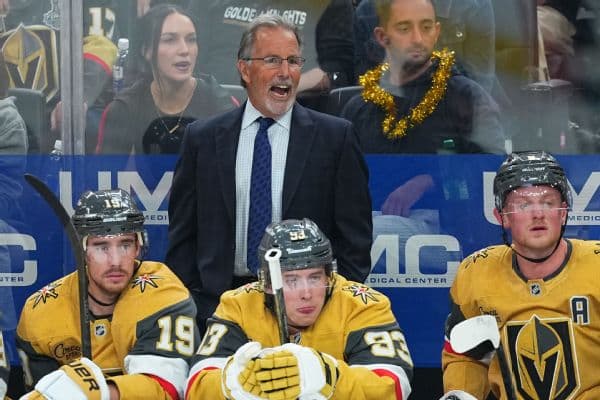
The long-standing dispute between the league office and one of its most successful expansion franchises has finally reached a definitive conclusion. The NHL announced this week that the Vegas Golden Knights have officially lost their appeal regarding league-imposed penalties for failing to meet media availability requirements. With the denial, the Vegas Golden Knights sanctions are now final, meaning the organization will indeed forfeit a second-round draft pick and head coach John Tortorella will be required to pay a substantial fine.
The ruling comes at a critical juncture for the franchise as they navigate the complexities of a 2026 season defined by high expectations and a deep playoff push. By standing firm on the original disciplinary measures, the NHL has sent a clear message to all 32 clubs: media access is not a suggestion, but a fundamental requirement of league operations. For Vegas, a team that has often operated on the edge of aggressive roster management, the loss of a premium draft asset represents a significant blow to their future flexibility.
The Final Ruling on Media Compliance
The core of the issue dates back to an investigation into the team’s conduct during their recent postseason run. According to league reports, the Golden Knights failed to make key players and staff available to the media in accordance with the collective bargaining agreement and standard league protocols. While the team argued that the circumstances of their schedule and player health should have granted them leniency, the NHL’s front office remained unmoved during the appeal process.
The league’s decision to uphold the Vegas Golden Knights sanctions underscores the importance the NHL places on its broadcast and journalistic partnerships. In an era where fan engagement is driven by behind-the-scenes access and post-game insights, the refusal to provide media availability is viewed as a violation of the league's commercial interests. The denial of the appeal serves as a reminder that off-ice administrative duties carry just as much weight as on-ice performance.
The Strategic Cost of the Penalty
While a financial penalty for a veteran coach like John Tortorella is notable, the true sting of this ruling lies in the forfeiture of draft capital. Losing a second-round selection in the 2026 NHL Draft is a heavy price to pay for an administrative lapse. In the modern NHL, second-round picks are vital currency, often used as the centerpiece for trade deadline acquisitions or to secure high-ceiling prospects who can provide cheap labor under the salary cap.
Impact on the Upcoming NHL Draft
The removal of a top-60 selection from the Golden Knights' cupboard significantly alters their approach to the upcoming draft cycle. Typically, Vegas has been aggressive in using their picks to acquire established stars, but without a second-rounder, their ability to facilitate such deals is diminished. Scouting departments must now work overtime to find value in the later rounds, as the margin for error has narrowed considerably.
Furthermore, this penalty puts Vegas at a competitive disadvantage against Western Conference rivals. Teams like the Colorado Avalanche and the Anaheim Ducks, both of whom are in various stages of roster refinement, will now have an extra asset relative to the Golden Knights. In a league where parity is the goal, losing a pick of this caliber can be the difference between landing a future middle-six contributor and having to overpay for one in free agency.
Organizational Fallout and the Road Ahead
Inside the locker room, the focus remains on the ice, but the administrative distraction cannot be ignored. John Tortorella, known for his fiery personality and often contentious relationship with the press, now finds himself at the center of a league-wide precedent. While the fine is a personal setback for the coach, his primary concern will be ensuring the team remains focused on their 2026 playoff aspirations despite the surrounding noise.
The Golden Knights' front office must also address the internal protocols that led to these Vegas Golden Knights sanctions in the first place. Moving forward, the organization will likely implement stricter media relations guidelines to ensure that a similar lapse does not occur. With the appeal process exhausted, the team has no choice but to accept the reality of their depleted draft board and find creative ways to remain a powerhouse in the Pacific Division.
A Warning to the Rest of the League
This ruling serves as a landmark case for the NHL's Department of Hockey Operations. By stripping a team of a high-round draft pick for a non-gameplay violation, the league has established a high-stakes benchmark for compliance. Other organizations will undoubtedly take note of the Golden Knights' situation, recognizing that the league is willing to impact a team's long-term competitive window to enforce its off-ice regulations.
As the Golden Knights prepare for the final stretch of the season, the focus shifts from the courtroom back to the rink. However, the shadow of the 2026 draft will loom large, serving as a permanent reminder of the cost of non-compliance in the modern era of professional sports. For now, Vegas must prove they can continue to win without the safety net of their full complement of draft picks.
Sources & Original Reporting