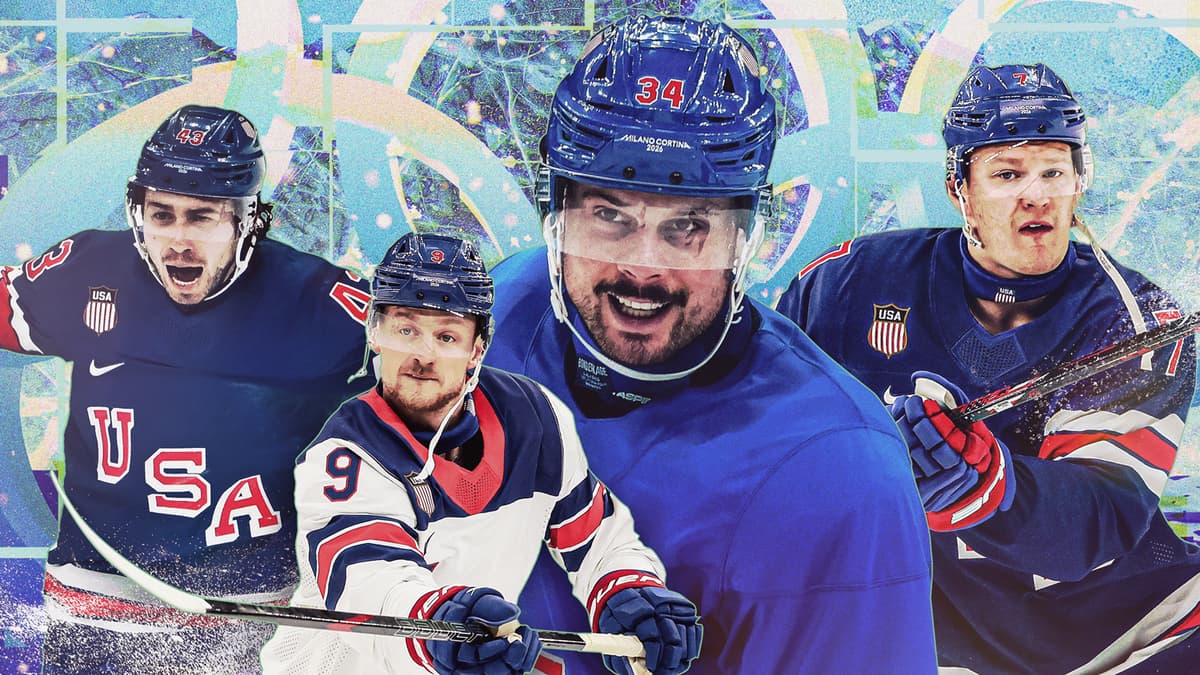
The landscape of international hockey has never been more competitive, but for American fans, the future has never looked brighter. As the hockey world turns its attention toward the 2030 Winter Games in the French Alps, the conversation surrounding the Team USA 2030 Olympic hockey roster is already heating up. While the 2026 cycle provided a glimpse into the program's elite depth, the 2030 Games represent a potential peak for a generation of talent that has been meticulously developed through the U.S. National Team Development Program.
Predicting a roster half a decade in advance is a challenge, but the current trajectory of American stars makes certain inclusions feel like locks. The focus for 2030 will be a blend of veteran savvy from today’s superstars and the explosive energy of prospects who are currently dominating the collegiate and junior ranks. Here is how the United States could look when they chase gold in the French Alps.
The Veteran Leadership: Matthews, Tkachuk, and the Hughes Brothers
By the time 2030 rolls around, the current faces of the NHL will be the elder statesmen of the Team USA 2030 Olympic hockey roster. Auston Matthews (Toronto Maple Leafs) and Matthew Tkachuk (Florida Panthers) will both be in their early 30s, likely serving as the emotional and offensive anchors of the team. Matthews remains the premier goal-scorer of his generation, and his presence on the top line provides the U.S. with a level of finishing ability that few nations can match.
On the blue line, Quinn Hughes (Vancouver Canucks) and Adam Fox (New York Rangers) will be the veteran anchors. Their ability to transition the puck and quarterback a power play will be essential on the larger international ice surfaces. Joining them in the leadership group will likely be Jack Hughes (New Jersey Devils), whose skating and vision should be at their absolute zenith in 2030. The chemistry between the Hughes brothers could be a defining characteristic of this Olympic squad.
The Emerging Blue Line: Depth and Versatility
The strength of the American program in recent years has been its ability to produce elite, mobile defensemen. Beyond the established stars like Fox and the elder Hughes, the 2030 roster will likely feature Brock Faber (Minnesota Wild) and Luke Hughes (New Jersey Devils). Faber has quickly established himself as a minute-munching workhorse who can play in all situations, making him an ideal candidate for a top-four role in a short tournament format.
Other names to keep an eye on include Jake Sanderson (Ottawa Senators) and Zayne Parekh (Calgary Flames prospect). Sanderson’s defensive reliability and elite skating allow him to neutralize opposing top lines, while Parekh represents the next wave of offensive-minded defenders who can change the complexion of a game from the back end. The competition for the final defensive spots will be fierce, showcasing the incredible depth of the U.S. talent pool.
Between the Pipes: The Goaltending Situation
Goaltending has traditionally been a position of strength for the United States, and the 2030 outlook remains promising. Jeremy Swayman (Boston Bruins) is the frontrunner to be the primary starter, assuming he maintains his current trajectory as one of the NHL’s elite netminders. His poise and big-game experience make him a natural fit for the Olympic stage.
However, the depth behind him is equally impressive. Trey Augustine (Michigan State/Detroit Red Wings prospect) and Jacob Fowler (Boston College/Montreal Canadiens prospect) have both shown the pedigree of future NHL starters. By 2030, these two will likely be in their prime, providing the U.S. with three legitimate options in the crease. The battle for the starting job will likely be one of the biggest storylines heading into the French Alps Games.
The Next Wave: Prospects Ready for the Big Stage
Perhaps the most exciting aspect of the Team USA 2030 Olympic hockey roster is the inclusion of today’s top prospects. James Hagens, widely projected as a top pick in the 2025 NHL Draft, is expected to be a centerpiece of the American forward group by 2030. His elite playmaking and hockey IQ have already drawn comparisons to some of the game’s greats.
Joining him will likely be Cole Eiserman, a pure goal-scorer whose shot is already considered NHL-ready. Adding these younger, dynamic threats to a lineup that already features Cole Caufield (Montreal Canadiens) and Matt Boldy (Minnesota Wild) creates a balanced attack that can score in multiple ways. The U.S. will be able to roll four lines that all pose a significant offensive threat, a luxury that few other countries will enjoy.
Final Outlook for 2030
The 2030 Winter Olympics will serve as a massive benchmark for USA Hockey. With a roster that features established NHL icons and a surge of young talent, the United States will enter the tournament as a heavy favorite for the gold medal. The transition from the 2026 roster to the 2030 squad highlights the sustainable success of the American developmental system, ensuring that Team USA remains a powerhouse on the international stage for years to come.
Sources & Original Reporting