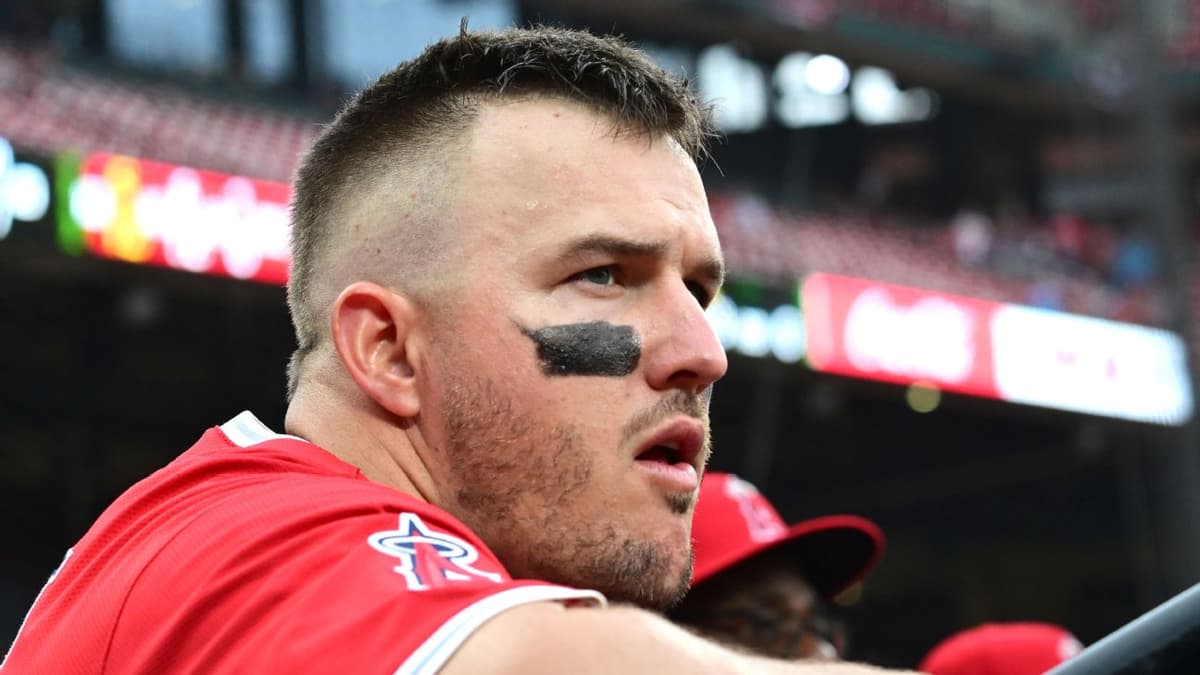
As the Los Angeles Angels descend upon Tempe for the start of the 2026 Spring Training, the primary focus remains on the health and positioning of their franchise icon. After a resurgent campaign last year, three-time American League MVP Mike Trout has made his preference clear for the upcoming season. Despite ongoing discussions about moving him to a less demanding role to preserve his health, Trout is advocating for a Mike Trout center field return, arguing that the position he has called home for over a decade is actually the safest place for him to be.
The Logic Behind a Mike Trout Center Field Return
The conventional wisdom in modern baseball suggests that as a superstar enters his mid-30s—especially one with a history of lower-body injuries—a move to a corner outfield spot or a permanent role as a Designated Hitter is inevitable. However, Mike Trout disagrees with the premise that center field is more taxing than the corners. According to Trout, playing center field allows for more fluid, linear movements compared to the unpredictable nature of left or right field.
Trout explained that the corner positions often require more frequent "stop-and-go" actions, sharp cuts, and awkward angles when playing balls off the side walls or chasing slicing line drives toward the foul lines. In contrast, the 34-year-old veteran feels that center field provides a more consistent rhythm, allowing him to use his elite instincts to take efficient routes that minimize unnecessary strain on his legs.
Managing Health After a Resurgent 2025 Campaign
The conversation surrounding Trout’s defensive home carries more weight this year because of his recent durability. After a frustrating 2024 season in which a torn meniscus limited him to just 29 games, Mike Trout silenced many critics in 2025 by appearing in 130 games—his highest total since the 2019 season. This durability was a turning point for the Angels, proving that with the right management, Trout can still be a foundational piece of the daily lineup.
The Shift from 2024 to 2026
In 2024, the narrative was focused on whether Trout’s body was breaking down permanently. However, entering February 2026, the narrative has shifted to optimization. By playing 130 games last year, Trout demonstrated that his conditioning program is working. He believes that maintaining his routine in center field is a key component of that success, rather than introducing the new physical stressors associated with learning a different outfield position at this stage of his career.
Kurt Suzuki’s Vision for the 2026 Angels Outfield
The decision ultimately rests with the Angels' leadership, now under the direction of manager Kurt Suzuki. As Suzuki prepares for his 2026 campaign, he faces the challenge of balancing Trout’s comfort with the defensive needs of a revamped roster. Unlike previous years where the outfield was anchored by long-term fixtures like Taylor Ward, the 2026 Angels feature a new-look group that requires tactical flexibility.
Integrating New Faces and Power Bats
The Angels' front office has been active in reshaping the grass around Trout. With Taylor Ward no longer in the fold, the team is looking to maximize the talents of their current core:
- Jo Adell: Now a seasoned veteran, Adell is expected to provide elite athleticism in right field, finally tapping into the potential the Angels have long envisioned.
- Josh Lowe: A critical addition to the roster, Lowe brings speed and a high-end defensive profile that can ease the burden on Trout if the two share duties or rotate.
- Jorge Soler: While primarily viewed as a power threat, Soler’s presence in the lineup often necessitates the DH spot, making it even more important for Trout to be able to hold down a defensive position effectively.
The Biomechanics of the Outfield: Why Center is 'Safer'
From a physiological standpoint, Trout’s argument for a Mike Trout center field return is supported by the "reads" a player gets from the middle of the park. Center fielders have the most direct view of the ball coming off the bat, which allows for better anticipation. Better anticipation leads to better routes, and better routes mean less max-effort sprinting to make up for a poor initial step.
For a player who has dealt with back and knee issues, the ability to play "smarter, not harder" is paramount. If the Angels' medical staff agrees that the linear movement of center field is less likely to trigger a recurrence of his previous injuries, it becomes the logical choice for both the player and the organization. The goal for 2026 is simple: keep Trout’s bat in the lineup for 130+ games again, and if center field is the place that allows him to do that, the Angels will likely grant him his wish.
Looking Forward to the 2026 Season
As the Angels progress through Spring Training, the coaching staff will monitor Trout’s lateral movement and recovery times closely. The 2026 season represents a pivotal year for the franchise as they look to climb back into American League West contention. Having a healthy, comfortable, and motivated Mike Trout in center field is the fastest way to achieve that goal. While the team now has more depth than in years past, there is still no substitute for the presence of No. 27 patrolling the gaps at Angel Stadium.
Sources & Original Reporting