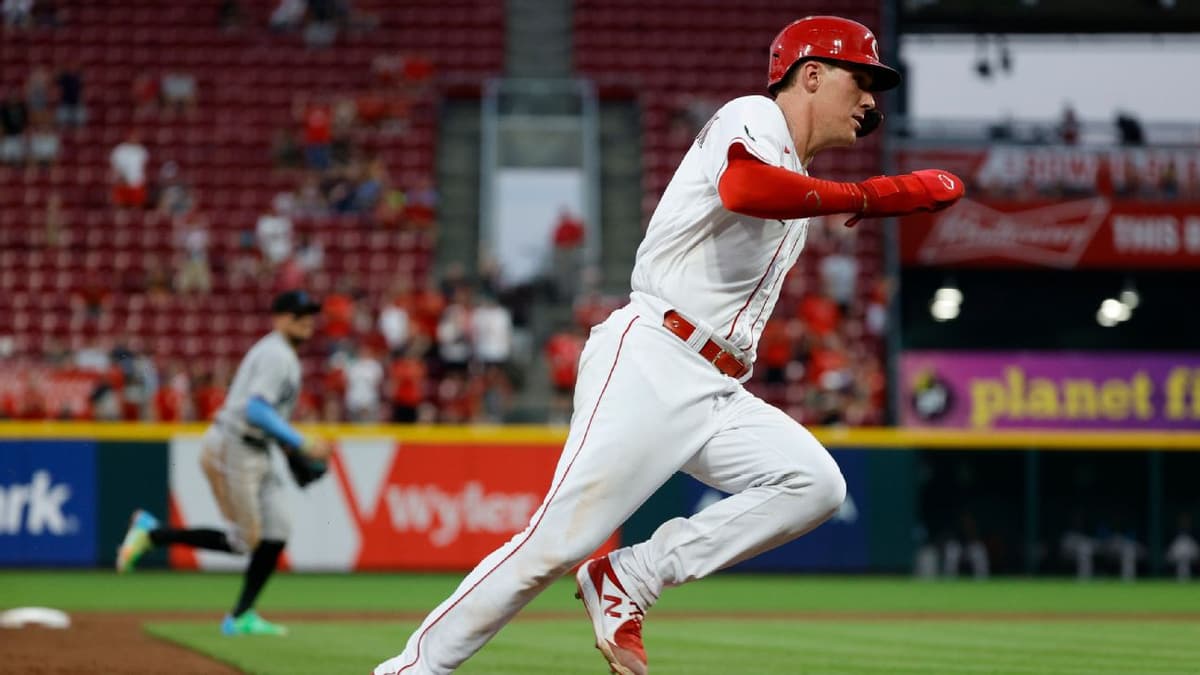
The Cincinnati Reds and catcher Tyler Stephenson have reached a resolution in their salary dispute for the upcoming season, but the conclusion came via a panel rather than a handshake. A three-person arbitration panel has ruled in favor of Stephenson, awarding him a $6.8 million salary for the 2026 season. The decision marks a significant financial victory for the backstop, who had been seeking the higher figure against the Reds' offer of $6.55 million.
Details of the Tyler Stephenson Arbitration Victory
While the gap between the two sides was relatively narrow—just $250,000—the implications of the Tyler Stephenson arbitration win are substantial. In the landscape of Major League Baseball, these hearings often set the floor for future negotiations and career earnings. By securing the $6.8 million figure, Stephenson ensures he is compensated as a top-tier contributor as he prepares for what will be a pivotal year in his professional career.
Stephenson has long been viewed as a foundational piece of the Reds' roster. His ability to provide offensive impact from behind the plate is a rare commodity, and this ruling reflects his value to the organization despite a recent stretch of bad luck with health. The panel's decision to side with the player suggests that his track record of production outweighs the availability concerns that plagued his most recent campaign. For the Reds, the ruling brings cost certainty as they finalize their roster for Spring Training.
Bouncing Back from a Challenging 2025 Campaign
The Tyler Stephenson arbitration case was particularly interesting given the catcher's 2025 season. It was a year defined more by the trainer's room than the batter's box, as Stephenson was limited to just 88 games. During that span, he posted a .239 batting average with 13 home runs, a dip from his career norms as he battled through persistent oblique and thumb injuries.
Despite the statistical dip in 2025, Stephenson remains one of the most dangerous hitting catchers in the National League when healthy. The Reds are banking on a return to his 2024 form, where he showcased the durability and power that the team desperately needs in the middle of the order. With the injuries now reportedly behind him, the focus shifts to whether Stephenson can maintain the workload of a primary catcher for a full 162-game slate in 2026.
Contractual Stakes and the Road to Free Agency
This arbitration ruling carries extra weight because Tyler Stephenson is entering his final year of club control. Following the conclusion of the 2026 World Series, Stephenson is set to become an unrestricted free agent. This makes the 2026 season a "walk year," where a healthy and productive performance could lead to a massive multi-year contract next winter, either in Cincinnati or elsewhere.
The Reds find themselves in a delicate position with their star catcher. While they have successfully navigated the arbitration process, the lack of a long-term extension means they risk losing a core leader for nothing more than draft pick compensation. As the team looks to build around a young pitching staff led by ace Hunter Greene, having a veteran presence like Stephenson behind the plate is vital for the development of their arms. The front office will likely spend the first half of the 2026 season evaluating whether to commit to Stephenson long-term or explore trade possibilities if the team falls out of contention.
The 2026 Arbitration Landscape Across MLB
The Stephenson ruling is part of a broader wave of decisions in the 2026 arbitration cycle. Several other notable players across the league have seen their salaries settled as teams look to finalize their payrolls before the start of the season. Among the key names involved in this year's cycle are:
- Reid Detmers (Los Angeles Angels): The left-hander remains a central figure in the Angels' rotation and saw his 2026 earnings addressed during this window.
- Kris Bubic (Kansas City Royals): Bubic continues to be a reliable arm for the Royals as they attempt to build on their recent competitive window.
- Dylan Lee (Atlanta Braves): The Braves' bullpen stalwart had his 2026 salary status finalized as Atlanta prepares for another title run.
- Calvin Faucher (Miami Marlins): The right-handed reliever is another arm whose 2026 compensation was determined through the arbitration process.
Furthermore, the market for catchers continues to be influenced by veteran benchmarks like Willson Contreras. As younger players like Stephenson move through their final years of arbitration, these veteran contracts serve as the framework for what a top-tier backstop can command on the open market. Meanwhile, teams like the Toronto Blue Jays and Boston Red Sox have been active in monitoring the veteran market for depth, particularly with players like Eric Lauer, who has moved beyond the arbitration-eligible stage of his career.
Cincinnati's Outlook for the 2026 Season
With the Tyler Stephenson arbitration case settled, the Reds can now turn their full attention to the diamond. The team is looking to take a step forward in the NL Central, relying on a mix of high-ceiling young talent and established veterans. Stephenson’s leadership will be critical for a rotation that features Greene, Nick Lodolo, and Andrew Abbott.
If Stephenson can stay on the field and return to the offensive form that saw him hit nearly 20 home runs in previous seasons, the Reds' lineup becomes significantly more formidable. For Stephenson, the 2026 season is more than just a year of play—it is a $6.8 million audition for the rest of his career. As Spring Training kicks off, all eyes will be on the Reds' backstop to see if he can turn this arbitration victory into a career-best season.
Sources & Original Reporting