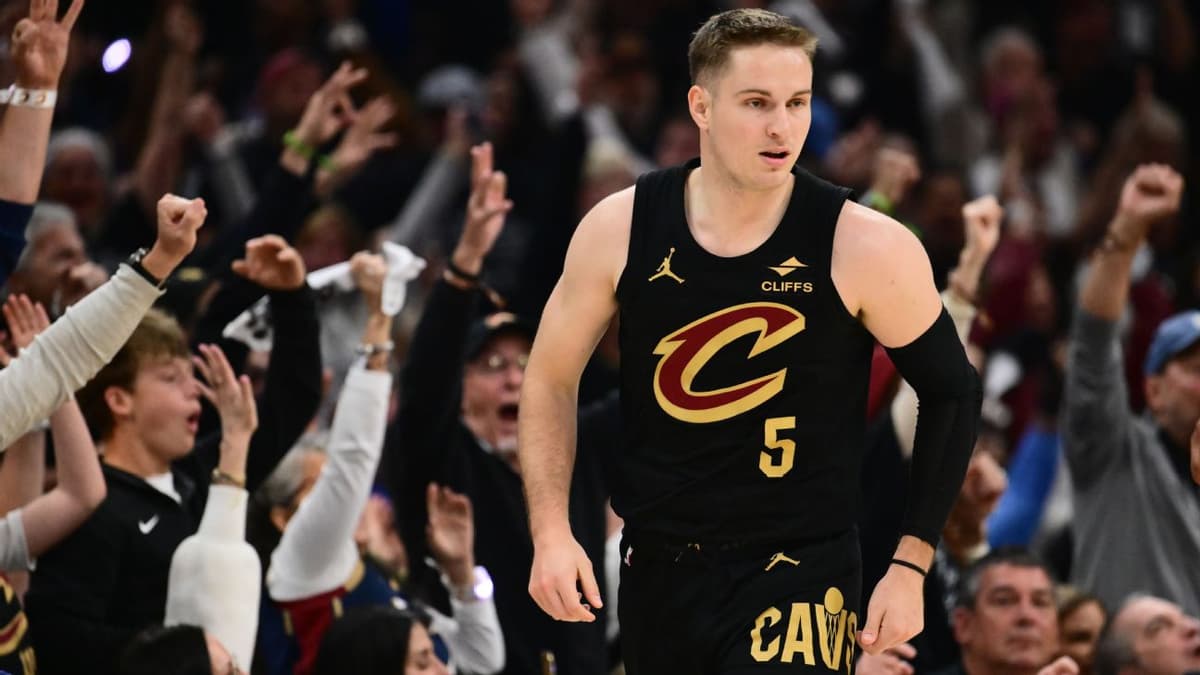
The Cleveland Cavaliers' postseason aspirations hit a double dose of adversity following their series opener against the Detroit Pistons. Beyond the sting of a Game 1 loss, the Cavaliers are now monitoring the health of one of their most efficient perimeter threats. Sam Merrill, the team’s standout reserve sharpshooter, underwent an MRI on his left hamstring after sustaining an injury during the contest, casting doubt on his availability for the immediate future. The Sam Merrill hamstring injury adds a layer of complexity to a series where Cleveland is already fighting from behind.
The Sam Merrill Hamstring Injury: MRI and Practice Status
Following the discomfort reported after the Game 1 defeat, Sam Merrill was scheduled for imaging to determine the severity of the strain. On Tuesday, the guard was a non-participant in the Cavaliers' practice session as the medical staff awaited the results of the MRI. Hamstring issues are particularly troublesome for players like Merrill, whose game relies on constant movement, navigating through heavy screens, and maintaining a stable base for a quick-release jump shot.
While the team has not yet provided a definitive timeline for his return, sitting out practice is a clear indicator of the caution the organization is taking. In the high-stakes environment of the NBA playoffs, even a minor strain can be a multi-game setback. Head coach Kenny Atkinson and his staff must now prepare for the possibility of being without their primary floor spacer as they look to evening the series in Game 2.
Impact on the Cavaliers' Offensive Rotation
The potential loss of Merrill is not just about losing a bench player; it is about losing the specific gravity he provides on the floor. During the regular season, Merrill’s presence forced opposing defenses to stay glued to the perimeter, which in turn opened up driving lanes for Donovan Mitchell and Darius Garland.
The Importance of Perimeter Spacing
Without Merrill’s threat from deep, the Detroit Pistons may find it easier to collapse their defense and protect the paint. Merrill has been a revelation for Cleveland, providing elite catch-and-shoot numbers that keep the offense fluid. If he is sidelined, the Cavaliers lose a player who can change the momentum of a game with two or three quick triples. This puts more pressure on the starting unit to maintain high-level efficiency from beyond the arc to prevent the Pistons from clogging the middle.
Adjusting the Bench Unit
With Merrill potentially out, Kenny Atkinson will need to look deeper into his rotation to find reliable scoring. The minutes typically reserved for Merrill may be distributed among other perimeter players who offer different skill sets. This adjustment could mean more responsibility for:
- Caris LeVert: Who will likely take on a larger playmaking and scoring role off the bench.
- Isaac Okoro: Whose defensive prowess is vital, but who will now be asked to hit open corner threes with more consistency.
- Craig Porter Jr.: Who could see spot minutes if the backcourt rotation needs further stabilization.
Strategic Shifts Under Kenny Atkinson
Head coach Kenny Atkinson is known for his tactical flexibility and emphasis on a modern, high-paced offense. However, losing a key cog like Merrill requires a shift in how the second unit operates. Atkinson’s system thrives on ball movement and finding the open man, but the "open man" is significantly more dangerous when it is a shooter of Merrill's caliber.
Countering the Pistons' Defensive Length
The Detroit Pistons utilized their length and athleticism to disrupt Cleveland in Game 1. To counter this without Merrill, Atkinson may implement more high-ball screens and double-drag sets to force Detroit’s bigs into uncomfortable positions. The goal will be to manufacture high-quality looks through scheme rather than relying on the individual gravity of a single shooter. The Cavaliers must find a way to punish the Pistons for any defensive lapses, even if their best pure shooter is watching from the sidelines.
Defensive Considerations
While Merrill is primarily known for his offense, his absence also affects the team's defensive matchups. The Cavaliers will need to ensure that whoever replaces his minutes can keep up with the Pistons' young, energetic backcourt. Maintaining defensive intensity while trying to replace Merrill's 10-15 points per game will be the primary challenge for the coaching staff heading into the next matchup.
Looking Ahead to Game 2
The Cavaliers find themselves in a pivotal moment. Dropping the first two games at home would be a disastrous start to the playoffs, and the Sam Merrill hamstring injury only makes the path to a comeback more difficult. The team is expected to release further updates once the MRI results are fully analyzed by the medical team.
For Cleveland to even the series, they will need a collective effort to replace Merrill’s production and spacing. The playoffs often come down to which team can best navigate unexpected injuries and rotation shifts. As the Cavaliers prepare for Game 2, all eyes will be on the injury report to see if Merrill can make a quick return or if the Cavs must find a new hero to spark their postseason run.
Sources & Original Reporting