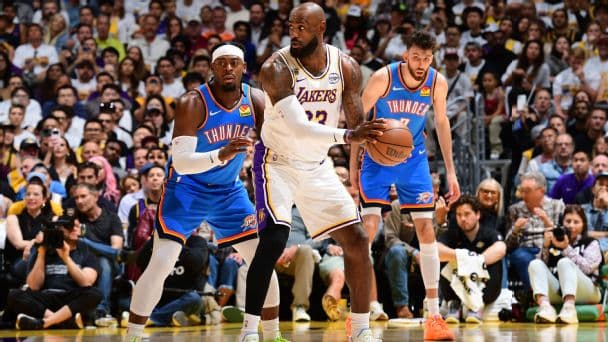
The purple and gold find themselves in a familiar yet increasingly desperate position. Facing a daunting 3-0 deficit against the Oklahoma City Thunder in the NBA playoffs, the conversation has shifted from tactical adjustments to a fundamental critique of the franchise's identity. For decades, the Los Angeles Lakers strategy has been predicated on a single, unwavering principle: acquire and retain the biggest stars in the galaxy. However, as the young, deep, and disciplined Thunder continue to dismantle them, that philosophy is facing its most rigorous stress test in the modern era.
The Traditional Los Angeles Lakers Strategy Under Fire
For generations, the Lakers have operated as the NBA’s ultimate destination for superstar talent. From the Showtime era with Magic Johnson and Kareem Abdul-Jabbar to the dominance of Shaquille O'Neal and Kobe Bryant, and most recently the arrival of LeBron James, the blueprint has rarely changed. The goal was always to secure top-tier talent first and figure out the supporting cast later. This approach yielded 17 championships, but the current series against Oklahoma City suggests the league has evolved past this top-heavy model.
The 3-0 hole the Lakers currently occupy isn't just a result of missed shots or poor rotations; it is an indictment of a roster construction that relies too heavily on aging superstars. While LeBron James continues to defy time, the gap between the Lakers' stars and their supporting cast has become a chasm that the Thunder are expertly exploiting. The lesson is becoming clear: in the modern NBA, star power alone can no longer mask a lack of systemic depth.
The Oklahoma City Thunder’s Blueprint for Success
In stark contrast to the Lakers' veteran-heavy approach, the Oklahoma City Thunder have built a juggernaut through meticulous drafting and patient development. While the Lakers have spent years trading away draft picks and young assets for established names, OKC has hoarded resources to build a cohesive unit that functions as a collective. The dominance shown by the Thunder in this series is a testament to the value of roster continuity and versatile, two-way players.
Where the Lakers rely on the individual brilliance of James or the secondary scoring of Austin Reaves, the Thunder offer a wave of relentless pressure from players who have grown together within the same system. This contrast is the "uncomfortable lesson" mentioned by league observers. The Thunder are proving that a team built on a foundation of young, high-motor talent can systematically dismantle a team built on the gravitational pull of a few superstars.
The Economic Reality of the Modern NBA
Part of the reason the Los Angeles Lakers strategy is struggling is the changing landscape of the NBA's collective bargaining agreement. The new financial rules make it increasingly difficult for teams to carry multiple max-contract players while still surrounding them with high-quality role players. We are seeing similar challenges across the league, where even transcendent talents like Luka Doncic require a perfectly calibrated supporting cast to achieve post-season success.
The Lakers have found themselves in a "stars and scrubs" trap. When their primary options aren't playing at a superhuman level, there is little margin for error. Players like Austin Reaves have been forced into roles that demand high-level consistency, but without a deeper bench of reliable veterans or high-upside youngsters, the Lakers simply run out of gas against a Thunder team that can go ten deep without a significant drop-off in production.
Is the Star-Chasing Era Over?
The question now facing the Lakers' front office is whether they can afford to continue with their traditional methodology. The league is getting younger, faster, and more skilled at every position. Relying on the allure of Hollywood and the promise of championships to attract stars is a strategy that assumes those stars can still carry the weight of an entire franchise. As the Thunder have shown, the modern game requires a level of athleticism and spacing that a top-heavy roster struggles to maintain over a seven-game series.
To move forward, Los Angeles may need to look at the very team currently beating them. The Thunder’s success isn't just about having good players; it’s about a philosophy that prioritizes the collective over the individual. For the Lakers, pivoting away from their historical identity will be painful, but as they stare down the barrel of a playoff exit, it may be the only way to remain relevant in a rapidly changing NBA landscape.
Conclusion: A Necessary Evolution
As the Lakers head into what could be their final game of the season, the focus remains on the looming offseason. Whether they attempt to double down on their current path or finally embrace a more balanced approach to team building remains to be seen. One thing is certain: the Oklahoma City Thunder have provided a roadmap for the future, and the Lakers are currently stuck in the past. If the Los Angeles Lakers strategy doesn't evolve, the franchise risks falling further behind the new guard of the Western Conference.
Sources & Original Reporting