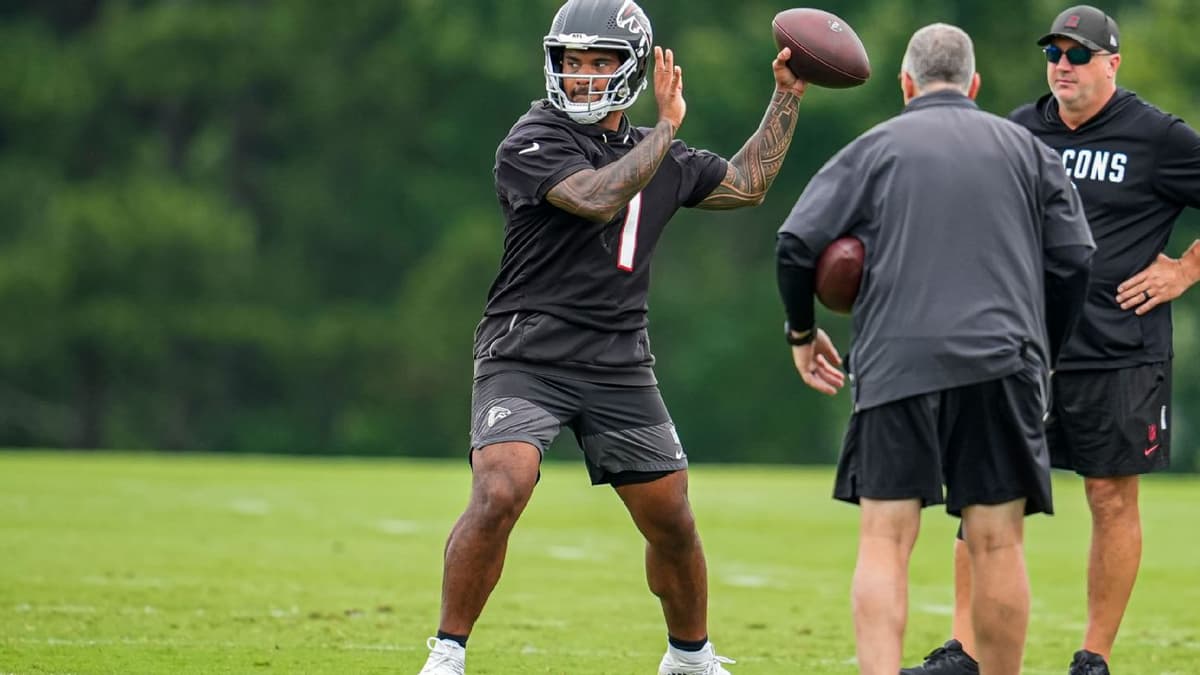
As the heat of the summer settles over Flowery Branch, the Atlanta Falcons are narrowing their focus for the upcoming season. While many teams spend the early days of training camp installing complex playbooks and high-concept schemes, the Falcons’ coaching staff is starting from the ground up—literally. The primary objective for the quarterback room this season is a mastery of Atlanta Falcons footwork, an essential component that the team believes will unlock the full potential of both Tua Tagovailoa and Michael Penix Jr.
The Importance of Atlanta Falcons Footwork
In the modern NFL, the difference between a completion and a turnover often comes down to inches, and those inches start with a quarterback’s feet. For the Atlanta Falcons, the emphasis on Atlanta Falcons footwork isn't just a coaching cliché; it is the cornerstone of their offensive philosophy heading into the 2026 campaign. Offensive coordinator Zac Robinson has been vocal about the need for rhythmic, disciplined drops to ensure the timing of the passing game remains surgical and explosive.
The logic behind this focus is simple: if the feet are late, the ball is late. By focusing on the specific steps required for various route concepts—whether it is a quick three-step drop for a slant or a deeper five-step drop for a post—the Falcons hope to eliminate the fractional delays that allow defenders to close passing windows. For a veteran like Tagovailoa and a rising talent like Penix, this technical refinement is seen as the final piece of the competitive puzzle. The team is utilizing specialized drills to analyze the weight distribution of every drop-back, ensuring that each quarterback is balanced and ready to fire at the top of their drop.
Tua Tagovailoa: Precision Through Discipline
Since his arrival with the Atlanta Falcons, Tua Tagovailoa has been praised for his elite processing and lightning-fast release. However, to thrive in the Falcons' specific system, which demands significant pocket mobility and varying launch points, Tagovailoa has had to recalibrate his base. The coaching staff is working closely with him to ensure his platform remains stable even when the pocket becomes muddy under pressure from an aggressive pass rush.
“Tua has some of the quickest hands in the league, but we want to make sure his feet are always in sync with his eyes,” a team source noted during recent sessions. By tightening his footwork, the Falcons aim to maximize Tagovailoa’s natural accuracy, particularly on intermediate crossing routes that are staples of the Atlanta offense. The goal is to have him "putting his best foot forward" on every snap, ensuring that his lower body provides the necessary power and alignment for every throw in the playbook. Furthermore, refined footwork helps in injury prevention, allowing Tagovailoa to maintain a more athletic posture that can better react to incoming pass rushers.
Michael Penix Jr. and the Developmental Curve
On the other side of the quarterback room, Michael Penix Jr. represents the future of the franchise. While Penix possesses undeniable arm talent and a massive ceiling, young quarterbacks often struggle with the transition from college systems to the complex under-center requirements of the NFL. For Penix, this training camp is serving as an intensive masterclass in footwork discipline and pocket navigation, which is vital for his long-term success.
The Falcons are focusing specifically on Penix’s ability to reset his feet quickly after moving off his initial read. In the NFL, the first option is rarely open for long, and the ability to "climb the pocket" while maintaining a throwing posture is what separates starters from backups. By mirroring Tagovailoa’s preparation, Penix is learning the nuances of professional Atlanta Falcons footwork that will eventually allow him to utilize his massive arm strength more effectively. The coaching staff has specifically highlighted his footwork on play-action fakes, which requires a level of deception and speed only possible with disciplined lower-body mechanics.
The Advantage of a Left-Handed Quarterback Room
One of the most intriguing storylines of the Atlanta Falcons’ current roster is the rare occurrence of having two high-level left-handed quarterbacks. This provides a unique advantage for the coaching staff and the offensive line alike. Typically, coaches have to flip their teaching points and visual demonstrations when moving between a righty and a lefty, but in Atlanta, the footwork drills are identical for both players.
- Synchronized Timing: Both quarterbacks operate on the same rhythm, allowing receivers to maintain consistent break-points regardless of who is throwing the ball.
- Offensive Line Continuity: The offensive line knows exactly where the "blind side" is at all times. In this case, the Right Tackle becomes the primary blindside protector, a shift the entire unit can commit to without switching back and forth.
- Unified Drill Structure: Coaches can run high-efficiency drills that allow both players to learn from one another’s repetitions in real-time, creating a collaborative and competitive environment.
Looking Ahead to the 2026 Season
As training camp officially kicks off, the Atlanta Falcons have established a clear roadmap for success. The focus on footwork is about more than just technique; it’s about creating a culture of precision and accountability. Whether it’s Tagovailoa leading a high-speed two-minute drill or Penix taking developmental reps with the second unit, the mandate remains the same: the feet must lead the way. If the Falcons can master the ground game from a mechanical standpoint, the sky is the limit for this offense in the upcoming season. Fans and analysts alike are eager to see if this attention to detail results in the deep postseason run that the city of Atlanta has been waiting for.
Sources & Original Reporting