As the New York Jets report to training camp for the 2026 campaign, the atmosphere around Florham Park feels decidedly different. For the first time in years, the defensive identity isn't centered around a single lockdown corner patrolling the perimeter. Instead, the New York Jets secondary is entering its first full season of the post-Sauce Gardner era, a transition that began with a blockbuster trade last November and has now become the defining storyline of the team's summer preparations.
The fallout from the trade continues to be a topic of discussion among league analysts. In July 2025, the Jets made Gardner the highest-paid defensive back in NFL history, signaling a long-term commitment to the All-Pro talent. However, in a move that stunned the sports world, the organization pivoted just four months later, trading their cornerstone defender in November 2025. Now, heading into the 2026 season, the focus has shifted from the shock of the transaction to the reality of the depth chart.
The Strategic Evolution of the New York Jets Secondary
Without a generational talent like Gardner to eliminate half the field, the New York Jets secondary has been forced to undergo a schematic evolution. The "shutdown island" philosophy has been replaced by a more holistic, collective approach to coverage. Defensive coordinators are no longer building a game plan around what one player can do in isolation; they are building a unit that relies on communication, versatile rotations, and veteran savvy.
This shift isn't necessarily a step backward, but it is a significant change in philosophy. By redistributing the resources previously tied up in Gardner’s record-breaking contract, the Jets have attempted to build a more balanced room. The 2026 defense aims to be less predictable, using a variety of zone looks and disguised pressures that were less common when the team could simply rely on man-to-man dominance on the outside.
Minkah Fitzpatrick: The New Defensive Anchor
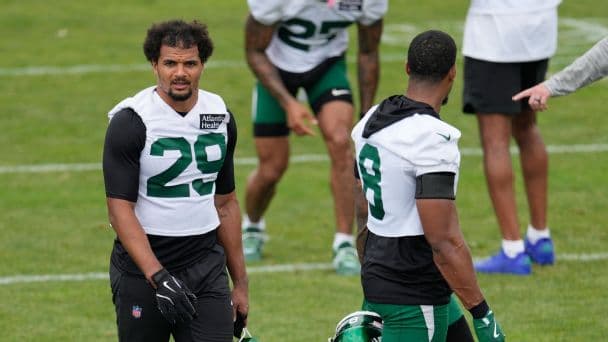
With Gardner gone, the mantle of leadership has officially passed to Minkah Fitzpatrick. While Fitzpatrick has always been a high-level performer, his role in 2026 is more critical than ever. He is no longer just a playmaker in the deep third; he is the primary communicator and the tactical glue holding the back end together. His ability to diagnose offensive sets in real-time will be the difference between a successful transition and a defensive regression.
Fitzpatrick’s veteran presence allows the coaching staff to be more creative with their young cornerbacks. By having a perennial Pro Bowler at safety who can mask mistakes and provide over-the-top help, the Jets are giving their new starting corners a margin for error they wouldn't otherwise have. Fitzpatrick has reportedly taken a hands-on approach during offseason programs, mentoring the younger players who are now stepping into the spotlight.
The New Starters: Brandon Stephens and D’Angelo Ponds
The most visible change in the New York Jets secondary is the elevation of Brandon Stephens and D’Angelo Ponds. Stephens, a seasoned veteran known for his physicality and consistent technique, is expected to take on the heavy lifting against opposing WR1s. While he may not possess Gardner’s unique length, his experience in high-leverage situations provides a stabilizing force on the boundary.
On the other side, the development of D’Angelo Ponds has become the X-factor for the 2026 defense. Ponds has been the standout of early summer sessions, showing the quickness and competitive edge necessary to survive in a division filled with elite passing attacks. The coaching staff has high expectations for Ponds, viewing him as a player who can thrive in a system that emphasizes collective coverage over individual isolation.
Key Personnel Outlook for 2026:
- Minkah Fitzpatrick: The undisputed leader of the unit, responsible for pre-snap adjustments and deep-field security.
- Brandon Stephens: The veteran presence on the outside, tasked with bringing physical play to the cornerback position.
- D’Angelo Ponds: The rising sophomore looking to prove he can handle a full-time starting role in the wake of the Gardner trade.
Expectations for the 2026 Campaign
The 2026 season will serve as a referendum on the front office’s decision to move on from a superstar in favor of a more balanced roster construction. The New York Jets secondary may lack the individual accolades it boasted a year ago, but there is a quiet confidence within the building that this unit is more adaptable. By moving away from a "star-heavy" model, the Jets are betting that a cohesive, well-coached group can be just as effective as one led by a single elite talent.
As the preseason progresses, all eyes will be on how Stephens and Ponds hold up under the pressure of being the new faces of the New York secondary. With Minkah Fitzpatrick directing traffic from the safety position, the Jets are hoping that their new-look defense can maintain its status as one of the league's most formidable units, even without the man they once called "Sauce."
Sources & Original Reporting