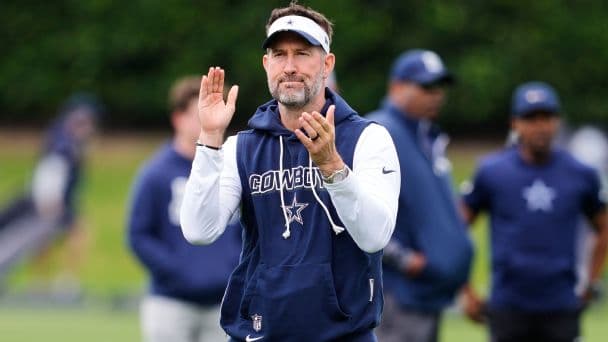
The Dallas Cowboys are no strangers to the intense spotlight of the NFL, but as they head into the second season under head coach Brian Schottenheimer, the pressure has reached a fever pitch. After a debut season that saw the team finish with a disappointing 7-9-1 record, the narrative in Arlington is no longer about potential—it is about tangible results. For the Brian Schottenheimer Dallas Cowboys era to truly take flight, the coaching staff must bridge the gap between a lackluster debut and the championship aspirations that define this historic franchise.
Learning from a Disappointing Debut
Taking over one of the most scrutinized positions in professional sports is never an easy task, but Brian Schottenheimer’s first year at the helm was particularly turbulent. Finishing below .500 is rarely tolerated in Dallas, and the 7-9-1 mark left fans and analysts questioning the long-term direction of the team. However, Schottenheimer has remained vocal about his commitment to self-reflection. He has spent the offseason dissecting the failures of last year, focusing specifically on game management and late-game execution—two areas where the Cowboys frequently faltered during his first year.
The transition to the head coaching seat often comes with a steep learning curve, regardless of a coach's prior experience. Schottenheimer has acknowledged that his "Year 1 mistakes" provided a necessary, albeit painful, roadmap for improvement. By identifying the schematic disconnects and communication breakdowns that led to their inconsistent performance, the Brian Schottenheimer Dallas Cowboys are aiming to field a more disciplined and cohesive unit in the upcoming campaign.
The Offensive Evolution: Maximizing Jake Ferguson
One of the primary bright spots for the Cowboys has been the continued emergence of tight end Jake Ferguson. As Schottenheimer looks to revitalize an offense that struggled to find its rhythm in key moments last year, Ferguson is expected to play a central role. In his second year under this system, the Pro Bowl tight end is looking to become more than just a reliable safety valve; he is being groomed as a primary vertical threat and a mismatch nightmare in the red zone.
Schottenheimer’s offensive philosophy often hinges on winning the middle of the field, and Ferguson’s ability to haul in contested catches makes him the ideal centerpiece for this strategy. If Dallas is to improve on their scoring output and overall efficiency, the chemistry between the coaching staff's play-calling and Ferguson’s execution will be the primary engine of that growth. Fans should expect to see Ferguson targeted early and often as Schottenheimer attempts to open up the rest of the playbook.
Defensive Stability and the Rise of DeMarvion Overshown
While much of the focus remains on the offense, the success of Schottenheimer's second year will depend heavily on the development of young defensive stars like DeMarvion Overshown. The linebacker, known for his sideline-to-sideline speed and high motor, represents the type of versatile athlete the Cowboys need to stabilize a defense that was occasionally porous during the 7-9-1 run.
Integrating Overshown more effectively into the defensive rotation is a top priority for the coaching staff this offseason. Schottenheimer has emphasized the need for a "complementary" style of football, where the defense can provide the offense with short fields and momentum-shifting turnovers. For Overshown, Year 2 is about health and consistency—two factors that could elevate the Dallas defense from a middle-of-the-pack unit to an elite force capable of carrying the team through tough divisional matchups.
The Path Forward in Year 2
Success in Dallas is measured in January, not September. For Brian Schottenheimer, the 7-9-1 record of the past is a shadow he must outrun quickly. The expectations for Year 2 involve more than just a winning record; they involve establishing a clear team identity that was missing last season. To achieve this, the team is focusing on several key pillars:
- Improved Red Zone Efficiency: Turning field goals into touchdowns was a major focus during spring practices.
- Enhanced Discipline: Schottenheimer has prioritized reducing pre-snap penalties that stalled drives in Year 1.
- Roster Depth: Ensuring that the team is better prepared to handle the inevitable injuries that come with a 17-game schedule.
If Schottenheimer can successfully implement the lessons learned from his debut, the Cowboys have the talent to compete in a wide-open NFC. The pressure is on, and the clock is ticking for the Dallas coaching staff to prove that Year 1 was merely a bump in the road toward a return to prominence.
Sources & Original Reporting