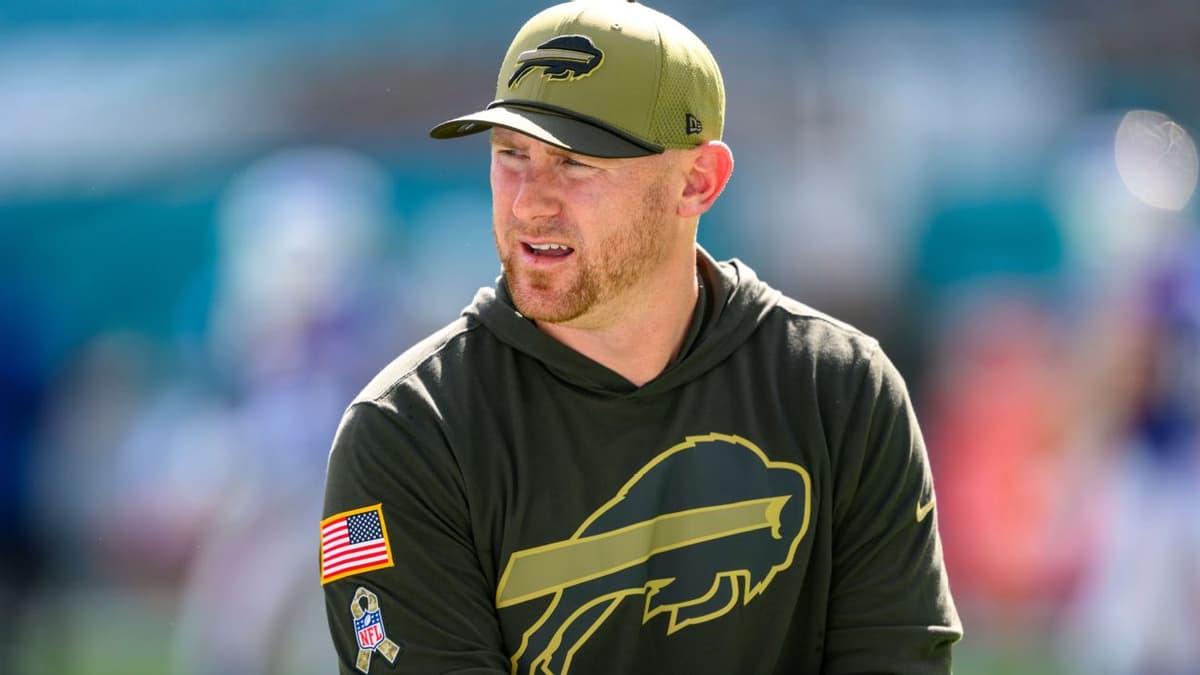
The Buffalo Bills have officially reached a turning point in their franchise history, deciding that the man to lead them over the elusive Super Bowl hump is already inside the building. By officially naming Joe Brady Buffalo Bills Head Coach, the organization has signaled a commitment to continuity and a belief that their current window of contention is best served by stability rather than a total systemic overhaul.
The Logic Behind the Joe Brady Buffalo Bills Head Coach Move
For a team that has consistently knocked on the door of the AFC Championship and beyond, the decision to promote from within often carries both hope and scrutiny. The primary driver behind the hiring of Joe Brady is his proven rapport with franchise quarterback Josh Allen. Since Brady took over offensive play-calling duties midway through the 2023 season, the Bills' offense underwent a significant transformation, becoming more balanced and efficient.
The front office's logic rests on the idea that the foundation for success is already laid. Rather than forcing Allen to learn a completely new terminology or offensive philosophy under an outside candidate, the Bills are doubling down on the chemistry that saved their 2023 season and propelled them into the 2024 postseason. Brady’s ability to maximize the run game while keeping Allen’s explosive playmaking ability intact was a key factor in the decision.
Addressing the "Super Bowl Hump" and Past Failures
One of the loudest criticisms of this hire is the question of whether an internal promotion can truly change the team's postseason trajectory. If the Bills have struggled to finish the job in January, how does keeping a member of the existing staff solve that? The organization's stance appears to be that the failures were not a result of the coaching philosophy, but rather a need for a fresh perspective at the top of the hierarchy.
Joe Brady brings a younger, more modern approach to the head coaching role. At just 35 years old, he represents a shift toward the NFL's trend of hiring innovative offensive minds to lead franchises. The Bills believe that Brady’s tactical flexibility and his ability to adapt in-game will provide the edge they were missing in previous high-stakes matchups against rivals like the Kansas City Chiefs.
What’s Next for the Buffalo Offense?
With Brady now at the helm as head coach, the focus shifts to how he will structure his staff and who will take over the day-to-day offensive coordinator duties. Under Brady’s previous tenure as OC, the Bills moved away from a pass-heavy, predictable attack and embraced a more physical identity. Fans can expect to see a continuation of this versatile approach.
Key priorities for the new regime include:
- Evolution of Josh Allen: Refining Allen’s decision-making to reduce turnovers while maintaining his status as a dual-threat weapon.
- Personnel Development: Integrating young talent like Dalton Kincaid and Keon Coleman into the core of the offensive scheme.
- Defensive Integration: While Brady is an offensive specialist, his first major task will be overseeing a defensive unit that has seen significant veteran departures in recent years.
The High Stakes of Continuity
By choosing Joe Brady, the Buffalo Bills are making a definitive statement: they believe their current roster and culture are championship-caliber. This hire avoids the "rebuild" phase that often accompanies a new head coach, keeping the team in a "win-now" posture. However, the pressure on Brady will be immediate. In Buffalo, the standard is no longer just winning the AFC East; it is bringing a Lombardi Trophy to Western New York.
As the NFL landscape shifts, the Bills are betting that the familiarity and innovation Joe Brady provides will be the final piece of the puzzle. Only time will tell if staying in-house was the masterstroke needed to finally conquer the AFC.
Sources & Original Reporting