For decades, the Green Bay Packers' approach to the wide receiver position in the first round was one of the most discussed storylines in the NFL. That narrative finally shifted in 2025 when General Manager Brian Gutekunst used a first-round selection on Matthew Golden, marking the first time the franchise had taken a pass-catcher in the opening frame since 2002. However, as the Green Bay Packers 2026 NFL Draft concluded this past weekend, fans noticed a familiar pattern: the wide receiver position was left entirely untouched.
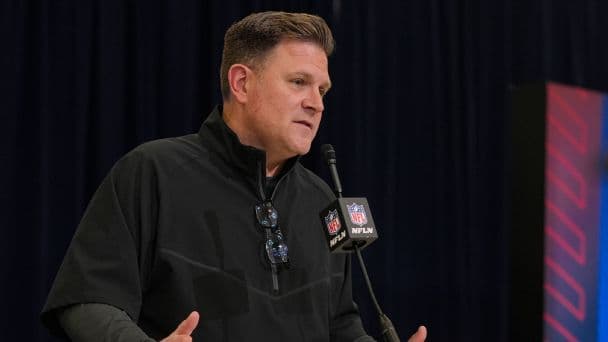
The decision to bypass the position throughout all seven rounds has sparked significant conversation among analysts and the Cheesehead faithful alike. After a year of aggressive investment in the perimeter, Gutekunst opted for a strategy of continuity and developmental trust. In a post-draft press conference, the Packers' front office leader shed light on why the team felt comfortable standing pat with their current stable of weapons for quarterback Jordan Love.
The Impact of the Matthew Golden Selection
To understand the 2026 strategy, one must look back at the 2025 NFL Draft. By selecting Matthew Golden in the first round, the Packers addressed a long-standing perceived void in their roster construction. Golden’s immediate integration into the offense provided the team with a blue-chip talent that complemented their existing young core. Taking a receiver early in 2025 fundamentally changed the urgency for the Green Bay Packers 2026 NFL Draft.
Gutekunst noted that the addition of Golden, combined with the continued growth of the 2023 and 2024 classes, created a logjam of talent that would have made it difficult for any 2026 rookie to see meaningful snaps. The front office viewed the 2025 investment as a multi-year solution rather than a one-off fix, allowing them to use their 2026 capital on other pressing areas of the roster, such as the offensive line and defensive secondary.
Trusting an Established and Deep Receiving Corps
The primary reason the Packers felt no pressure to add a wideout in 2026 is the sheer depth of their current room. Green Bay currently boasts one of the most versatile and young receiving groups in the league, led by Jayden Reed and Christian Watson.
- Jayden Reed: Has emerged as a premier slot threat and a versatile weapon in the run game.
- Christian Watson: Remains the team's primary deep threat with elite physical traits.
- Matthew Golden: The 2025 first-rounder who provides high-end route running and reliable hands.
- Romeo Doubs: A consistent chain-mover and red-zone target.
- Dontayvion Wicks: A technician who has shown elite separation metrics.
With five players who could arguably start for a dozen other NFL franchises, Gutekunst emphasized that adding a sixth or seventh receiver through the draft would have likely resulted in cutting a talented veteran or stunting the development of a high-upside player already on the roster. The Green Bay Packers 2026 NFL Draft was about augmenting the team's weaknesses, and wide receiver was viewed as a position of extreme strength.
Draft Board Dynamics and Value Alignment
Beyond the roster depth, the actual flow of the Green Bay Packers 2026 NFL Draft played a role in the shut-out of the receiver position. Gutekunst has long been a proponent of the "Best Player Available" (BPA) philosophy. In several rounds where the Packers were on the clock, the value simply didn't align with the available wide receivers compared to other positions of need.
"We always look at the board and see where the value is," Gutekunst explained during his post-draft wrap-up. "There were a few guys we liked, but the way the runs happened, we felt we were getting better football players at other spots. You never want to reach just to fill a room that is already one of the strongest on your team."
This disciplined approach ensured that the Packers didn't sacrifice talent elsewhere to add a redundant piece to the offense. By focusing on the trenches and the defensive backfield, the Packers believe they have built a more balanced team capable of supporting Jordan Love in ways that go beyond just giving him more targets.
Looking Ahead: The 2026 Offensive Outlook
As the Packers head into the 2026 season, the message from the front office is clear: they believe they have the pieces in place to compete for a championship. The absence of a rookie receiver in this year's class is a vote of confidence in the coaching staff's ability to maximize the existing talent of Jayden Reed, Christian Watson, and Matthew Golden.
While some fans may have wanted to see more speed or size added to the mix, the stability of the current group offers a rare advantage in an NFL where roster churn is constant. The Green Bay Packers 2026 NFL Draft may be remembered as the year the team finally stopped chasing wide receiver depth and started trusting the elite unit they had already built.
Sources & Original Reporting