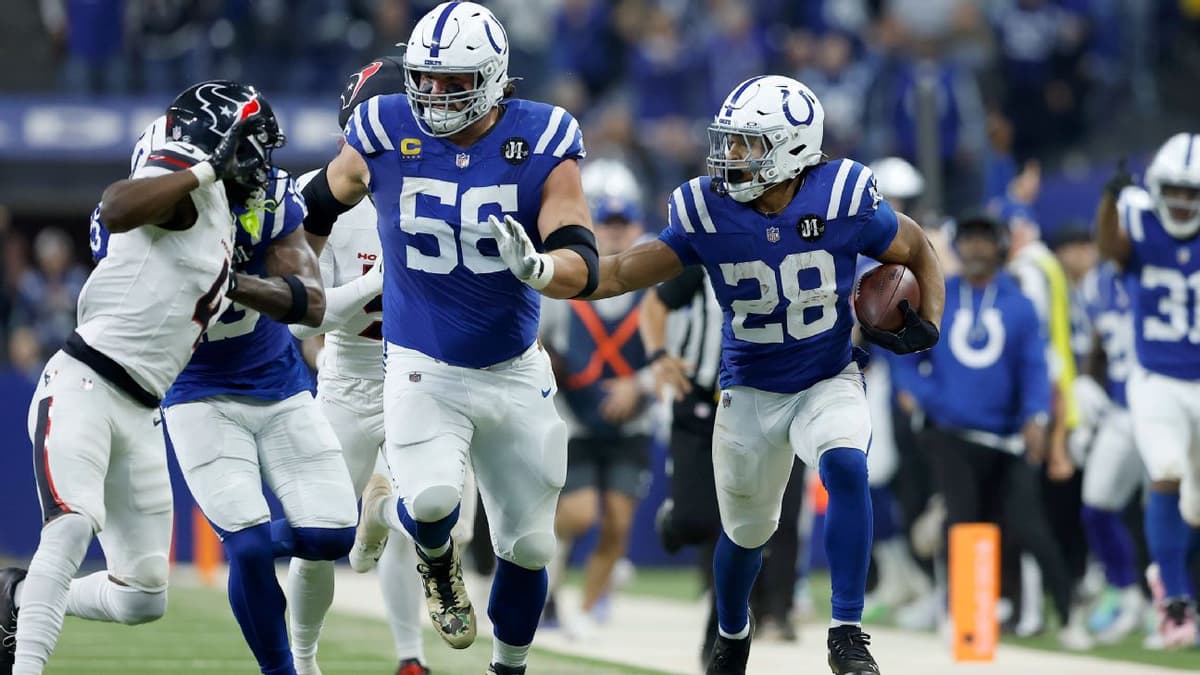
The Indianapolis Colts are approaching a defining crossroads for their franchise as the 2026 NFL season looms. While roster turnover is a constant in professional football, the Colts face a unique challenge as they prepare for the upcoming campaign: three of their most significant pillars are entering the final year of their deals. As the Jonathan Taylor contract year officially begins this June, the focus in Indianapolis is shifting toward how the front office will manage the futures of their elite talent. Alongside Taylor, defensive powerhouse DeForest Buckner and perennial All-Pro guard Quenton Nelson are also entering the final stages of their current agreements, putting General Manager Chris Ballard in a high-pressure situation to maintain the team's core identity.
The Significance of the Jonathan Taylor Contract Year
Since being drafted out of Wisconsin, Jonathan Taylor has been the undisputed engine of the Indianapolis offense. His ability to blend elite speed with physical power transformed the Colts' ground game, highlighted by his historic 2021 campaign where he led the league in rushing yards and touchdowns. However, as Taylor enters this pivotal Jonathan Taylor contract year in 2026, the stakes have never been higher for both the player and the organization.
Proving Durability and Value in 2026
For the Colts, Taylor represents more than just a ball carrier; he is the primary safety net for the offense. His presence in the backfield forces opposing defenses to stack the box, creating favorable matchups on the perimeter for the passing game. Securing Taylor long-term remains a complex puzzle for a team that has historically valued high-character, high-production homegrown talent. The 2026 season will serve as a critical audition for Taylor to prove his durability and explosive playmaking ability remain at peak levels before he hits the open market next spring.
Anchoring the Trenches: Quenton Nelson and DeForest Buckner
While Taylor handles the high-profile role in the backfield, the Colts' success is equally dependent on the two men dominating the line of scrimmage: Quenton Nelson and DeForest Buckner. Both players are entering the final year of their respective contracts in 2026, representing a massive portion of the team's leadership and salary cap allocation. Nelson, a multi-time All-Pro, has been the standard-bearer for offensive line play since he entered the league, while Buckner remains the focal point of the defensive front.
Quenton Nelson’s Standard of Excellence
Quenton Nelson has been the heartbeat of the offensive line since his rookie season. His ability to pull in the run game and provide a clean pocket is essential for the Colts' offensive rhythm. As he enters the final year of his deal, his performance will be closely watched, as elite interior linemen continue to see their market value rise across the NFL. Maintaining a player of Nelson's caliber is often seen as non-negotiable for a franchise built on winning in the trenches.
DeForest Buckner’s Defensive Impact
On the other side of the ball, DeForest Buckner remains one of the most consistent interior pass rushers in the league. Since arriving via trade from the San Francisco 49ers, Buckner has been the anchor of the Indianapolis defense. His ability to disrupt plays from the 3-technique position makes everyone else on the defensive line more effective. With Buckner heading toward free agency after the 2026 season, the Colts face the daunting task of potentially replacing one of the best positional players in professional football.
Salary Cap Management and the Front Office Strategy
The Indianapolis Colts have traditionally operated with a "build from within" philosophy. General Manager Chris Ballard has often emphasized the importance of rewarding players who perform at a high level and contribute to the locker room culture. However, managing three simultaneous high-profile contract situations requires surgical precision regarding the salary cap as the team moves through the 2026 calendar.
Navigating Extension Priorities
- Market Value: Jonathan Taylor remains one of the highest-valued assets at the running back position, despite the shifting economics of the role in recent years.
- Veteran Leadership: Buckner and Nelson are not just starters; they are captains whose presence influences the development of younger roster additions.
- Future Flexibility: The Colts must balance these potential extensions with the need to fill other roster holes through free agency and the draft in 2027.
The decision-making process will likely involve prioritizing which players are indispensable to the team's three-to-five-year window. While it is rare for a team to let three blue-chip players walk in a single cycle, the financial gymnastics required to keep all three will be a major storyline throughout the 2026 season. Whether the Colts choose to sign these stars to mid-season extensions or let the year play out, the performance of these three individuals will dictate the success of the franchise in the near future.
Sources & Original Reporting