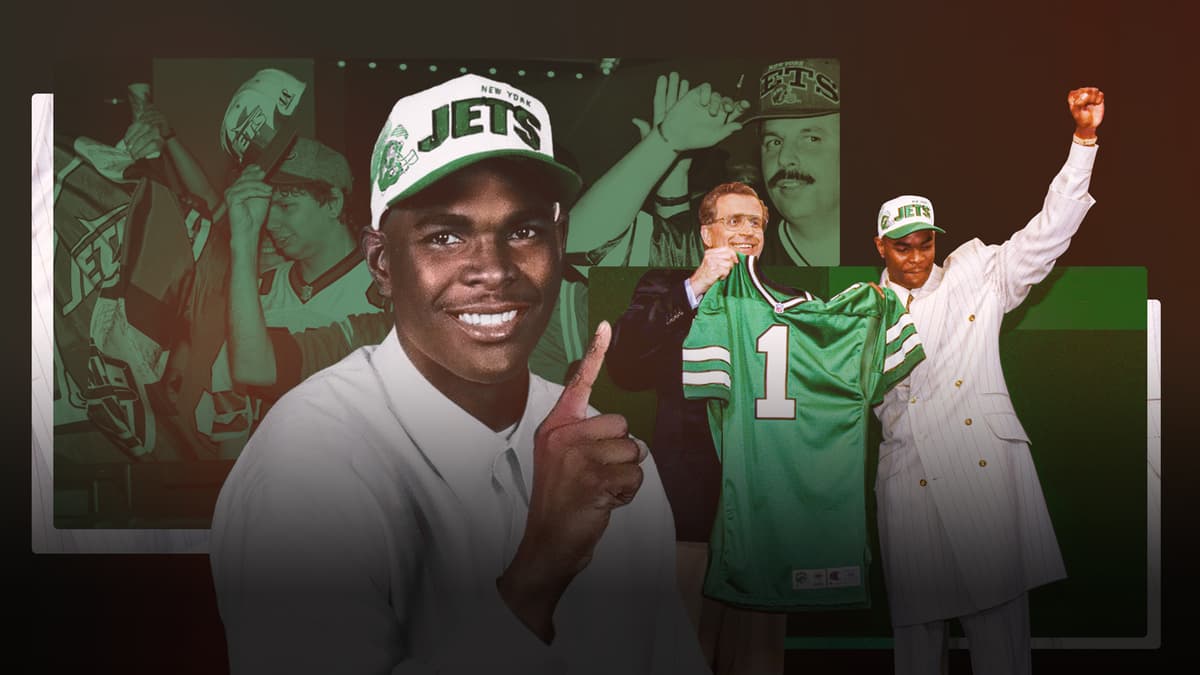
In the modern era of the NFL Draft, the first overall pick is almost exclusively reserved for the "franchise savior" at the quarterback position. However, looking back thirty years, the landscape of professional football scouting was markedly different. In 1996, the New York Jets held the top selection and chose to bypass the traditional logic of the time, selecting USC standout Keyshawn Johnson. To this day, Keyshawn Johnson remains the last wide receiver taken No. 1 overall in the NFL Draft, a testament to both his singular talent and a unique set of circumstances that defined that draft class.
The 1996 NFL Draft: A Quarterback Vacuum
To understand why a wide receiver was able to climb to the very top of the draft board, one must first look at the available talent pool in 1996. History remembers that year as one of the weakest quarterback classes in the history of the league. In a stunning turn of events, not a single quarterback was selected in the first round. The first signal-caller off the board was Tony Banks, who wasn't taken until the second round by the St. Louis Rams with the 42nd overall pick.
With no blue-chip quarterback prospect to anchor the draft, teams were forced to evaluate the best overall football players regardless of position. The Jets, coming off a dismal 3-13 season, were in desperate need of a transformative player who could change the culture of the franchise. While players like tackle Orlando Pace (who would go No. 1 the following year) were gaining traction, the sheer magnetism and production of Keyshawn Johnson made him the undeniable favorite for the top spot.
Keyshawn Johnson: The Star Power of 'Just Give Me the Damn Ball'
Keyshawn Johnson wasn't just a productive college player; he was a cultural phenomenon. During his final season at USC, Johnson put up staggering numbers, recording 102 receptions for 1,434 yards and 11 touchdowns. He capped off his collegiate career with an MVP performance in the Rose Bowl, catching 12 passes for a record-setting 216 yards and a touchdown against Northwestern.
Standing at 6-foot-4 and weighing over 210 pounds, Johnson possessed the physical frame to dominate NFL defensive backs. But it was his confidence that truly set him apart. He famously authored the book "Just Give Me the Damn Ball," which perfectly encapsulated his belief that he was the ultimate playmaker for any offense. The Keyshawn Johnson No. 1 pick selection wasn't just about finding a receiver; it was about the Jets finding a face for their franchise that could handle the bright lights of the New York media market.
The Evolution of NFL Draft Strategy and Positional Value
In the three decades since Johnson’s selection, the NFL has undergone a massive shift in how it values specific positions. The "Positional Value" era has prioritized three key roles above all others: the Quarterback, the Left Tackle (who protects the QB), and the Edge Rusher (who attacks the QB). This shift has made it increasingly difficult for a wide receiver to reach the No. 1 spot, regardless of their talent level.
Consider the legendary wide receiver prospects that have entered the league since 1996. Players like Calvin Johnson, Larry Fitzgerald, Julio Jones, and A.J. Green were all considered "can't-miss" prospects with elite physical traits. Yet, none of them were selected first overall. In 2007, the Oakland Raiders chose quarterback JaMarcus Russell over Calvin Johnson. In 2004, the San Diego Chargers took Eli Manning over Larry Fitzgerald. The trend is clear: if there is a viable quarterback prospect at the top of the board, teams will almost always prioritize the passer over the pass-catcher.
The Legacy of the 1996 Draft Class
While the 1996 draft is often cited for its lack of quarterback depth, it was actually a powerhouse for other positions. Ray Lewis, Brian Dawkins, and Marvin Harrison—all Hall of Famers—were selected in the first round of that same draft. For the Jets, the Keyshawn Johnson No. 1 pick yielded immediate results. Johnson was a Pro Bowler by his second season and helped lead the Jets to the AFC Championship game in 1998 under head coach Bill Parcells.
Johnson eventually moved on to the Tampa Bay Buccaneers, where he played a pivotal role in their Super Bowl XXXVII victory. His career totals of 814 receptions, 10,571 yards, and 64 touchdowns solidify his status as one of the premier receivers of his era. However, his most lasting legacy may be his place in the record books as the last of a dying breed.
Will a Wide Receiver Ever Go No. 1 Again?
As we look toward future drafts, the question persists: could we ever see another wide receiver taken first overall? With the NFL becoming more pass-heavy than ever, the value of an elite receiver has never been higher. However, the premium placed on the quarterback position has also reached an all-time high. For a receiver to break the 30-year drought started by Keyshawn Johnson, the draft would likely need to mirror the 1996 scenario—a year with no clear franchise quarterback and a generational talent at receiver who possesses both the stats and the star power to force a team's hand.
Until that perfect storm occurs, Keyshawn Johnson remains the definitive answer to a fascinating piece of NFL Draft trivia. He was a player who demanded the ball and, for one historic afternoon in 1996, he was the player who demanded the top spot in the draft.
Sources & Original Reporting