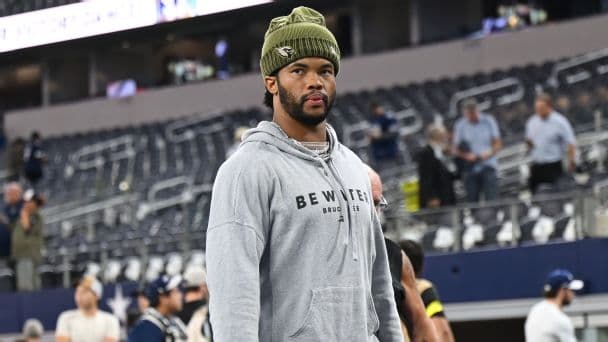
The NFL offseason is often shaped by decisions made hundreds of miles away from professional front offices. In a surprising turn of events, the college football landscape has sent shockwaves through the desert. With Oregon quarterback Dante Moore deciding to remain in school for the 2026 season, the Kyler Murray trade value has seen a significant shift. As the Arizona Cardinals navigate a pivotal transition period, the scarcity of elite signal-callers in the upcoming draft has placed their franchise quarterback in a unique position of leverage.
How Dante Moore Shook the NFL Draft Board
Dante Moore was widely considered one of the premier prospects eligible for the NFL Draft. His decision to return to the Oregon Ducks has effectively removed one of the most polished arms from the available pool of talent. For NFL teams desperate for a solution at the quarterback position, the options are suddenly much thinner. This collegiate retention does more than just help Oregon’s national title hopes; it fundamentally alters the supply and demand dynamics of the NFL trade market.
When a top-tier prospect like Moore exits the draft conversation, teams that were previously eyeing a rookie savior are forced to look elsewhere. Often, this leads front offices back to the veteran market, where proven starters become exponentially more expensive to acquire. For the Arizona Cardinals, this external factor has inadvertently strengthened their hand in any potential negotiations involving their long-time starter.
Why Kyler Murray Trade Value is Rising
The Kyler Murray trade value is inherently tied to the availability of alternatives. In a draft class that is now missing a key blue-chip prospect, Murray represents a known commodity with a Pro Bowl pedigree. While his tenure in Arizona has seen its share of ups and downs, his dual-threat capability remains a rare asset in the modern NFL. Teams that may have been hesitant to surrender high draft picks for a veteran are now faced with the reality that those same picks may not yield a comparable talent in a weakened rookie class.
According to league sources, the reduction in draft-day options has made Murray a more attractive target for teams that believe they are a quarterback away from contention. Rather than gambling on a developmental prospect, a team could pivot to Murray, who offers immediate starting experience and explosive playmaking ability. This shift in the market ensures that if Arizona decides to move on, the return on investment could be substantially higher than it was just a few weeks ago.
The Arizona Cardinals' Patient Approach
Despite the rising interest and the favorable market conditions, the Arizona Cardinals are not in a rush to pull the trigger on a deal. The organization is currently in the midst of a coaching search, and the front office has made it clear that no definitive decision will be made regarding Murray until a new leader is in place. The Cardinals are prioritizing alignment between the front office and the coaching staff, ensuring that the next head coach has a direct say in the future of the quarterback position.
This patient strategy serves two purposes:
- Coaching Input: A new head coach may see Murray as the perfect centerpiece for their offensive scheme, making a trade unnecessary.
- Market Maturation: By waiting, the Cardinals allow the desperation of QB-needy teams to build as the draft approaches, potentially driving the Kyler Murray trade value even higher.
What’s Next for Arizona?
The Cardinals find themselves at a crossroads. On one hand, they have a franchise quarterback whose value has arguably never been higher in the trade market. On the other, they have a roster that requires a clear vision from a new coaching staff. The decision to stay at Oregon by Dante Moore has provided Arizona with a luxury rarely found in the NFL: time and leverage.
As the coaching search continues, the league will be watching Arizona closely. Whether the Cardinals choose to build around Murray or capitalize on his increased trade value to kickstart a total rebuild, the landscape of the NFC West—and the NFL at large—will be shaped by what happens next in the desert. For now, the Cardinals remain in a holding pattern, waiting for the final piece of their leadership puzzle to fall into place before deciding the fate of their star quarterback.
Sources & Original Reporting