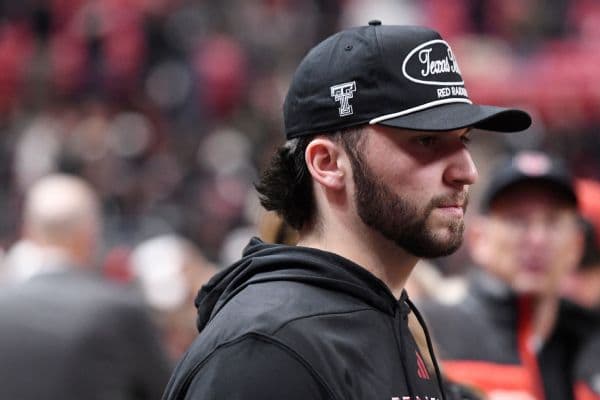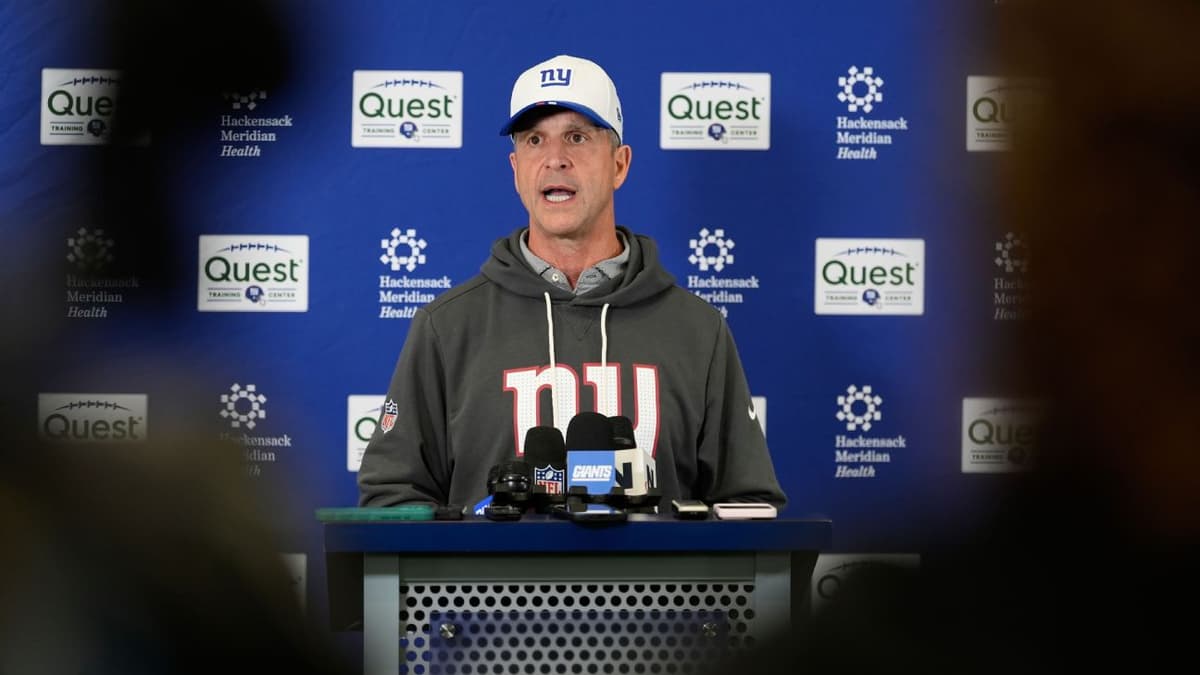
The New York Giants' preparations for the upcoming season have hit a significant roadblock following a concerning update regarding their star wide receiver. On Thursday, head coach John Harbaugh provided a sobering assessment of the Malik Nabers knee injury, describing the situation as "not simple" and leaving the young playmaker's return date shrouded in mystery.
The Giants and their fan base are holding their collective breath as the team’s most explosive offensive weapon faces an indefinite period on the sidelines. Harbaugh’s comments have shifted the narrative from a routine recovery to a more complex medical situation that could impact the team's offensive strategy for the foreseeable future.
Unpacking Harbaugh's Comments on Nabers
During his Thursday press conference, John Harbaugh was direct about the challenges facing the star receiver. While the team had initially hoped for a straightforward recovery timeline, the latest medical evaluations have suggested a more nuanced and difficult recovery path than originally anticipated.
"The Giants don't know when star wide receiver Malik Nabers will be back," Harbaugh stated, emphasizing that the issue is "not a simple knee" injury. This lack of clarity is particularly troubling for a Giants team that has heavily invested in Nabers as the cornerstone of their aerial attack. By categorizing the injury as "not simple," Harbaugh signaled that the rehabilitation process will likely involve multiple phases and will be dictated by how the knee responds to incremental increases in physical workload.
The ambiguity surrounding the return date suggests that the Giants' medical staff is taking a highly cautious approach. In the high-stakes environment of the NFL, rushing a player of Nabers' caliber back from a complex knee issue could have long-term ramifications for both his career and the franchise's competitive window.
The Significance of the Malik Nabers Knee Injury
The Malik Nabers knee injury is more than just a line on a weekly injury report; it represents a potential shift in the competitive landscape of the NFC East. Since entering the league, Nabers has established himself as one of the most dynamic threats in professional football. His unique ability to create separation and his prowess in contested-catch situations made him the primary target in the Giants' passing game.
Without Nabers on the field, the Giants’ offense loses its primary vertical threat. Last season, Nabers was responsible for a significant portion of the team’s explosive plays, often drawing double teams that opened up opportunities for tight ends and secondary receivers. The "not simple" nature of the injury implies that the Giants must now prepare for a variety of challenging scenarios:
- A prolonged rehabilitation period that could potentially extend into the regular season.
- The necessity of adjusting the offensive playbook to accommodate a different style of wide receiver play.
- Increased pressure on the remaining receiving corps to step up in high-volume roles.
Navigating the Depth Chart Without a Star
With the return date clouding the horizon, the Giants' coaching staff must look toward their depth chart to find immediate solutions. Filling the shoes of a player like Malik Nabers is an impossible task for a single individual, and the team may be forced to adopt a committee approach to maintain offensive efficiency.
The Giants have several young receivers who showed flashes of potential during previous campaigns, but none possess the elite combination of speed and route-running precision that Nabers brings to the field. Coach John Harbaugh and his offensive coordinators will likely spend the coming weeks evaluating how to redistribute Nabers' significant target share among the remaining healthy players on the roster.
This situation also places a greater burden on the Giants' running game. If opposing defenses no longer fear the deep-ball threat posed by Nabers, they may choose to stack the box, making life more difficult for the offensive line and the backfield. The ripple effect of one "not simple" injury can be felt across every unit on the team.
Looking Ahead: The Giants' Strategy for Recovery
As the organization moves forward, the primary focus remains on Nabers' long-term health and viability. The Giants have pointedly refused to place a specific date on his return, opting instead to monitor his progress day by day under the supervision of the team's medical experts. This strategy aligns with Harbaugh’s philosophy of prioritizing player safety and ensuring that athletes have reached 100% capacity before returning to full-contact game action.
Fans and analysts alike will be watching the daily practice reports closely for any sign of Nabers returning to the field, even in a limited or non-contact capacity. For now, the Giants must operate under the assumption that they will be without their top target for the foreseeable future. The resilience of the roster will be tested as they navigate this period of uncertainty, hoping that the "not simple" injury eventually yields a positive outcome and a full return to form for their star player.
The Malik Nabers knee injury serves as a stark reminder of the physical toll of the NFL and how quickly a team's trajectory can be altered. As more information becomes available, the Giants will continue to adjust their plans, but the shadow of Nabers' absence will loom large until he is officially cleared to return to the gridiron.
Sources & Original Reporting