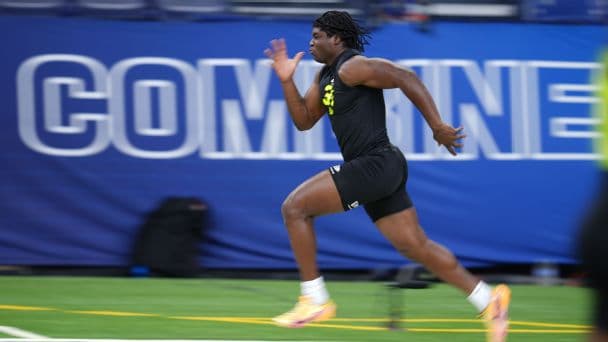
For decades, the NFL Scouting Combine was the undisputed king of player evaluation. Scouts would descend upon Indianapolis, stopwatches in hand, to measure the speed, agility, and explosion of the next generation of football stars. However, as more top-tier prospects choose to skip physical workouts at the Combine, front offices are turning to cutting-edge technology to fill the information gap. Today, NFL Draft prep is entering a new era where artificial intelligence and computer vision are providing insights that a simple 40-yard dash never could.
The Rise of AI in NFL Draft Prep
The traditional scouting model is being disrupted by the ability to extract precise athletic data directly from game film. Teams like the Miami Dolphins and Denver Broncos are at the forefront of this shift, utilizing AI-driven platforms to project measurables for players who may not have a complete athletic profile from the Combine or Pro Days. This technology allows teams to maintain a high level of NFL Draft prep even when the physical data points are missing.
By using computer vision, software can analyze thousands of hours of college footage to determine a player’s maximum speed, acceleration rates, and lateral movement. This isn't just about how fast a player runs in shorts and a t-shirt; it’s about how fast they play when the pads are on and the lights are bright.
From Game Film to Verifiable Data
One of the primary companies leading this charge is Reel Analytics, which uses AI to verify the "game speed" of prospects. During the recent collegiate season, players like Ohio State’s Caleb Downs and Arvell Reese have been the subjects of intense data analysis. For example, when a prospect like Downs displays elite closing speed on a tackle, AI can calculate his exact miles per hour, providing a concrete metric that scouts can compare against NFL benchmarks.
The technology is particularly useful for evaluating defensive standouts such as David Bailey and Rueben Bain Jr.. When these athletes skip specific drills, AI can project their 40-yard dash times and shuttle runs based on their in-game movements. This ensures that a team's big board remains accurate and data-driven, regardless of whether a player chooses to participate in the traditional testing circuit.
The "Game Speed" Advantage
The Miami Dolphins have famously prioritized speed on their roster, headlined by superstars Tyreek Hill and Jaylen Waddle. For a team built on explosive plays, the difference between track speed and game speed is critical. AI allows the Dolphins' front office to see how a prospect's speed translates to the field, measuring how quickly they reach their top gear while navigating traffic or tracking a ball in the air.
Scouts have long noted that some players are "track fast" but "football slow." AI eliminates this ambiguity by providing stats such as:
- Max Sustained Speed: The highest velocity a player maintains during a play.
- Explosive Burst: The rate of acceleration in the first five yards of a route or rush.
- Deceleration and Change of Direction: How efficiently a player can stop and restart their momentum.
The Future of Scouting and Decision Making
As the Denver Broncos and other organizations integrate these AI tools into their NFL Draft prep, the role of the traditional scout is evolving. Rather than spending weeks traveling to cross-reference hand-timed 40s, scouts can now focus on the nuances of a player's character, football IQ, and scheme fit, while the AI handles the physical quantification.
This technological leap is pushing the draft process to what many insiders call "a different level." It provides a safety net for teams when a blue-chip prospect from a school like The Ohio State University decides to let his game tape speak for itself. In the high-stakes world of the NFL Draft, where a single pick can alter the trajectory of a franchise, having AI-verified data is becoming an essential tool for success.
While the NFL Combine will always have its place in the league's pageantry, the real work of building a championship roster is increasingly happening in the digital realm. As AI continues to refine its predictive capabilities, the gap between collegiate potential and NFL reality will only continue to shrink.
Sources & Original Reporting