Every March, the NFL landscape shifts as teams open their checkbooks to lure the biggest names on the open market. The frenzy of the legal tampering period and the subsequent signing day often feels like a high-stakes poker game where the stakes are hundreds of millions of dollars. However, as history has shown from 2013 to 2022, spending the most money does not always equate to hoisting the Lombardi Trophy. When we look back at the most significant NFL free agent signings over the last decade, the results range from franchise-altering championships to salary-cap-crippling disasters.
The Gold Standard: When Big Spending Leads to Rings
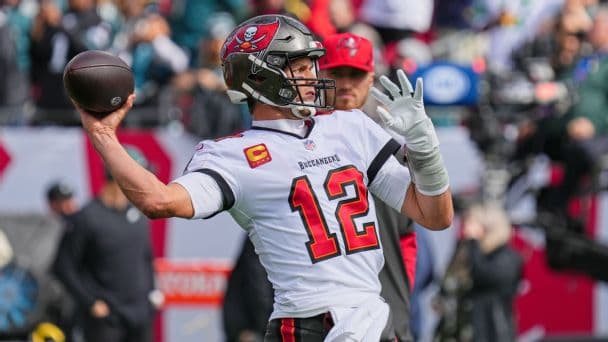
When discussing whether massive NFL free agent signings pay off, the conversation must begin and end with Tom Brady and the Tampa Bay Buccaneers. In 2020, Brady signed a two-year, $50 million fully guaranteed contract with Tampa Bay. Unlike many aging veterans who struggle in new systems, Brady immediately led the Buccaneers to a Super Bowl title in his first season. This deal represents the rare occasion where a massive investment provided an immediate, maximum return on investment.
Similarly, the San Francisco 49ers found success with their 2017 signing of fullback Kyle Juszczyk. While fullbacks rarely command high salaries, Juszczyk became a foundational piece of Kyle Shanahan’s offense, proving that "paying up" for a specific scheme fit can be just as valuable as chasing a star quarterback. These successes represent the dream scenario for every General Manager entering the free agency period.
The Cautionary Tales: When Megadeals Go South
For every Tom Brady, there is a signing that serves as a warning for teams that overextend themselves for a single player. Perhaps the most infamous example in recent history is Brock Osweiler and the Houston Texans. In 2016, the Texans signed Osweiler to a four-year, $72 million contract after he started just seven games for the Denver Broncos. The experiment was such a failure that the Texans eventually had to trade a second-round pick to the Cleveland Browns just to convince them to take Osweiler’s contract off their books.
The New York Giants experienced a similar disappointment with wide receiver Kenny Golladay. Signed to a four-year, $72 million deal in 2021, Golladay was expected to be the primary weapon for Daniel Jones. Instead, he struggled with injuries and production, failing to record a single touchdown in his first season with the team. These deals highlight the inherent risk of free agency: you are often paying for past performance rather than future production.
The Middle Ground: Stability vs. Ceiling
Many NFL free agent signings fall into a middle category where the player performs well, but the team’s overall success remains stagnant. The Minnesota Vikings’ 2018 signing of Kirk Cousins is the quintessential example of this phenomenon. Cousins signed a historic three-year, $84 million contract that was fully guaranteed—a first for the league at the time.
Statistically, Cousins delivered exactly what was promised: high-level quarterback play, durability, and consistent production. However, the Vikings struggled to build a championship-caliber roster around his massive cap hit, leading to a period of being "stuck in the middle." This raises a difficult question for front offices: is it better to pay for a high floor, or save that money to take a swing at a higher ceiling elsewhere?
Recent Trends and the Value of the "Splash"
In more recent years, we have seen teams like the Jacksonville Jaguars and Miami Dolphins take massive swings to jumpstart their rebuilds. The Jaguars were widely criticized for the contract they gave wide receiver Christian Kirk (four years, $72 million) in 2022. However, Kirk’s immediate chemistry with Trevor Lawrence helped propel the Jaguars to a playoff win, suggesting that sometimes the market price for a player is secondary to the developmental boost they provide for a young quarterback.
The Dolphins have also been aggressive, bringing in veterans like Terron Armstead to stabilize a young offensive line. While Armstead has dealt with injuries, his impact when on the field has been undeniable. This illustrates a shift in how teams view free agency; it is no longer just about finding the best player, but about finding the player who solves a specific, immediate problem.
Lessons from a Decade of Spending
Looking back at the data from 2013 to 2022, a few patterns emerge regarding the success of NFL free agent signings:
- Scheme Fit Matters More Than Talent: Players who are signed to fill a specific role in an established system (like Juszczyk in SF) have a higher success rate than those signed simply because they were the best available athlete.
- The "Quarterback Tax" is Real: Teams that overpay for mid-tier quarterbacks out of desperation (like the Texans with Osweiler) almost always regret the decision within 24 months.
- Guaranteed Money is the True Metric: The total value of a contract is often fluff; the real risk lies in the guaranteed money. The Vikings’ deal with Cousins changed how agents approach negotiations, leading to more leverage for players but higher risk for teams.
As the NFL continues to see its salary cap rise, the price of free agency will only increase. While the 2013-2022 window provided plenty of busts, it also showed that for a team one piece away from glory, the right signing is worth every penny.
Sources & Original Reporting