In the ever-evolving landscape of the National Football League, strategic trends often move in cycles. For years, the league was obsessed with the spread offense, prioritizing three-receiver sets and lightning-fast perimeter play. However, as the 2025 season proved, the pendulum is swinging back toward size and physicality. Leading this charge is Sean McVay and the Los Angeles Rams, whose successful implementation of the Rams' TE-heavy offense has sent shockwaves through the league's coaching circles. After a 2026 NFL Draft that saw an unprecedented run on tight ends during Day 2, the question is no longer if the league will follow McVay’s lead, but how quickly they can adapt to this jumbo-sized reality.
The Evolution of Sean McVay’s Offensive Philosophy
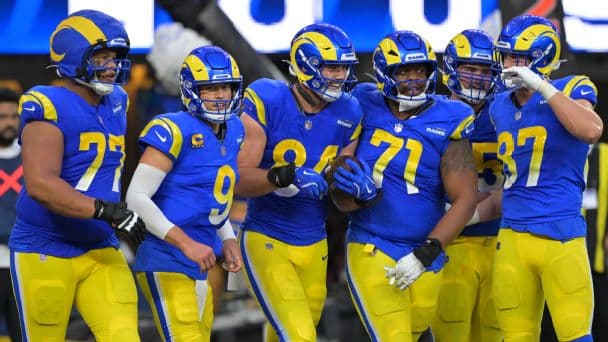
For much of his early career, Sean McVay was the poster child for 11-personnel (one running back, one tight end, and three wide receivers). It was the formation that took the Rams to two Super Bowls and established McVay as a modern offensive genius. However, as defensive coordinators across the NFL began utilizing lighter, faster sub-packages to counter the spread, McVay realized that the tactical advantage of the three-receiver set was diminishing. In 2025, the Rams made a definitive pivot, leaning heavily into 12-personnel (two tight ends) and even 13-personnel (three tight ends) to dictate the flow of the game.
This shift wasn't just about personnel; it was about math. By putting more versatile athletes on the field, the Rams forced opposing defenses into a difficult choice: stay in a light 'nickel' defense and get bullied in the run game, or switch to a heavier 'base' defense and risk being exploited by agile receivers in the passing game. The Rams' success with these multi-TE personnel groupings in 2025 provided a proof of concept that the rest of the league has been desperate to replicate.
Why the 2026 NFL Draft Targeted Tight Ends
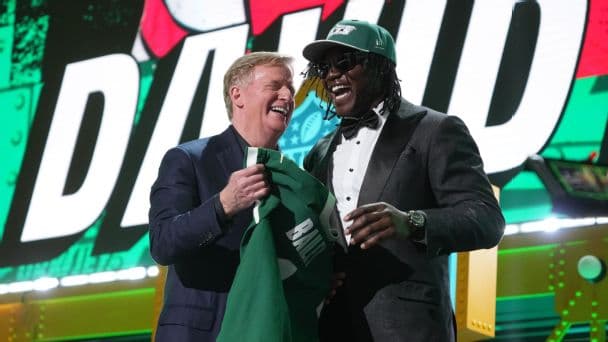
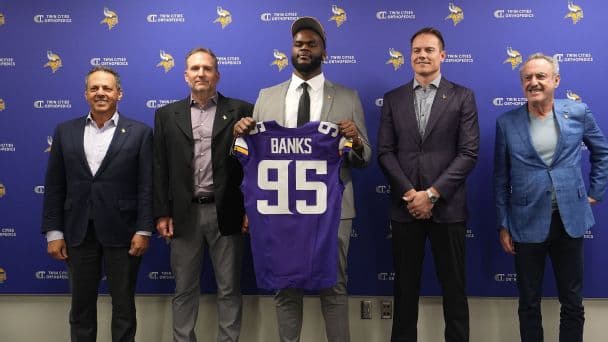
The impact of McVay's strategy was most visible during the recent 2026 NFL Draft. Scouts and general managers entered the draft with a clear mandate: find the next generation of versatile, 'matchup nightmare' tight ends. Day 2 of the draft saw a historic run on the position, with teams scrambling to secure players who can both block at the point of attack and stretch the seam as receivers. This influx of talent suggests that the league's decision-makers are fully committed to the 'jumbo' trend.
Teams are no longer looking for traditional 'Y' tight ends who simply serve as extra offensive linemen. Instead, they are hunting for the 'U' tight end—the move-piece who can line up in the slot, in the backfield, or with a hand in the dirt. The 2026 draft class was uniquely suited for this demand, offering a blend of basketball-style athletes and physical blockers that will allow more teams to mirror the looks that made Los Angeles so dangerous last season.
The Strategic Impact of the Rams' TE-Heavy Offense
The primary reason heavy sets are winning in the modern NFL is their ability to create 'conflict of assignment' for defenders. When a team employs three tight ends, they create extra gaps in the run game that a standard four-man defensive front cannot easily account for. Sean McVay mastered the art of making a heavy formation look like a run play, only to have a tight end leak out into a wide-open flat or a deep crosser.
Creating Defensive Conflict
By utilizing 13-personnel, the offense dictates the defensive personnel. If the defense stays in nickel (five defensive backs), the offense has a significant weight and strength advantage in the run game. If the defense brings in a third linebacker to match the size, the Rams use their tight ends to outrun those slower defenders in space. This constant state of 'wrong-footing' the defense is the cornerstone of the modern jumbo set.
Neutralizing the Pass Rush
Furthermore, this strategy mitigates the impact of elite edge rushers. By keeping extra tight ends on the line of scrimmage, offenses can chip pass-rushers or provide double-teams without sacrificing all their receiving options. This 'big-on-big' football is a direct response to the era of the 'undersized speed rusher,' effectively neutralizing the speed advantage that many modern defenses have prioritized over the last decade.
Can Other Teams Replicate the Los Angeles Model?
While the blueprint is clear, execution is another matter entirely. The success of McVay's jumbo sets relies on having tight ends who are truly interchangeable. If a tight end can only block, the defense knows a run is coming. If he can only catch, they treat him like a wide receiver. The magic happens when the personnel is versatile enough to keep the defense guessing. As other NFL teams attempt to copy this model in 2026, the limiting factor will be the individual talent and the coaching staff's ability to design complex route trees for larger bodies.
We are likely to see teams like the Green Bay Packers, Buffalo Bills, and Baltimore Ravens—who already have foundations in multi-TE sets—double down on this approach. The 2026 season will serve as a massive experiment to see if the Rams' offensive pivot was a flash in the pan or the beginning of a permanent shift in how professional football is played. With the personnel now in place following a TE-packed draft, the stage is set for a more physical, 'heavy' brand of football to take over the league.
Sources & Original Reporting