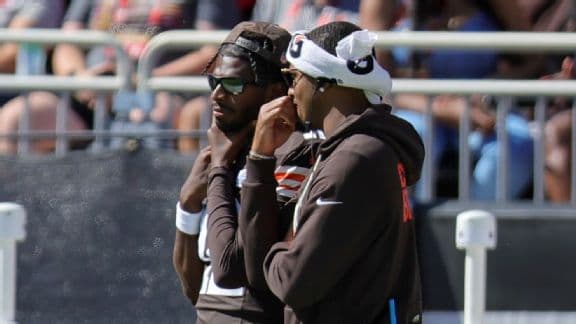
The Cleveland Browns have signaled a bold new direction for their franchise by naming Todd Monken as their new head coach. As the team transitions into the 2026 season, the primary focus is how Todd Monken's arrival will reshape an offense that features a unique blend of talent at the most critical position. Monken inherits a quarterback room led by second-year starter Shedeur Sanders, the high-priced veteran Deshaun Watson, and sophomore Dillon Gabriel. With the franchise holding the No. 6 overall pick in the upcoming draft, Monken’s ability to maximize these diverse skill sets will be the defining story of his tenure.
The Monken Philosophy: Adapting to the Cleveland Browns Quarterbacks
Todd Monken's arrival brings a proven track record of offensive innovation and, perhaps more importantly, schematic flexibility. Unlike coaches who demand a specific type of player to fit a rigid system, Monken has consistently demonstrated an ability to tailor his play-calling to the specific strengths of his personnel. From his high-flying "Air Raid" days to his recent success with the Baltimore Ravens, Monken understands how to marry NFL concepts with the modern spread elements that younger quarterbacks favor.
For the Browns, this versatility is essential. The current roster features three distinct archetypes. Monken’s first task is to create a cohesive offensive identity that can bridge the gap between Watson’s veteran experience and the youthful upside of Sanders and Gabriel.
Maximizing Shedeur Sanders in Year Two
After starting the final seven games of the 2025 season, Shedeur Sanders enters 2026 as the incumbent leader of this offense. Sanders showed flashes of elite processing and pocket poise during his rookie campaign, and Monken’s system is designed to accelerate that growth. Monken’s offenses typically emphasize vertical spacing and creating one-on-one matchups, which aligns perfectly with Sanders’ ability to deliver the ball with touch and accuracy.
Sanders' Pocket Presence and Accuracy
In Monken’s scheme, the emphasis on a strong run game creates the play-action opportunities that allow a quarterback to exploit the middle of the field. For a second-year player like Sanders, this structure provides a clear roadmap for success. By utilizing heavy personnel and varied formations, Monken can simplify Sanders' post-snap reads while allowing his natural playmaking ability to shine in critical moments.
The Veteran and the Sophomore: Watson and Gabriel
While Sanders is the focal point of the future, Todd Monken's arrival also necessitates a clear plan for Deshaun Watson and Dillon Gabriel. Watson remains a central figure due to his contract, but his struggle with consistency has been a hurdle for the Browns. Gabriel, meanwhile, enters his second year as a mobile and efficient operator who provides high-end depth.
Reclaiming Deshaun Watson's Form
Monken has historically found success by simplifying the passing game for his veterans, focusing on timing and rhythm. If Watson is to regain his Pro Bowl form, he will need to thrive in a professional, timing-based offense. Monken’s ability to utilize RPOs (Run-Pass Options) and bootlegs could help Watson find the comfort level that has eluded him in recent seasons.
The Role of Dillon Gabriel
As a second-year player drafted in 2025, Dillon Gabriel offers a different dynamic as a left-handed passer with significant collegiate experience and mobility. Monken’s history of utilizing mobile quarterbacks—most notably Lamar Jackson—suggests he can create specific packages or a sub-scheme that maximizes Gabriel’s ability to stress defenses with his legs and quick-release passing.
Building a Sustainable Offensive Identity
The success of the Monken era will ultimately be measured by the development of the quarterback position. The Browns are looking for more than just a play-caller; they are looking for a designer who can build a sustainable system around their current core. Key elements of Monken’s projected strategy include:
- Explosive Play Creation: Utilizing deep crossers and vertical routes to stress secondaries and maximize Sanders' arm talent.
- Personnel Flexibility: Shifting between 11-personnel (three receivers) and 12-personnel (two tight ends) to dictate defensive alignments.
- Quarterback Empowerment: Giving the signal-callers more autonomy at the line of scrimmage to check into advantageous plays.
As the Browns navigate the 2026 offseason with the No. 6 overall pick and an additional first-rounder, the presence of Todd Monken provides schematic certainty. Whether it is refining the veteran Watson or molding the second-year stars Sanders and Gabriel, the Browns finally have a blueprint designed to maximize the talent under center.
Sources & Original Reporting